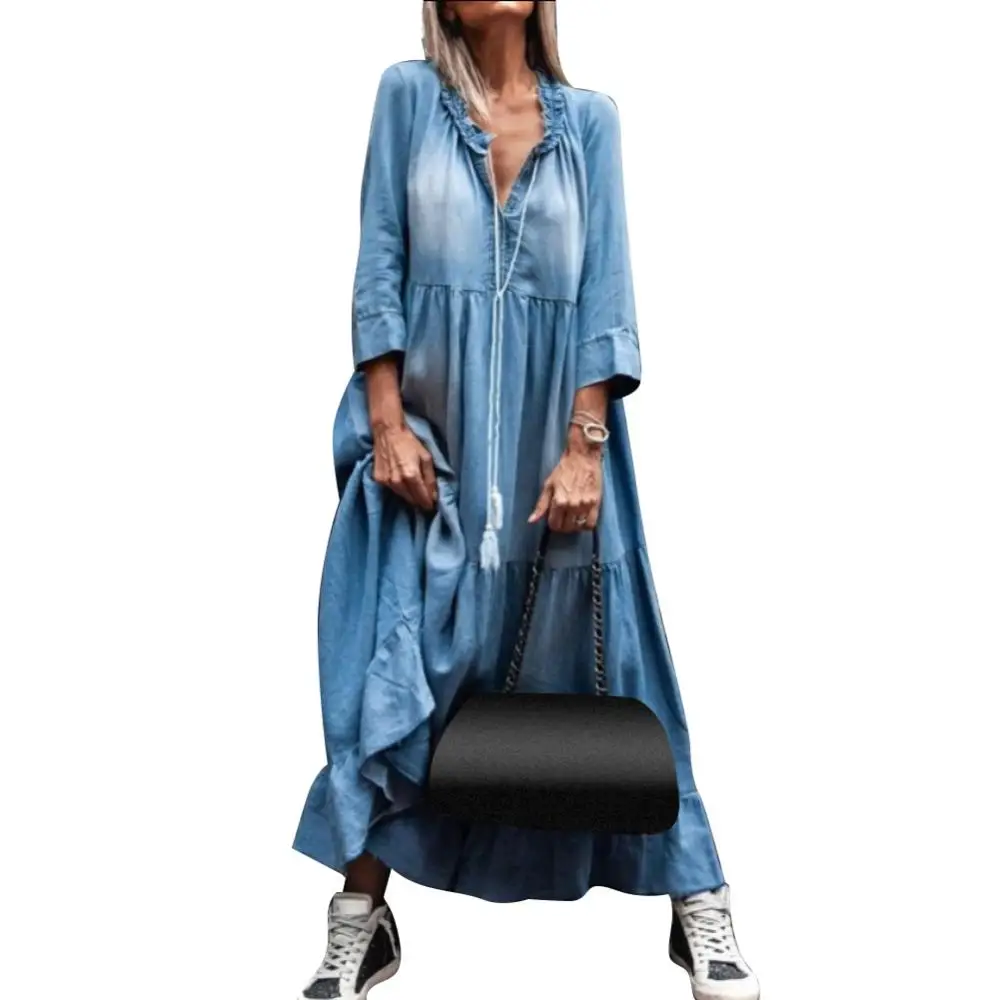
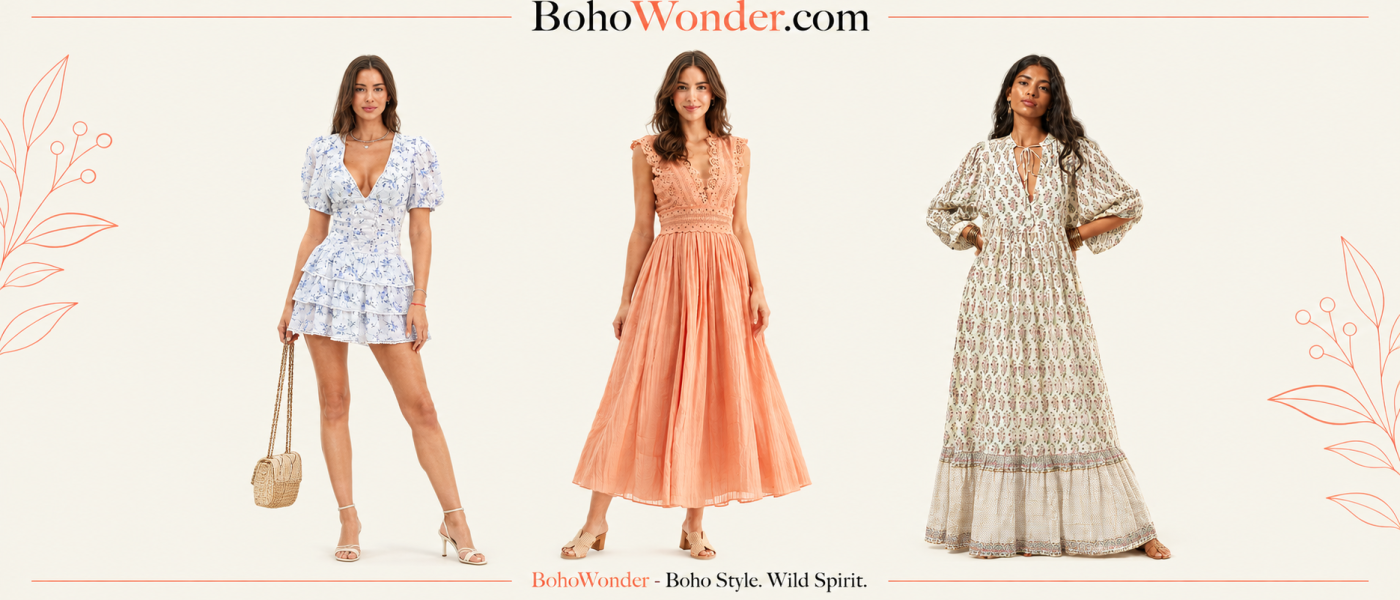
Choosing a boho dress is about more than finding a beautiful print or a romantic detail. The right length and silhouette can influence how a dress moves, where it sits on your body, how comfortable it feels throughout the day, and how easily it fits into your wardrobe. From playful mini dresses to flowing maxi styles, each length offers a different look and styling potential.
The best approach is to consider your height, preferred coverage, proportions and the occasions you dress for. Whether you love relaxed everyday outfits, feminine brunch looks, beach holidays or expressive festival fashion, understanding dress lengths and silhouettes makes it easier to find bohemian pieces that feel natural to wear and personal to your style.
Quick Answer
The right boho dress length depends on where you want the hem to fall, how much coverage you prefer and how you plan to style the outfit. Mini dresses offer a shorter, playful look, midi dresses provide versatile coverage between the knee and ankle, and maxi dresses create a longer silhouette with plenty of movement.
Your preferred silhouette is equally important. A-line dresses gently widen from the waist, empire-waist designs place the waistline higher, wrap dresses allow you to adjust the fit, and tiered styles introduce volume through layers of fabric. Rather than following rigid body-shape rules, use these design features to decide which proportions, levels of structure and kinds of movement you enjoy most.
Understanding Boho Dress Lengths
Dress length shapes the overall appearance of an outfit. It influences how much leg is visible, where the eye travels across the silhouette and which shoes or outer layers work naturally with the dress.
When choosing a length, consider your height, the garment’s actual measurements, the footwear you expect to wear and the setting. A dress that looks like a midi on one person may sit closer to the ankle on another, so the name of the style is only a starting point.
Mini Boho Dresses: Playful and Easy to Style
Mini boho dresses generally finish above the knee. They are a natural choice for warm-weather outfits, casual gatherings and occasions when you want a shorter hemline with a relaxed, expressive feel.
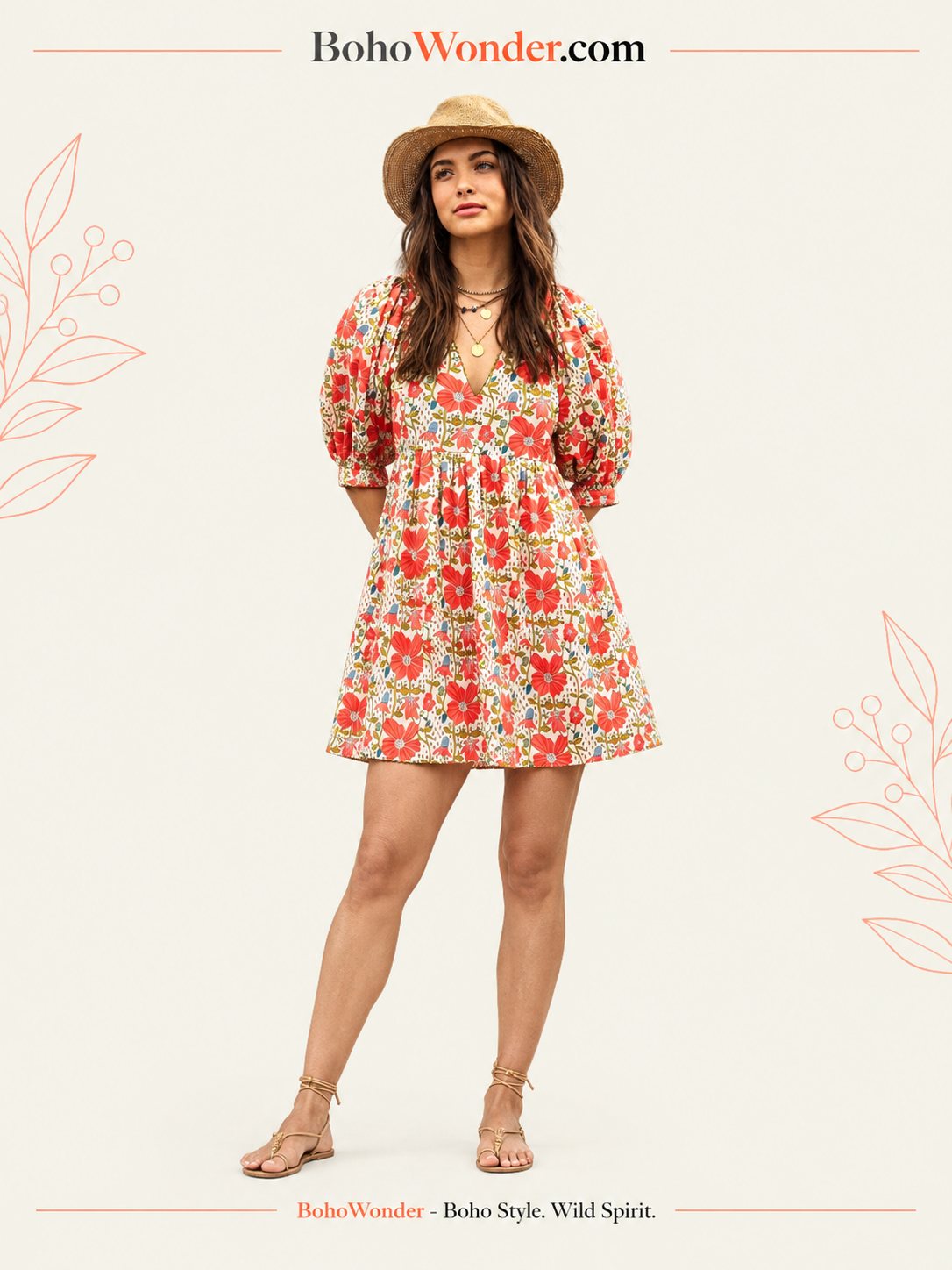
Common design details include puff sleeves, embroidered accents, lace trims, gathered waists, ruffles and all-over floral prints. Depending on the cut, a mini dress can feel romantic and delicate or more relaxed and festival-inspired.
How to choose a mini dress
-
Consider your preferred coverage. Check the garment’s length rather than relying only on the model’s appearance. A mini dress can sit differently depending on your height and torso proportions.
-
Think about movement. A gently flared or tiered skirt offers a different feel from a fitted design. Choose a cut that feels comfortable when walking, sitting and moving around.
-
Balance the proportions. Pair a detailed mini dress with simple sandals, understated jewellery or a relaxed woven bag. If the dress has voluminous sleeves or prominent ruffles, uncomplicated accessories can help the outfit feel cohesive.
-
Plan your layers. A cropped cardigan, lightweight jacket or relaxed overshirt can make a shorter dress easier to style across changing temperatures.
For petite shoppers, a mini dress can create a longer-looking leg line, particularly when its hemline and footwear work together. However, the best length is the one that provides the coverage and proportions you prefer, not a fixed rule based on height.
Mini dresses also transition between occasions. A floral design with flat sandals works for a daytime holiday outfit, while heeled sandals and more polished accessories can make the same dress suitable for an evening gathering.
Midi Boho Dresses: Versatile and Balanced
Midi boho dresses typically fall between the knee and ankle, often around mid-calf. They offer a middle ground between the openness of a mini dress and the extended coverage of a maxi.
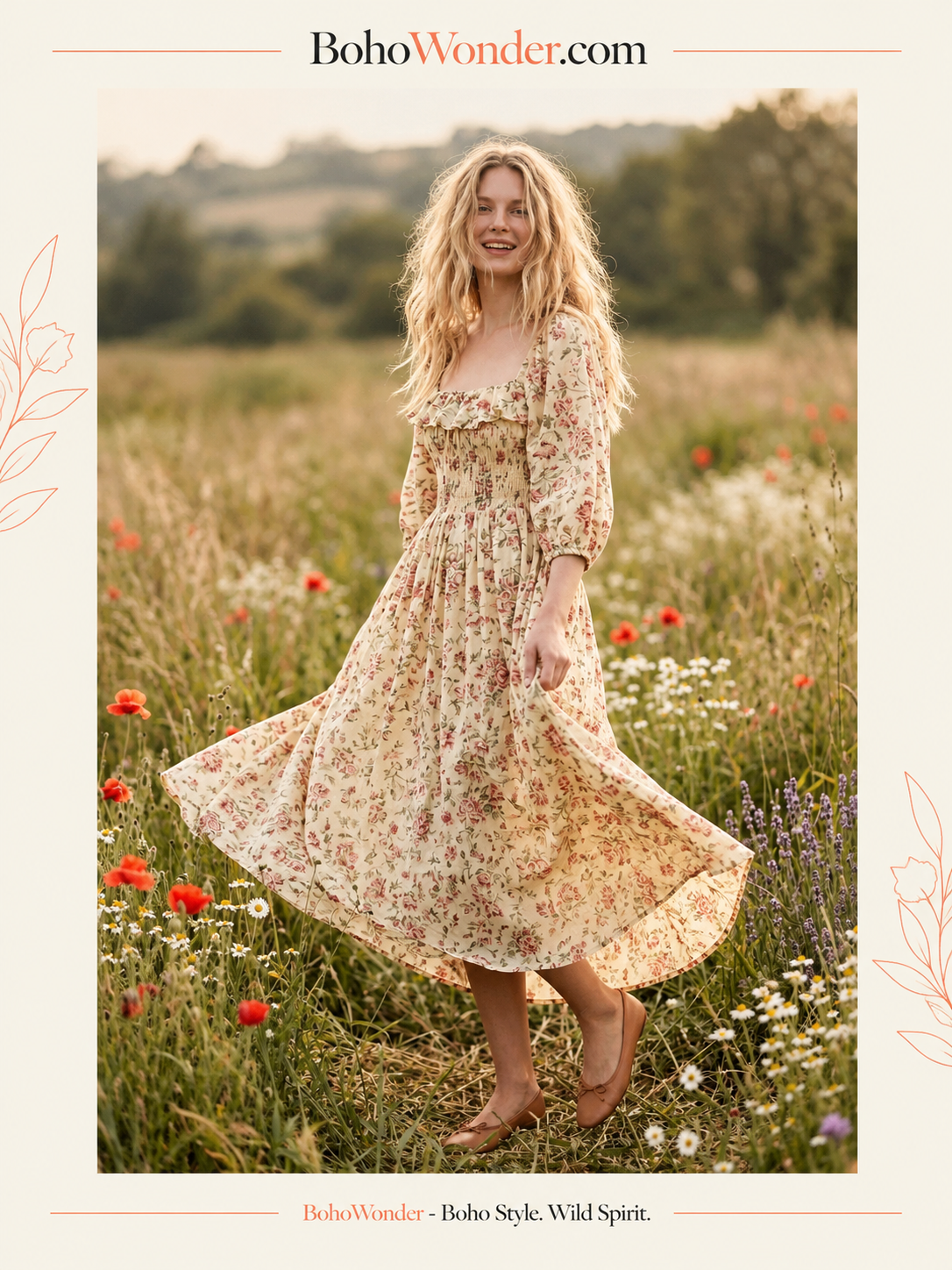
This length works across a wide range of styling preferences. A softly gathered midi can create a romantic daytime outfit, while a wrap-style design or a dress with a defined waist can feel more polished for dinners, celebrations and casual events.
Why choose a midi dress?
-
Flexible coverage: The hemline provides more coverage than a mini while allowing the ankles and footwear to remain visible.
-
Easy outfit building: Midi dresses pair well with flat sandals, ballet flats, ankle boots and heeled shoes, depending on the cut and occasion.
-
A range of silhouettes: A-line skirts, fitted bodices, wrap fronts and tiered designs all work well at midi length.
-
Useful across seasons: The length can be styled with a cardigan, jacket or boots when temperatures change.
Midi dresses can also be practical for petite shoppers who want a longer hemline without the full length of a maxi. Still, proportions matter. A midi that finishes at an awkward point for your preference can be styled differently with footwear or selected in another length.
For a balanced outfit, consider the relationship between the dress’s hemline, waist placement and footwear. A dress with a defined waist and a softly flared skirt creates a different outline from a loose, straight-cut midi. Neither is inherently better; the choice depends on whether you prefer a shaped or relaxed appearance.
If you enjoy romantic details, explore Boho Dresses to compare different dress lengths, prints and silhouettes before settling on a style.
Maxi Boho Dresses: Flowing and Expressive
Maxi boho dresses generally extend to the ankle or floor. Their longer lines and generous skirts are closely associated with the flowing, expressive side of bohemian fashion.
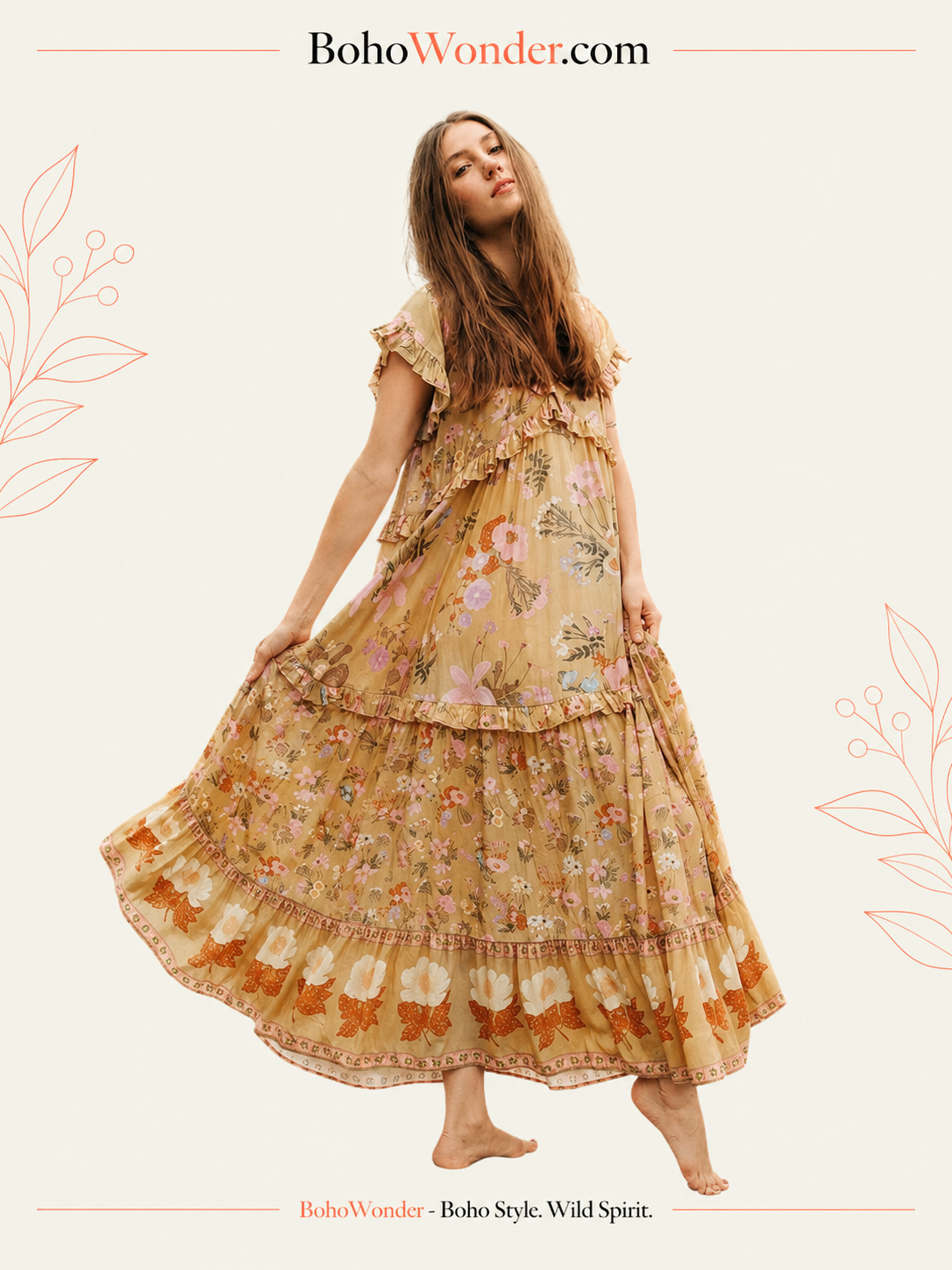
Depending on the design, a maxi can feature a fitted bodice, a high empire waist, a wrap front, a straight silhouette or several gathered tiers. These construction details affect how the dress hangs and how much volume it creates.
What to consider when choosing a maxi
-
Check the hemline with your intended shoes. A floor-length dress may sit differently with flat sandals than with wedges or heels.
-
Pay attention to skirt volume. A softly draped skirt creates a different effect from a heavily tiered or gathered design.
-
Consider the setting. An ankle-length dress may be convenient for sightseeing or everyday wear, while a longer hem can create a more dramatic effect for an evening event.
-
Think about movement and practical coverage. Check whether the skirt allows you to walk comfortably and whether its length suits stairs, uneven paths or outdoor settings.
Maxi dresses can work on people of different heights. Taller shoppers may appreciate the uninterrupted length, while petite shoppers can look for a shorter cut, consider alterations or choose footwear that provides the desired lift. A maxi dress does not need to reach the floor to look intentional.
For a relaxed daytime outfit, pair a flowing maxi with flat leather sandals and a woven bag. For a dinner or celebration, consider heeled sandals, delicate jewellery and a structured bag to introduce contrast.
If you prefer full-length styles, Boho Maxi Dresses offers a useful category to explore when comparing long hems, skirt shapes and styling possibilities.
Understanding Boho Dress Silhouettes
Length determines where a dress ends, but silhouette describes the overall shape of the garment. It is influenced by the bodice, waist placement, skirt construction and the way the fabric falls.
Two dresses can share the same hemline and still create very different outfits. A fitted-bodice maxi with a flared skirt feels different from a loose, straight-cut maxi, even when both reach the ankle.
Understanding the most common silhouettes helps you choose a dress based on the proportions and fit you enjoy.
A-Line Dresses: A Classic, Adaptable Shape
An A-line dress follows a relatively fitted upper body and gradually widens towards the hem. Its shape resembles the letter A, creating a clear transition from the bodice to the skirt without requiring a close fit throughout the garment.
This silhouette is a useful starting point if you prefer definition through the upper body and room through the skirt. It is often recommended for pear-shaped proportions because the skirt can skim the hips rather than following their contours closely.
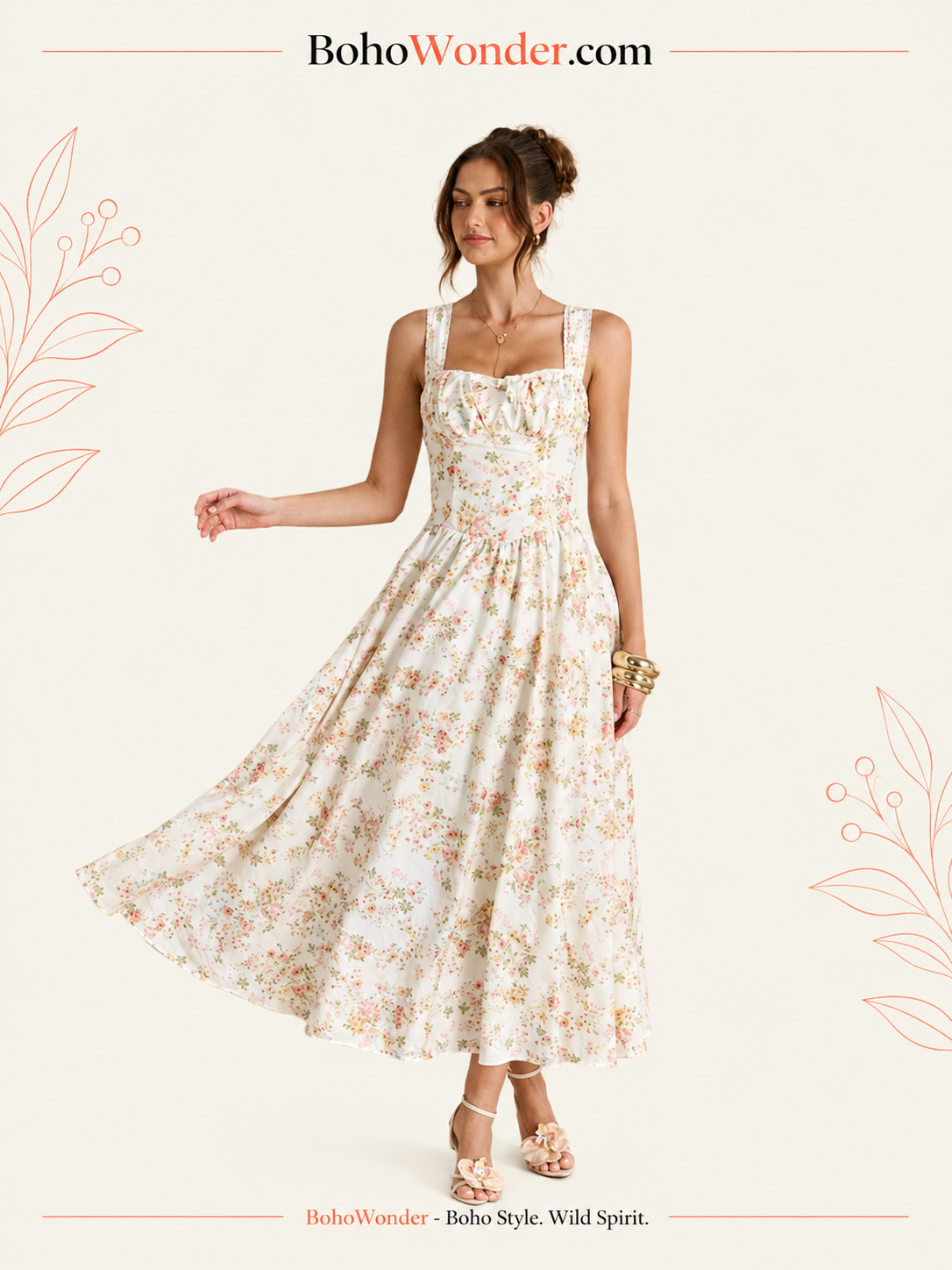
A-line boho dresses come in different lengths and levels of detail. A mini version can feel playful, a midi version offers versatile coverage, and a maxi version creates a flowing outline.
When shopping, look at where the skirt begins to widen. A dress that flares immediately below the bust creates a different shape from one that follows the waist before opening into the skirt. Choose the version that best matches your preferred proportions.
Empire-Waist Dresses: A Higher Waistline
An empire-waist dress has a waist seam or visual gathering positioned above the natural waist, usually just below the bust. The fabric then falls from that higher point, often creating a flowing skirt.
This design can appeal to anyone who prefers a relaxed fit around the middle or likes the look of a longer, uninterrupted skirt. It is frequently suggested for apple-shaped proportions, but it is not limited to one body type.
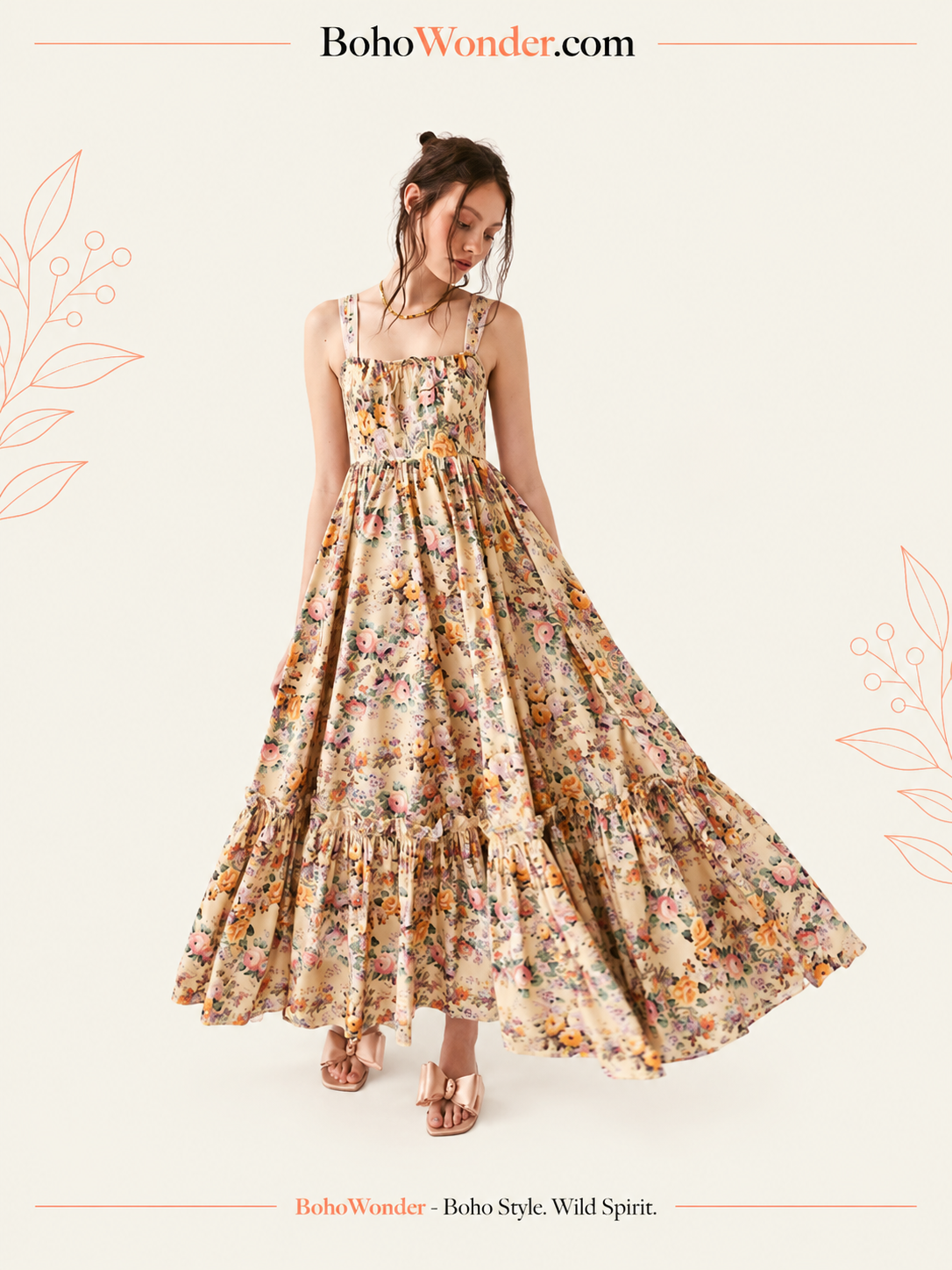
The effect depends on the construction. A softly gathered skirt creates volume, while a more streamlined design can look relatively understated. Neckline, sleeve shape and fabric drape also influence the overall result.
If you are considering an empire-waist dress, check where the seam falls on your body and whether the bodice provides the coverage you want. A waistline that sits comfortably is more important than following a prescribed measurement or body-shape category.
Wrap Dresses: Adjustable Definition
Wrap dresses feature overlapping front panels that fasten or tie around the body. Depending on their construction, they can allow some adjustment around the waist and create a V-shaped neckline.
This makes a wrap silhouette a useful option if you enjoy a defined waist without a rigidly structured bodice. The skirt may be straight, gently flared or full, so the overall appearance can range from understated to distinctly romantic.
When choosing a wrap dress, check how securely it closes, how much coverage the neckline provides and whether the skirt remains in place as you move. Some wrap designs have internal fastenings or additional ties, while others rely primarily on the outer tie. The specific garment details matter.
A wrap dress can be styled with flat sandals and a woven bag for daytime or with heeled shoes and simple jewellery for an evening occasion.
Fitted-Bodice Dresses: Definition Through Contrast
A fitted-bodice dress has a more defined upper section, often paired with a skirt that flares or falls away from the body. This contrast creates a recognisable waistline and allows the skirt to move independently.
For hourglass proportions, a fitted bodice can complement a naturally defined waist. It can also appeal to people with other body shapes who enjoy a more structured upper section.
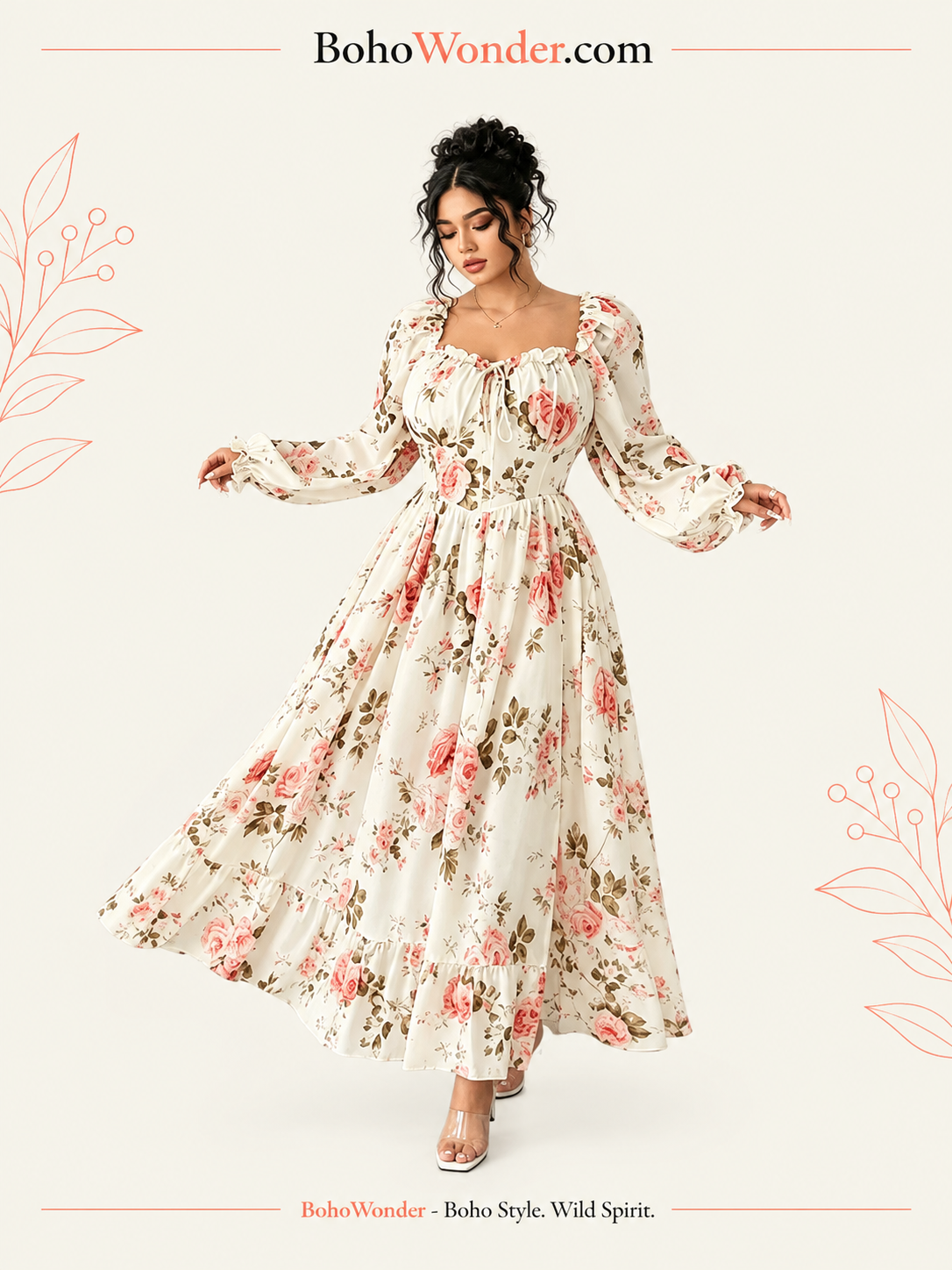
Fit is particularly important here. Check the bust, underarm area, waist seam and any fastening before choosing a size. A bodice should feel secure without restricting breathing or movement. If the skirt is full, consider how the volume balances the rest of the design.
For a contemporary bohemian look, a fitted bodice can be paired with a tiered skirt, delicate embroidery or a subtle floral pattern. Let one or two details stand out rather than adding accessories that compete with every feature.
Tiered Dresses: Texture and Movement
Tiered dresses are constructed with horizontal sections of fabric, often gathered to create fullness. The number, depth and placement of the tiers affect the final shape.
A tiered silhouette is a good option if you enjoy visible texture and movement. It can add dimension to a straight or rectangular outline, although it may also create substantial volume depending on the fabric and cut.
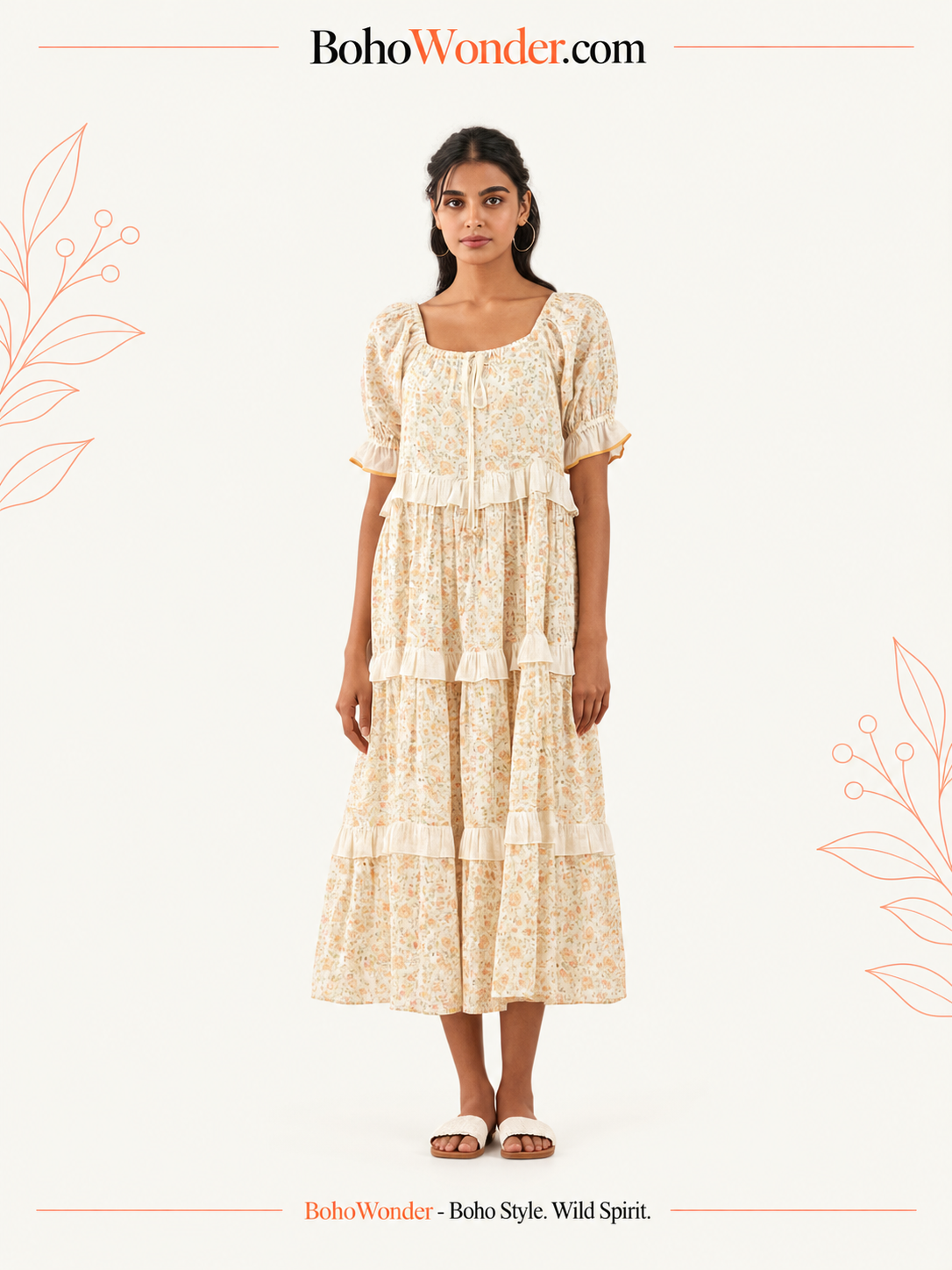
Before choosing a tiered dress, consider where the tiers begin and how much gathering each section contains. Tiers starting high on the body can create a different effect from those concentrated around the lower skirt. More tiers do not automatically mean a more flattering result.
To keep a tiered dress easy to style, balance its volume with simpler accessories. A defined waist, a clean neckline or a relatively understated shoe can give the outfit a clear focal point.
Straight and Relaxed Dresses: Effortless Structure
Straight and relaxed dresses fall more evenly from the shoulders, bust or waist rather than opening dramatically into an A-line skirt. They can feel understated and modern, particularly when the fabric, neckline or print provides the main visual interest.
This silhouette is worth considering if you prefer freedom through the waist and hips or want a dress that does not rely on a strongly defined waistline. It can also suit people who enjoy a more minimal interpretation of bohemian style.
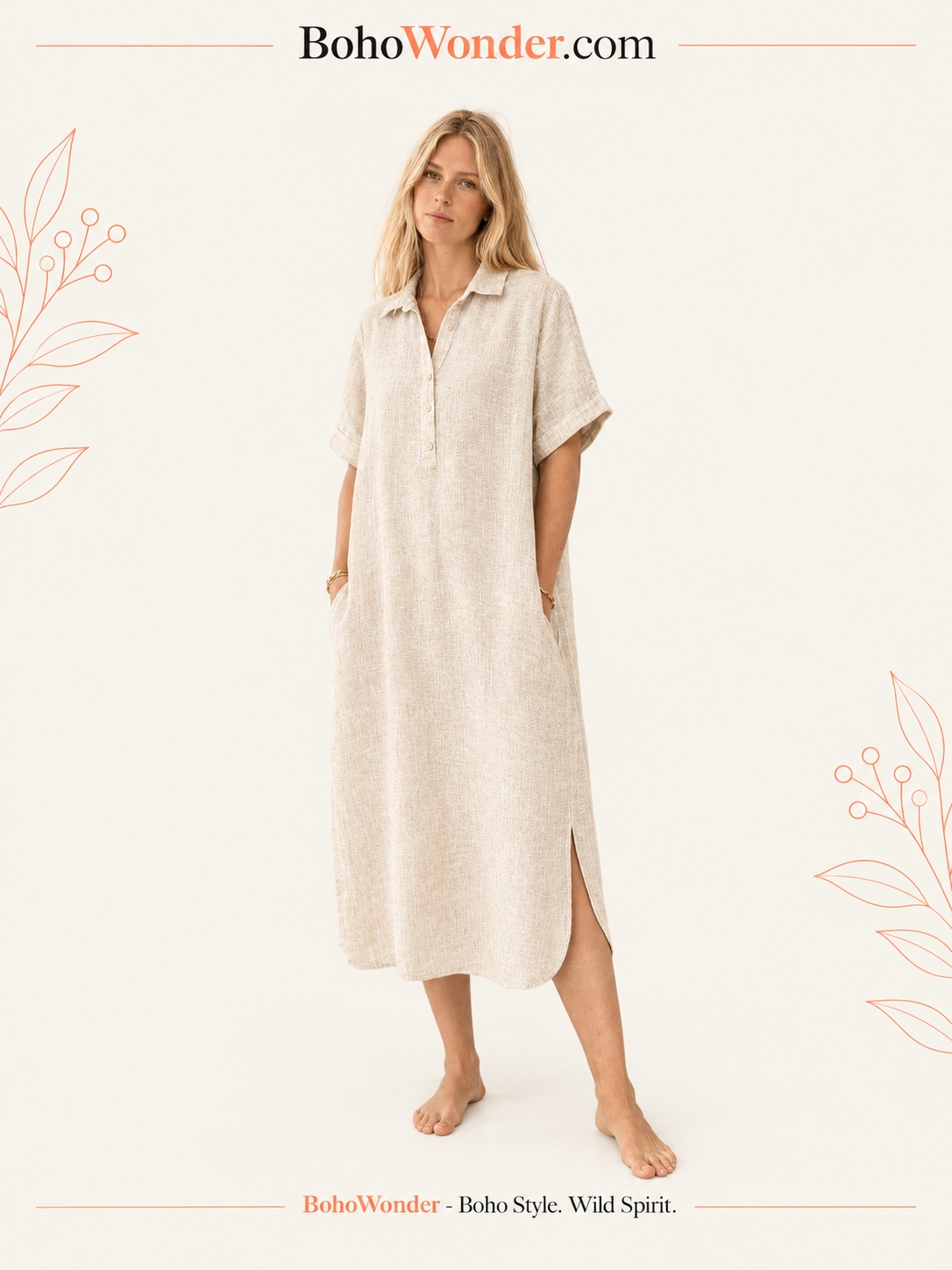
Pay attention to the shoulder seams, armholes and overall width. A relaxed dress should look intentional rather than simply oversized. If you want more shape, try adding a belt where the construction allows it, or choose a design with subtle gathering or a shaped neckline.
Mermaid and Fit-and-Flare Dresses: A More Defined Outline
Mermaid silhouettes are relatively fitted through the bodice and hips before flaring more dramatically lower down the skirt. Fit-and-flare designs also combine a closer upper section with a fuller skirt, but their flare may begin higher and feel less dramatic.
These styles can create a more sculpted outline than a loose boho dress. They are worth exploring if you enjoy definition through the waist or hips while still wanting movement around the lower skirt.
The distinction is practical as well as visual. A skirt that fits closely through the hips may limit stride length, depending on its construction. Check how easily you can walk, sit and climb stairs before deciding that a particular shape works for your lifestyle.
Mermaid and fit-and-flare designs are options rather than rules for any body type. Choose them because you enjoy the silhouette and feel comfortable in it.
How to Choose a Boho Dress for Your Body Shape
Body-shape guides can help you identify silhouettes to try, but they should never be treated as strict instructions. Bodies do not fit neatly into a handful of categories, and your proportions may combine features from several descriptions.
Use the following suggestions as a starting point. The aim is to understand how different cuts distribute volume and where they create definition, then decide which effects you want.
Pear-Shaped Proportions
Pear-shaped proportions are commonly described as having hips that are wider than the shoulders or upper body.
If you enjoy balancing the visual proportions of an outfit, consider:
-
A-line dresses that gently widen from the waist.
-
Bodices with interesting necklines, sleeves or embroidery.
-
Midi and maxi skirts that skim rather than closely follow the hips.
-
Wrap designs that create definition at the waist.
A dress with decorative sleeves or an open neckline can draw attention towards the upper half, while a simple A-line skirt provides contrast. You do not need to minimise the hips or create a particular shape; these are simply options for distributing visual detail.
Apple-Shaped Proportions
Apple-shaped proportions are often associated with more fullness around the middle relative to the hips. If you prefer a little more room through the waist, consider designs that provide a comfortable drape without requiring a close fit.
Empire-waist dresses, gently gathered styles and relaxed A-line silhouettes are useful starting points. Smocking or ruching may also be worth trying when it is incorporated into the area where you want flexibility or texture.
Check the garment’s construction carefully. Smocking can provide stretch in some designs, but not every gathered section is elasticated. Likewise, ruching may create texture without making the dress adjustable.
A V-neckline, a flowing skirt or a dress with vertical details can help create a visual line through the outfit. Choose the features you like rather than trying to conceal a particular part of your body.
Hourglass Proportions
Hourglass proportions are generally described as having a relatively defined waist with the bust and hips appearing more balanced.
If you enjoy highlighting your waist, try fitted-bodice dresses, wrap styles or designs with a clearly placed waist seam. A-line skirts and softer tiered skirts can both work, depending on how much volume you prefer.
A wrap dress can offer a more adjustable appearance, while a structured bodice may create a more defined outline. Consider the relationship between the neckline, waist and skirt rather than focusing on any one measurement.
You can also choose a loose silhouette if comfort and ease are more important to you. A body-shape category should expand your options, not narrow them.
Rectangle or Straight Proportions
Rectangle or straight proportions are often described as having less difference between the measurements of the bust, waist and hips. If you want a dress with more visible dimension, look at the construction rather than relying on a specific length.
Tiered skirts, gathered details, ruffles, textured panels and belted waists can introduce contrast and create the appearance of a more varied outline. A wrap dress can add waist definition, while a relaxed straight dress offers a cleaner, less structured look.
Consider where the volume sits. Full sleeves paired with a straight skirt create a different effect from a fitted bodice with a gathered lower half. Both can work well if they match your taste.
Inverted Triangle Proportions
Inverted triangle proportions are often described as having shoulders that appear wider than the hips. If you want to create more visual volume towards the lower half of a dress, an A-line skirt, a tiered maxi or a fit-and-flare design may appeal to you.
A relatively simple upper section paired with a fuller skirt creates contrast between the two areas. A V-neckline or open neckline can also change the overall impression of the bodice, depending on the cut.
Mermaid styles are another possibility if you enjoy a fitted shape through the hips with a pronounced flare lower down. However, the flare placement and skirt volume make a difference, so inspect the full silhouette rather than choosing by name alone.
If You Do Not Identify With One Body Shape
You do not need to label your body before finding a dress you love. Many shoppers have proportions that change across different parts of the body or do not match a conventional category.
Instead, ask yourself three practical questions:
-
Where do I prefer the dress to fit closely, if anywhere?
-
Where would I like more room or movement?
-
Which neckline, hemline and skirt shape make me feel most comfortable?
These questions lead to more useful shopping decisions than trying to fit your body into a single silhouette chart.
How Height and Proportions Affect Dress Length
Height can influence where a hemline falls, but it does not determine which dress lengths you can wear. Torso length, leg proportions, waist placement, skirt volume and footwear all affect the final appearance.
Choosing a Boho Dress for Petite Heights
If you are petite, begin by checking the garment’s actual length and where the waistline sits. A mini dress can create a shorter overall outline, while a midi dress can offer longer coverage without the additional fabric of a full-length skirt.
Useful options include:
-
Mini dresses: Consider these if you enjoy shorter hemlines and want a simple daytime outfit.
-
Midi dresses: Look for a hemline that falls where you prefer on the lower leg. A slightly shorter midi may work better than one that finishes at an uncomfortable point.
-
Maxi dresses: Check the length against your intended shoes. Alterations or a shorter cut may be useful if the hem drags on the ground.
A defined waist can help establish the dress’s proportions, but a relaxed silhouette can work just as well. Avoid assuming that every petite shopper needs a fitted bodice, a small print or a short hemline.
Choosing a Boho Dress for Taller Heights
Taller shoppers may find that some standard dress lengths sit higher on the leg than expected. Checking the garment measurements is particularly useful if you want a midi to finish mid-calf or a maxi to reach the ankle.
Longer dresses can create an uninterrupted line, while mini dresses offer a contrasting, shorter silhouette. Both are worth exploring.
If you prefer maxi styles, pay attention to the skirt’s shape and the placement of its tiers. A long dress with a narrow silhouette creates a different effect from a full, gathered skirt. Choose based on your preferred balance of volume, movement and coverage.
Dressing for Proportions Rather Than Height Alone
Two people of the same height can find that the same dress falls differently on them. Torso length, shoulder width and the position of the waist all influence how a garment sits.
For this reason, look beyond labels such as mini, midi and maxi. Review the product’s measurements, compare them with a dress you already own and consider where you want the hemline to finish.
How Necklines, Sleeves and Skirt Volume Change the Look
Length and silhouette are the main decisions, but smaller design details can make a noticeable difference to the overall outfit. The neckline, sleeves, waist placement and skirt volume determine how the dress balances from top to bottom.
Necklines
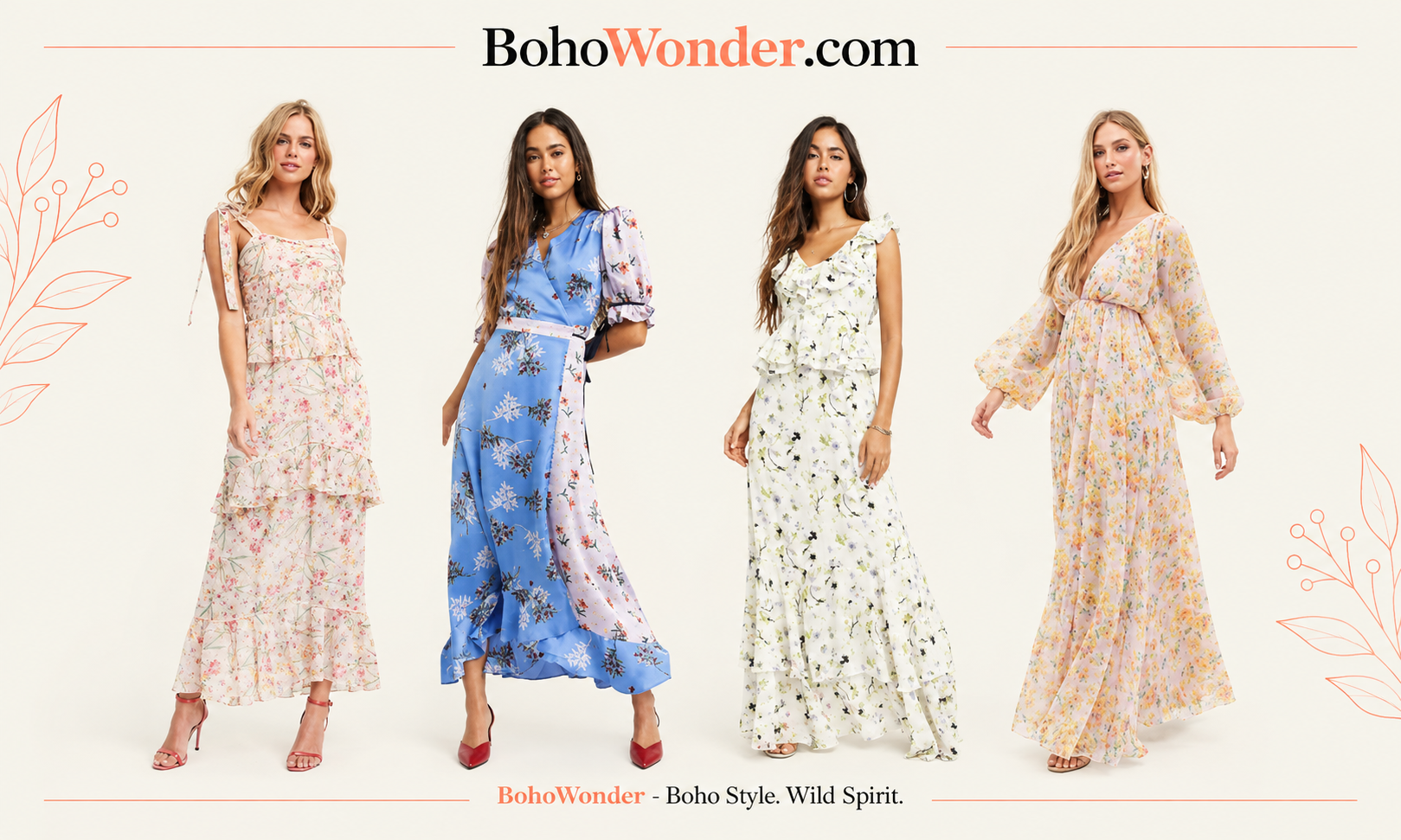
Different necklines create different visual effects and levels of coverage.
-
V-necklines create an angled line through the upper body.
-
Square necklines provide a defined, geometric frame.
-
Scoop necklines create a rounded opening that can feel relaxed and understated.
-
Sweetheart necklines introduce a curved shape through the bust.
-
High necklines offer more coverage and can balance decorative sleeves or a detailed skirt.
Consider the neckline alongside the dress’s other details. An embroidered bodice may work well with a simpler neckline, while a minimal dress can make a more distinctive neckline the focal point.
Sleeves
Sleeves influence both the visual proportions and practical feel of a dress.
Puff sleeves introduce volume around the shoulders and upper arms. Bell sleeves widen towards the cuff, while flutter sleeves create a softer outline. Long, relatively straight sleeves provide a cleaner appearance.
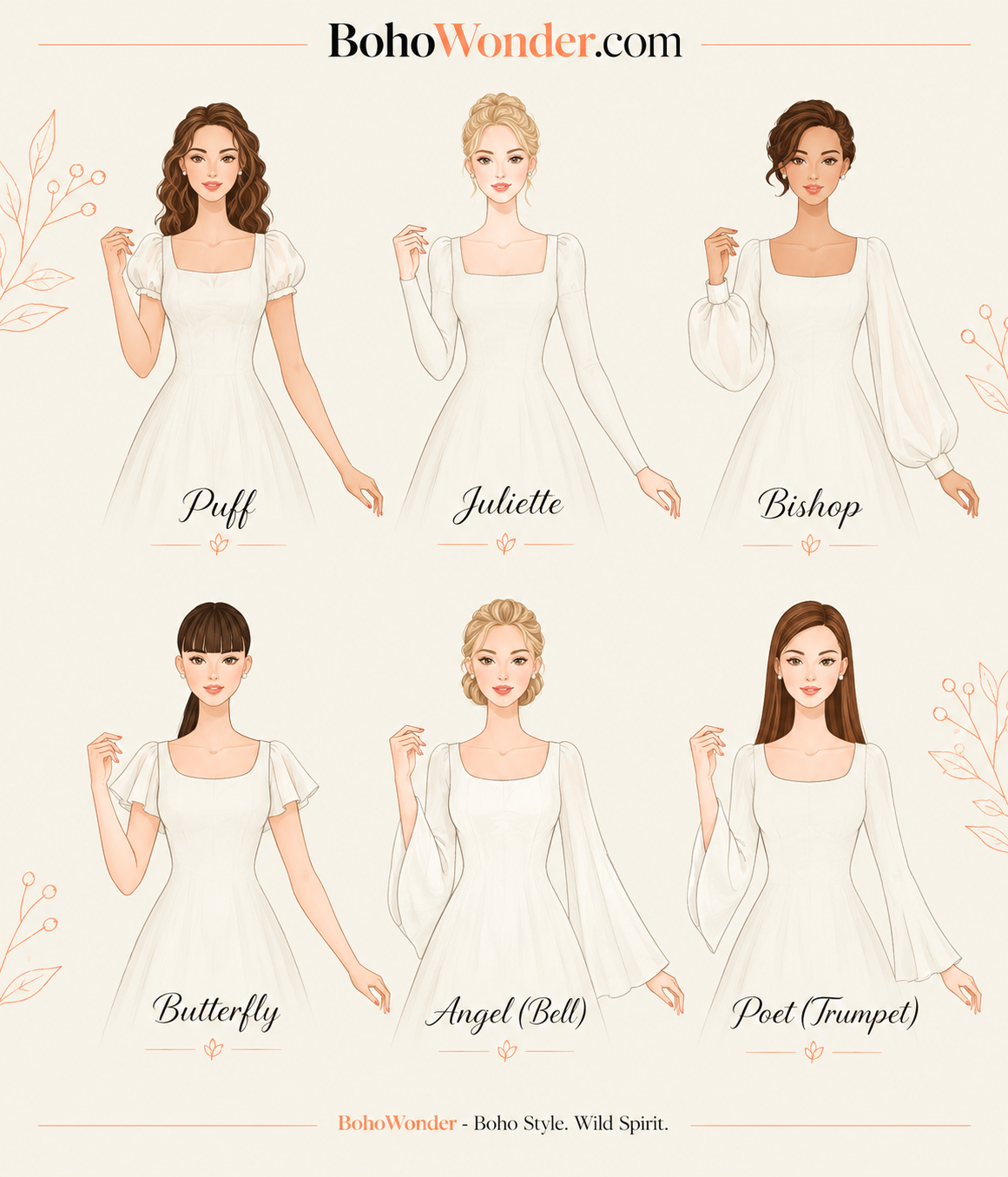
If a dress already has a full tiered skirt, simpler sleeves can help balance its volume. Conversely, a straight-cut dress may benefit from more expressive sleeves if you want additional texture.
Think about your intended setting, too. Sleeves that feel appropriate for a garden gathering may be less convenient for a hot afternoon outdoors. The best choice depends on the weather, occasion and how you prefer to move.
Skirt Volume
Skirt volume is one of the most useful features to compare when choosing a silhouette.
A gently flared A-line skirt creates a relatively smooth outline. A gathered skirt adds fullness where the fabric is joined, while a tiered skirt introduces volume through separate sections. A straight skirt offers a cleaner line with less flare.
More volume can create movement and texture, but it can also make the dress feel visually prominent. If you prefer an understated outfit, look for a simpler skirt and allow the print, neckline or accessories to provide interest.
If you enjoy dramatic movement, a fuller maxi skirt may be more appealing. There is no need to choose the most elaborate option simply because bohemian fashion is often associated with flowing layers.
How to Choose or Apply This in Real Life
When several dresses appeal to you, use a simple decision process to narrow your options. This makes it easier to compare garments without getting distracted by print, colour or styling in a product photograph.
Step 1: Decide Where You Want the Hemline to Fall
Start with the length you feel most comfortable wearing.
| Your preference | Length to explore | What to check |
|---|---|---|
| Short and playful | Mini | Sitting comfort and hemline coverage |
| Versatile, with more coverage | Midi | Where the hem finishes on your lower leg |
| Long and flowing | Maxi | Length with your intended footwear |
These are starting points rather than strict rules. A dress can be shorter or longer than its category suggests, so measurements remain important.
Step 2: Choose Your Preferred Shape
Next, decide how you want the dress to sit through the bodice, waist and skirt.
-
For a gently widening skirt, try an A-line silhouette.
-
For a higher waistline and fabric falling from below the bust, try an empire-waist design.
-
For adjustable definition around the waist, explore wrap styles.
-
For added texture and fullness, consider tiered or gathered skirts.
-
For a cleaner, more relaxed outline, try a straight-cut dress.
If you are unsure, compare two dresses of the same length with different silhouettes. This helps you understand whether the hemline or the shape has the greater influence on your preference.
Step 3: Check the Garment Measurements
Product photographs show how a dress looks on a particular model, but they cannot tell you exactly how it will fit your body.
Before buying, review the available measurements and size chart. Pay attention to:
-
Bust and waist measurements.
-
Shoulder width and sleeve length, where provided.
-
Total dress length.
-
Hip measurements for closer-fitting designs.
-
Any available information about stretch, lining or adjustable details.
Do not assume that a US size and a UK size with the same number are equivalent. Use the applicable size chart and the product’s own measurements when comparing options.
If you already own a dress with a similar shape, measure it while laid flat and compare the results with the new garment’s size information. Make sure you understand whether the listed measurements refer to the garment itself or to body measurements.
Step 4: Think About Fabric and Construction
The same silhouette can look different depending on its fabric and construction. A gathered skirt made from a fabric that holds its shape may appear fuller than one made from a fabric that drapes more closely.
Look for confirmed product information about the material, lining and construction. Do not assume that every boho dress is made from cotton, linen or another natural fibre, or that every flowing dress is lightweight or breathable.
If opacity matters to you, check whether the dress is lined and review any transparency information provided. If you prefer flexibility at the waist, look for verified details about elasticated sections, smocking or adjustable ties.
Step 5: Match the Dress to Your Lifestyle
Consider where you are most likely to wear the dress. A beautiful garment is more useful when it works with your actual routine.
For everyday outfits, you may prefer a midi or mini dress that pairs easily with shoes you already own. For a holiday, a flowing maxi may appeal to you, provided its length works for walking and travel. For an event, the neckline, sleeve shape and overall level of detail may matter as much as the hemline.
If you plan to wear the dress in several settings, choose a silhouette that can be styled in more than one way. A relatively simple dress can often be adapted with a change of footwear, outer layer and accessories.
Styling Boho Dresses for Different Occasions
Once you have chosen a length and silhouette, styling helps bring the whole outfit together. The goal is to complement the dress rather than add so many details that its shape and character become difficult to appreciate.
Everyday Wear
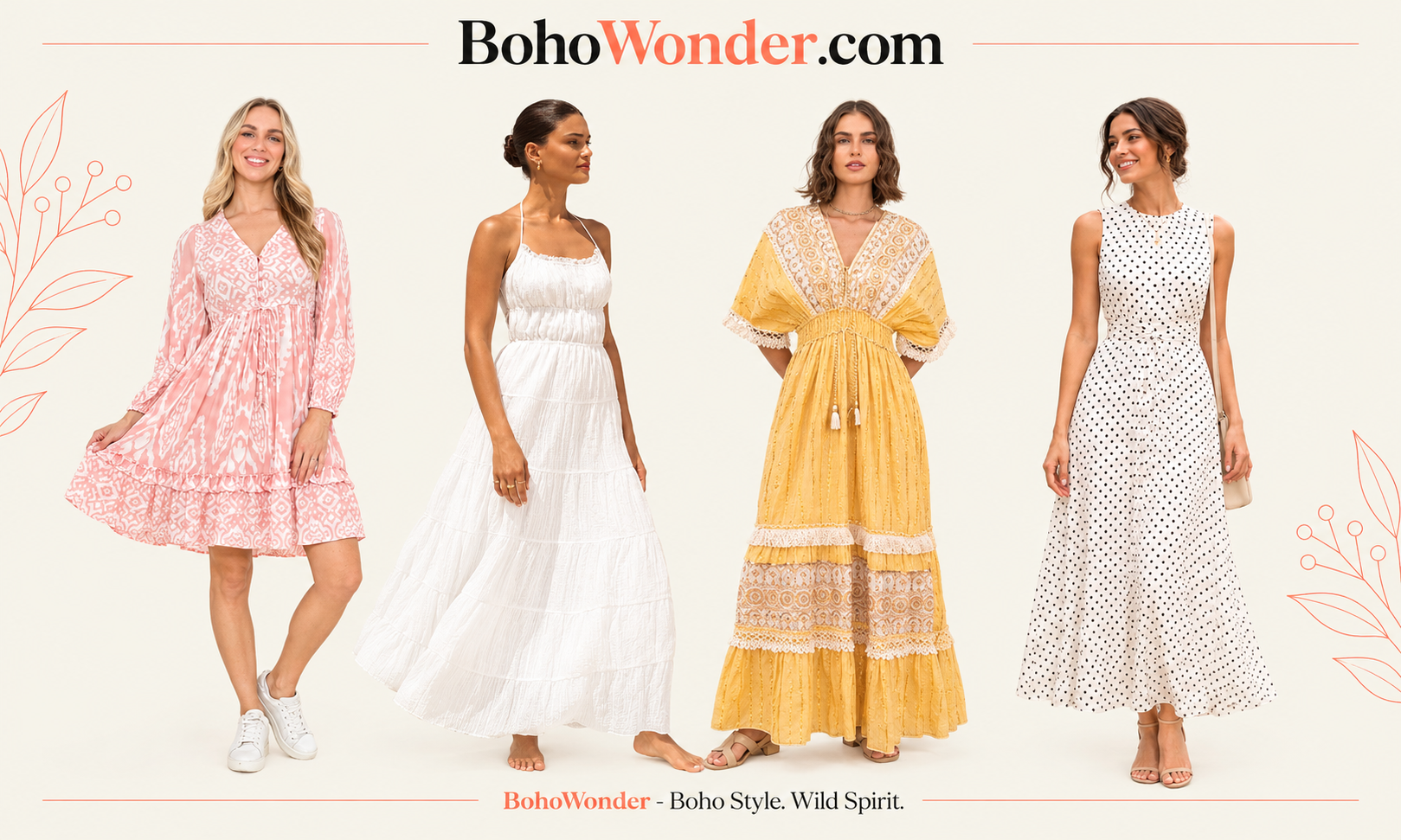
For a casual day, start with a mini or midi dress and comfortable flat sandals, trainers or simple ballet flats. A woven bag or small crossbody bag adds texture without overwhelming the outfit.
If your dress features a bold floral print, ruffled sleeves or a tiered skirt, keep jewellery relatively simple. If the dress has a clean silhouette and a muted colour, you can introduce interest through a textured bag or layered necklaces.
A cardigan or relaxed jacket can add another layer when the weather changes. Choose one that works with the dress’s volume so that the outfit remains comfortable.
Beach Holidays and Resort Dressing
For a beach holiday, consider how easily the dress works with the footwear and accessories you intend to pack. Midi and maxi dresses can create a relaxed resort look, while a mini dress may be more convenient for a casual daytime outfit.
Pair a flowing dress with flat sandals, a woven tote and understated jewellery. If the neckline or sleeves already provide visual interest, avoid adding too many competing accessories.
Consider practical details before travelling. Check the garment’s care instructions, lining and opacity, especially if you plan to wear it in bright sunlight. A beach-inspired outfit does not automatically mean the dress is suitable as swimwear or a cover-up.
For more occasion-specific inspiration, a related article on Boho Beach Dresses can explore holiday styling without taking the focus away from choosing the right length and silhouette.
Brunch and Casual Gatherings
A midi A-line dress or a mini dress with romantic details can work well for brunch, informal celebrations and relaxed social occasions.
Choose accessories according to the level of formality. Flat sandals and a woven bag create an easy daytime look, while heeled sandals and a more structured bag can make the same dress feel more polished.
A dress with a defined waist can provide a clear shape, while a relaxed straight silhouette may suit a more understated aesthetic. Both can work for casual gatherings when the shoes and accessories complement the overall design.
Festivals and Outdoor Events
Bohemian fashion is often associated with expressive prints, flowing layers and distinctive accessories, making it a natural option for festivals and outdoor events.
A mini dress can offer freedom of movement, while a midi or maxi provides a different balance of coverage and visual drama. Consider the ground conditions and how much walking you expect to do before choosing shoes.
A crossbody bag, comfortable footwear and a light outer layer can be more practical than multiple decorative accessories. If the dress has prominent ruffles, embroidery or a striking print, allow those details to lead the outfit.
Dinners and Special Occasions
For a dinner or celebration, a fitted-bodice midi, a wrap dress or a full-length maxi can create a more considered appearance.
Choose the silhouette first, then refine the outfit with shoes and jewellery. A defined waist and flowing skirt can feel romantic, while a straighter dress with a distinctive neckline can feel more minimal and contemporary.
If you are dressing for a specific event, consider its dress code rather than assuming that every boho dress is appropriate for every occasion. Length, neckline, coverage and overall formality all contribute to whether a garment suits the setting.
Common Mistakes to Avoid When Choosing a Boho Dress
A few simple checks can help you avoid buying a dress that looks appealing online but does not suit your preferences once it arrives.
Choosing by Length Label Alone
A midi dress is not guaranteed to finish at mid-calf, and a maxi dress does not always reach the floor. Different brands and garment cuts use different proportions.
Check the actual length, consider your height and compare the measurement with a dress you already own. This is especially useful when shopping online.
Assuming One Silhouette Suits Everyone in a Body Category
Body-shape recommendations are helpful for discovering styles, but they cannot account for every personal preference or proportion.
An A-line dress may be a useful starting point for someone who wants room through the hips, but that does not mean it is the only suitable option. If you prefer a straight or fitted silhouette, explore it.
Ignoring the Bodice and Waist Placement
Two dresses with the same skirt shape can look very different because of their bodices. A high empire waist, a natural waist seam and a loose bodice each create a different outline.
Check where the waistline sits and how the upper section fits before deciding whether the dress has the proportions you want.
Overlooking Footwear
Shoes can affect both the appearance and practicality of a dress. A maxi that works with wedges may drag when worn with flat sandals, while a midi may reveal more or less of the ankle depending on the shoe.
When possible, consider the footwear you are most likely to wear with the dress before choosing its length.
Buying Without Checking Construction Details
Terms such as smocked, tiered and wrap-style describe design features, but they do not guarantee a particular level of stretch, coverage or adjustability.
Read the product description and check the measurements. If lining, opacity or fastening details are important to you, look for specific confirmation rather than relying on the product photograph.
Common Questions
What Is the Most Flattering Length for a Boho Dress?
There is no single length that works best for everyone. Mini dresses offer a shorter silhouette, midi dresses provide versatile coverage, and maxi dresses create a longer line. Your height, proportions, preferred coverage and footwear can all influence which length you enjoy wearing most.
Are Midi Boho Dresses Suitable for Petite Women?
Yes. Midi dresses can work well for petite shoppers, particularly when the hemline and waist placement suit their proportions. Check the actual garment length rather than relying on the category name, as some midi dresses may fall closer to the ankle on a shorter frame.
Can Tall Women Wear Mini Boho Dresses?
Absolutely. Mini dresses offer a playful silhouette for people of different heights. If you are tall, check the garment’s measurements and preferred level of coverage to ensure the hemline feels comfortable when standing, sitting and moving.
Which Boho Dress Silhouette Works Well for Pear-Shaped Proportions?
An A-line silhouette is a useful option because its skirt gradually widens from the waist and can skim the hips. You can also explore wrap dresses, fitted bodices and different skirt lengths. The best choice depends on whether you prefer a defined waist, a relaxed fit or more volume through the skirt.
BohoWonder Edit
Finding a boho dress that feels right starts with understanding the details that matter most to you. You might prefer the playful proportions of a mini, the versatility of a midi or the movement of a maxi. You may also gravitate towards a gently flared A-line skirt, a defined wrap waist or a relaxed silhouette with gathered details.
Explore the Boho Dresses collection to compare lengths, shapes and design details that suit your personal style. If you already know that you prefer a longer hemline, browse Boho Maxi Dresses for full-length options.
As you compare styles, keep your preferred coverage, garment measurements and intended occasions in mind. The right dress is not necessarily the one with the most elaborate details or the silhouette recommended for a particular body type. It is the one that fits your preferences and works naturally with the rest of your wardrobe.
Conclusion
Choosing the right boho dress length and silhouette becomes easier when you consider the two decisions separately. Start with the hemline you enjoy wearing, then compare silhouettes to find the balance of definition, volume and movement that feels right for you.
Mini, midi and maxi dresses each offer different styling possibilities, while A-line, empire-waist, wrap, fitted-bodice, tiered and straight silhouettes provide a range of shapes to explore. Height and body-shape guides can help you narrow the options, but they should remain flexible suggestions rather than strict rules.
Before buying, check the garment measurements, waist placement, construction details and intended footwear. With those practical details in mind, you can build a boho wardrobe that feels expressive, comfortable and genuinely personal.


Pingback: Boho Mini Dresses and Sundresses: A Shopping Guide