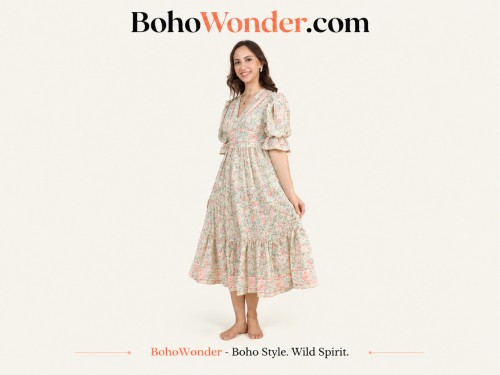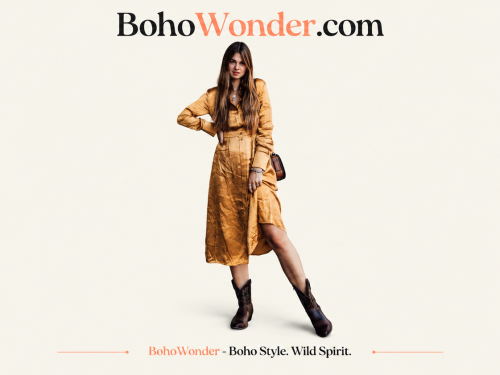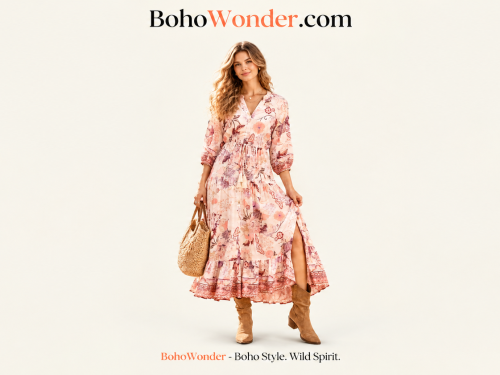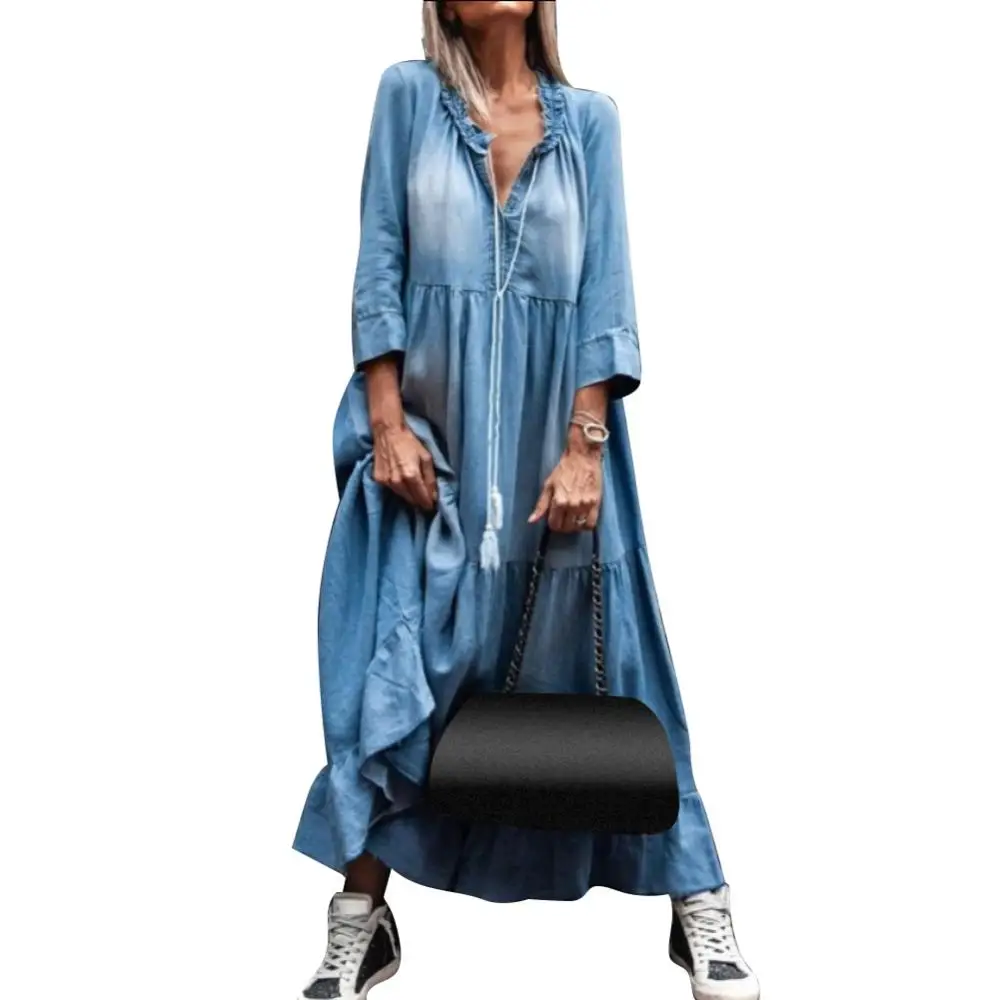
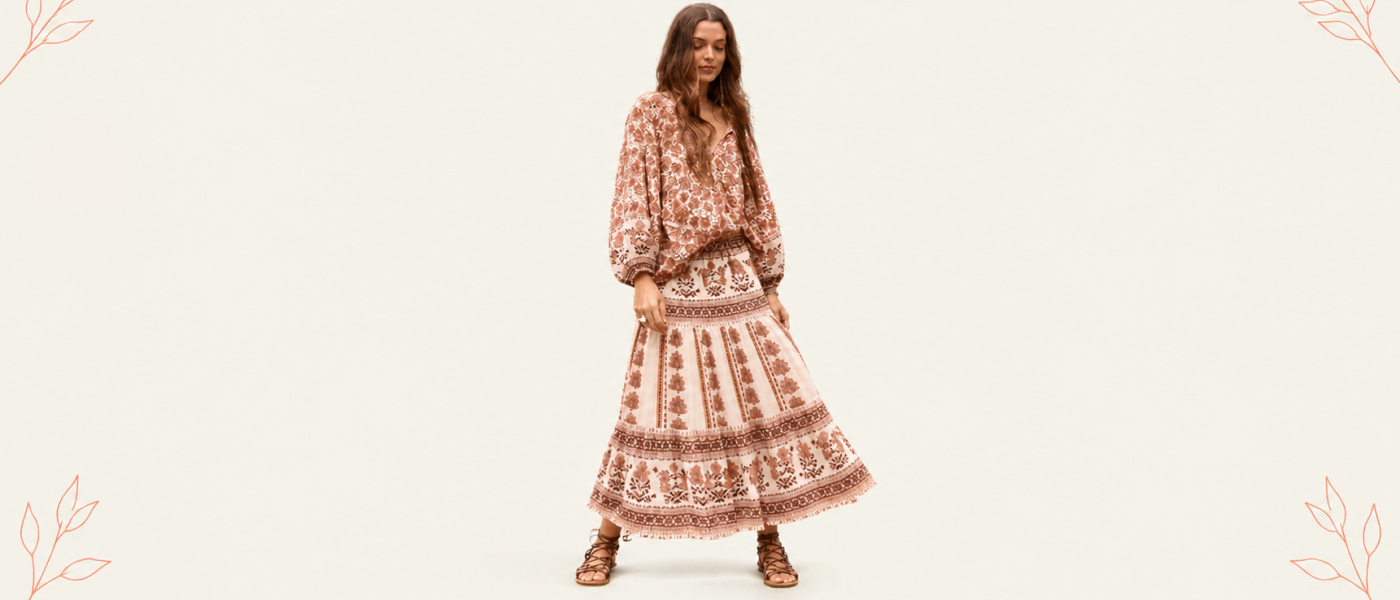
Boho style is often recognised at a glance, but understanding why an outfit feels genuinely bohemian is a little more nuanced. A flowing dress alone does not necessarily create a boho look, just as a floral print or woven accessory does not automatically define an outfit. The distinctive character comes from how several visual elements work together.
Among the most important elements of boho style are boho colour, print, texture and movement. Colour establishes the mood, print introduces personality, texture creates depth, and movement gives the outfit a relaxed, free-spirited quality. These elements can appear separately, but they become especially effective when balanced rather than simply piled together.
For modern boho dressing, there is also no requirement to follow one rigid formula. You can create an earthy neutral outfit with subtle texture, a romantic floral look with flowing movement, or a more expressive combination of colour and pattern. Understanding the role of each element gives you more freedom to develop a bohemian wardrobe that feels personal rather than costume-like.
Quick Answer
The four key elements of boho style are colour, print, texture and movement.
- Colour creates the foundation, often through warm neutrals, earthy shades and rich accents.
- Print adds visual personality through florals, paisley-inspired designs, geometric motifs and other expressive patterns.
- Texture creates depth through details such as crochet, lace, woven surfaces and tactile fabrics.
- Movement gives boho clothing its relaxed character through flowing silhouettes, draped layers, tiered shapes and softly moving details.
The four elements do not need to appear equally in every outfit. In fact, a more considered approach is often to choose one dominant element and allow the others to support it.
For example, a printed maxi dress already combines colour, print and movement. Adding a heavily patterned bag, bold jewellery and several textured layers may make the outfit feel unnecessarily busy. A simpler woven accessory and understated jewellery can allow the dress to remain the focal point.
The same principle works in the opposite direction. If you are wearing a simple neutral dress, texture, accessories and movement can give the outfit more visual interest without requiring a bold print.
Why Colour, Print, Texture and Movement Matter in Boho Style
Bohemian fashion is often associated with individuality, relaxed silhouettes and expressive styling. Rather than depending on a single defining garment, it creates character through combinations.
This is why two outfits can both be considered boho while looking completely different. One might use warm beige, crochet and a flowing silhouette for a quiet, earthy interpretation. Another might combine vivid colour, floral print, layered textures and dramatic sleeves for a more expressive look.
The difference comes from the balance of visual elements.
Colour Establishes the Mood
Colour is usually the first thing the eye notices. It can make an outfit feel earthy, romantic, vibrant, understated or dramatic before the details are even considered.
Warm neutrals tend to create a grounded foundation, while deeper or brighter shades introduce stronger personality.
Print Creates a Visual Story
Print breaks up solid areas and gives an outfit a more expressive quality. Floral, paisley-inspired, geometric and botanical patterns can all contribute to a bohemian aesthetic.
Print also creates opportunities for colour repetition. A secondary colour within a floral pattern can be picked up in shoes, jewellery or a bag to make the outfit feel more connected.
Texture Adds Dimension
Texture gives an outfit something to look at beyond colour and pattern. Crochet, lace, woven details, velvet, macramé-inspired elements and other tactile surfaces can make even a simple outfit feel more considered.
Texture is particularly useful when you prefer solid colours but still want visual depth.
Movement Keeps the Look Relaxed
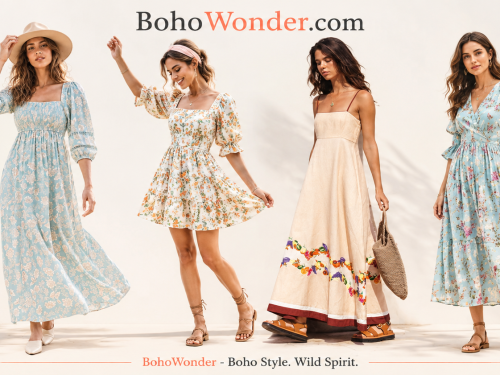
Movement gives boho dressing its sense of ease. Flowing skirts, maxi silhouettes, billowing sleeves, tiered details and softly draped layers can create visual movement even when the rest of the outfit is relatively simple.
Together, these four elements create the visual language that makes boho style feel expressive without needing to follow strict rules.
Boho Colour: Build the Foundation First
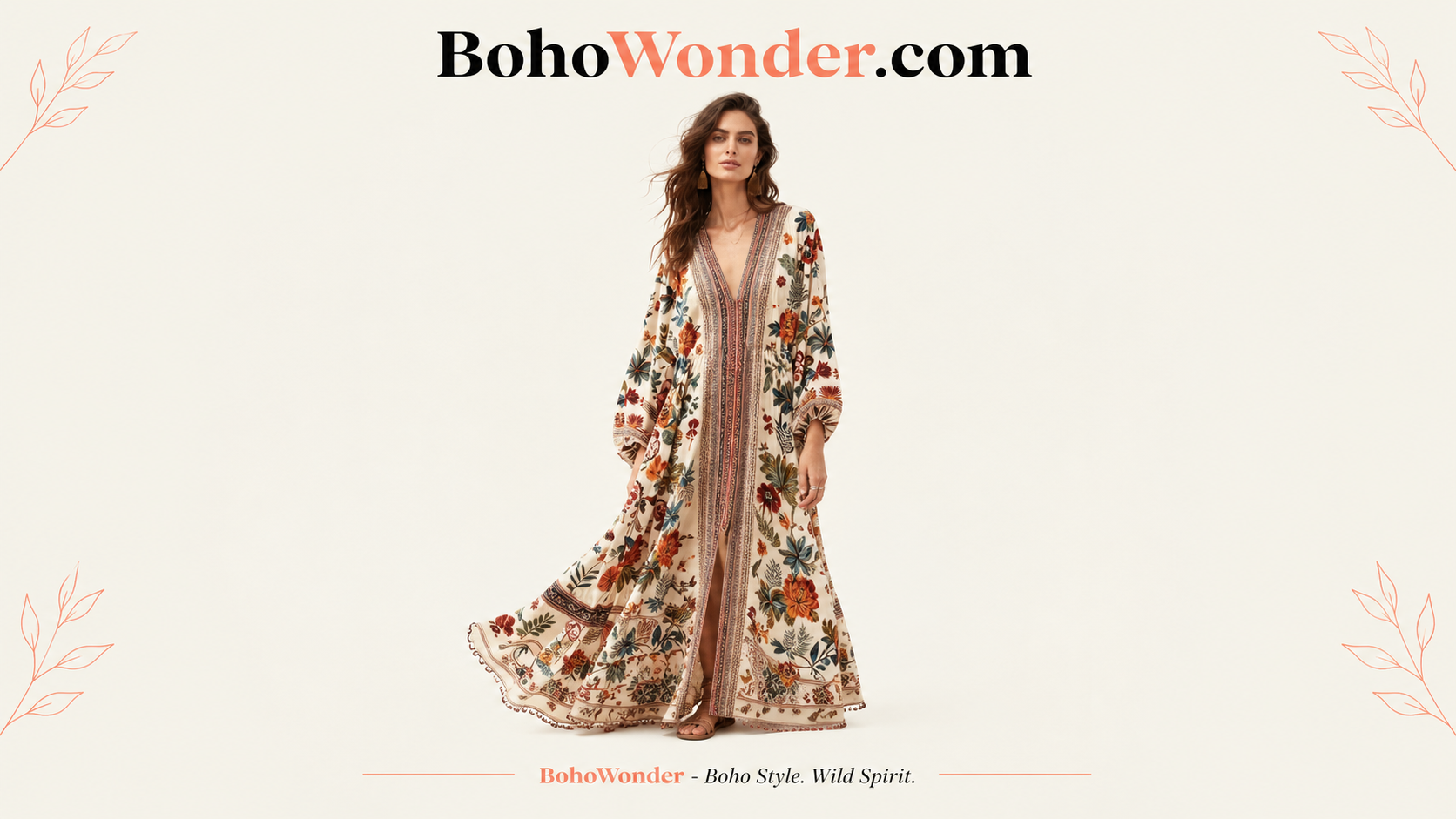
Colour is one of the easiest places to begin when developing a bohemian wardrobe. The classic approach often starts with warm, nature-inspired shades, but modern boho dressing allows plenty of room for variation.
Warm Neutrals Create an Earthy Base
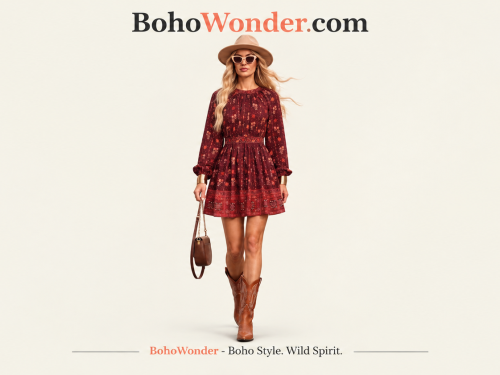
Terracotta, warm beige, camel and olive green are useful foundation colours for boho outfits.
These shades work particularly well because they can be combined without creating excessive contrast. A camel layer over a warm beige dress, for example, creates a soft tonal outfit. Olive accessories can introduce a slightly deeper contrast without overpowering the overall look.
Warm neutrals are also useful when you want your outfit to feel bohemian without relying on obvious prints or decorative details.
Consider combinations such as:
- Warm beige with camel
- Terracotta with cream
- Olive with warm brown
- Camel with muted rust
- Beige with olive green
The goal is not to create an outfit where every item is the same shade. Slight differences in warmth and depth can make a neutral palette more interesting.
Rich Colours Add Personality
Once you have established a neutral foundation, richer shades can be introduced as accents.
Burnt orange, mustard yellow, deep teal and burgundy can all add depth to an otherwise understated outfit. These colours can appear in a dress, cardigan, scarf, bag, shoes or jewellery.
If you are unsure how much colour to use, start with one strong accent.
For example, a warm beige dress can be paired with a deep burgundy bag. An olive outfit can be complemented by a burnt-orange accessory. A neutral printed dress can pick up one of its deeper colours through jewellery or footwear.
You Do Not Need to Avoid Bright Colours
A common misconception is that boho style must always be muted. Earthy colours are strongly associated with traditional bohemian palettes, but colour can be much more expressive.
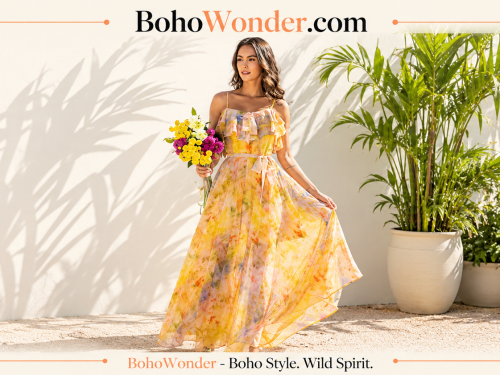
A maximalist interpretation can include richer pinks, purples and other saturated shades. The important consideration is not whether a colour is technically “boho”, but whether the complete combination creates the relaxed and expressive character you want.
If several vivid colours are used together, look for a connecting element. This might be a repeated colour, similar warmth or a shared pattern.
Try a Dominant Colour and Supporting Shades
One of the simplest ways to make colour feel intentional is to select one dominant shade and use one or two supporting colours.
For example:
Dominant: Terracotta
Supporting: Cream and camel
Or:
Dominant: Deep teal
Supporting: Warm beige and tan
This approach is especially useful when your outfit already contains texture or print. It prevents the colour palette from competing with other strong elements.
Boho Print: Add Personality Without Losing Balance
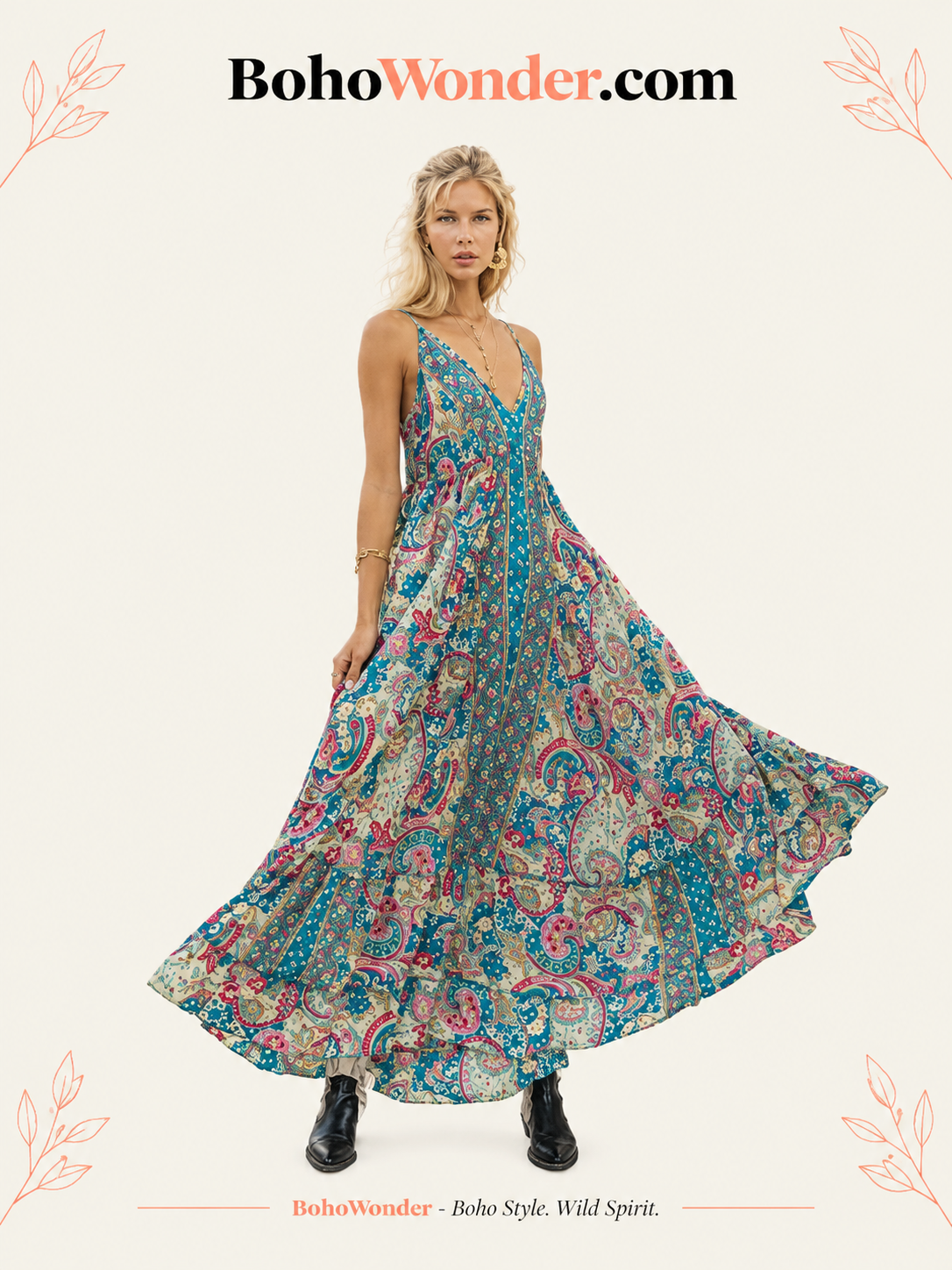
Print is one of the most expressive aspects of bohemian fashion. It can make a simple silhouette feel distinctive and can bring several colours together within one garment.
However, print does not need to mean complicated. A single well-chosen pattern can provide enough visual interest for an entire outfit.
Florals Bring a Romantic Quality
Floral prints are closely associated with romantic and feminine interpretations of boho style.
Large-scale flowers can create a dramatic focal point, while smaller repeating florals tend to feel softer and more delicate. Botanical motifs can offer a slightly more natural interpretation.
A floral maxi dress, for example, may already provide enough print and colour to define the outfit. In that case, accessories can remain relatively simple.
Paisley-Inspired Prints Create an Eclectic Mood
Paisley-inspired patterns can contribute to the collected, expressive character often associated with bohemian styling.
Because these patterns may contain several colours, they can also provide a useful starting point for the rest of the outfit. Choose one secondary shade from the print for an accessory rather than introducing an entirely unrelated colour.
Geometric and Repeating Patterns Add Contrast
Geometric patterns can give boho outfits a more structured visual element. Moroccan-inspired geometric designs, repeating motifs and other decorative patterns can contrast nicely with soft silhouettes.
This can be particularly effective when you want a boho outfit that feels modern rather than overly romantic.
Botanical and Celestial Details Offer Smaller Statements
Leaves, flowers, moons and stars can introduce a bohemian mood without covering an entire garment in pattern.
Smaller motifs can work well when you want your silhouette or accessories to remain the main focus.
How to Mix Boho Prints
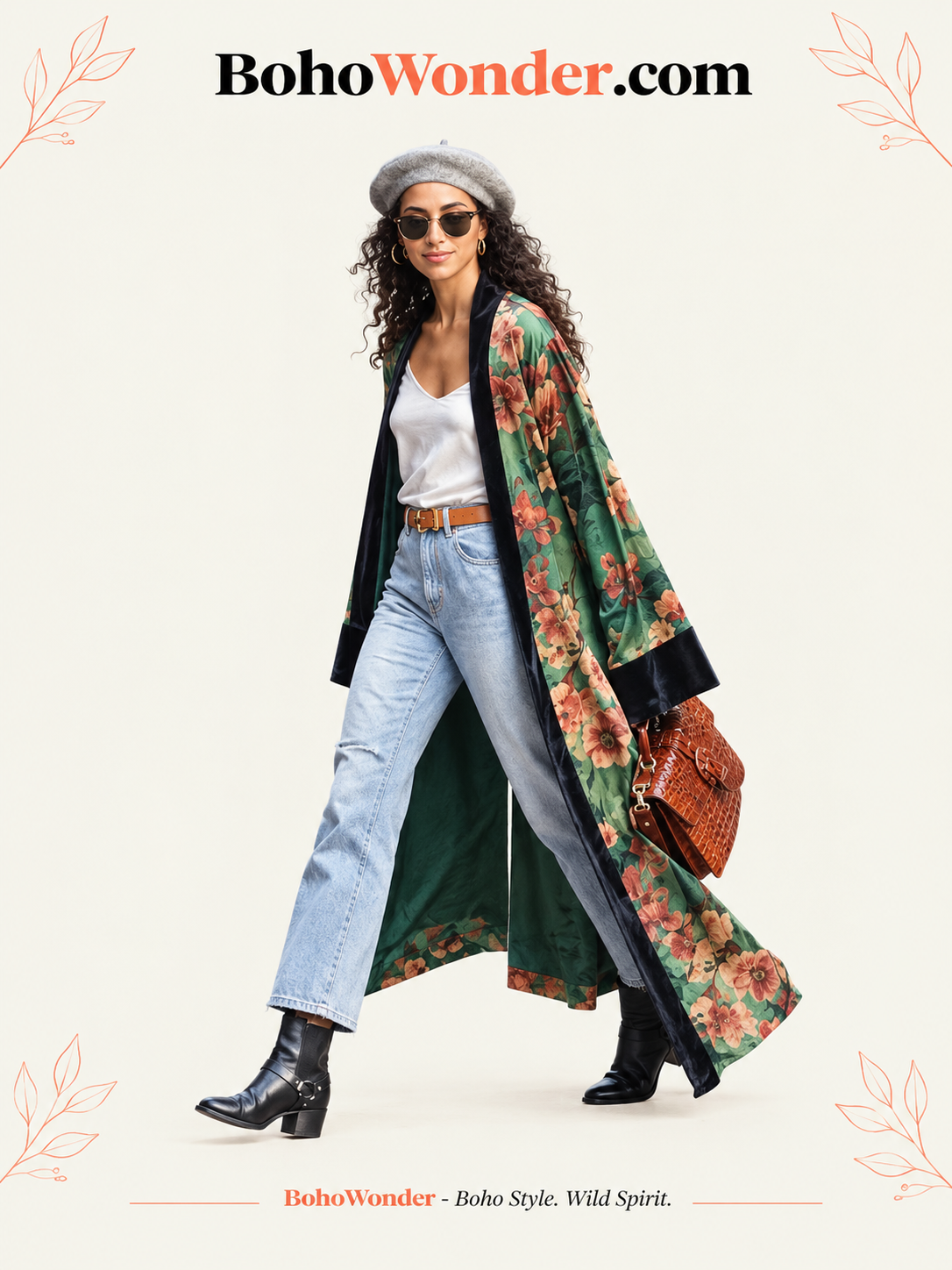
Pattern mixing can make an outfit look creative and collected, but it is easier when there is some visual relationship between the prints.
Start With Two Prints
If you are new to mixing patterns, begin with two rather than three or four.
For example, pair a larger floral print with a smaller geometric pattern. The difference in scale helps create hierarchy.
Repeat a Colour
The easiest connection between two prints is often colour.
Suppose one garment features cream, olive and terracotta while another includes cream and terracotta. The repeated shades create a visual bridge even though the patterns are different.
Vary the Scale
Using patterns of the same scale can make them compete with each other. Instead, try combining:
- One large floral with a smaller print
- One bold geometric with a fine repeating pattern
- One dominant print with a subtle accessory pattern
Let One Print Lead
If both patterns are equally bold, the outfit can quickly become visually crowded.
Choose one as the primary statement and make the second more restrained. This creates a clearer focal point.
Boho Texture: Create Depth Without Adding More Colour
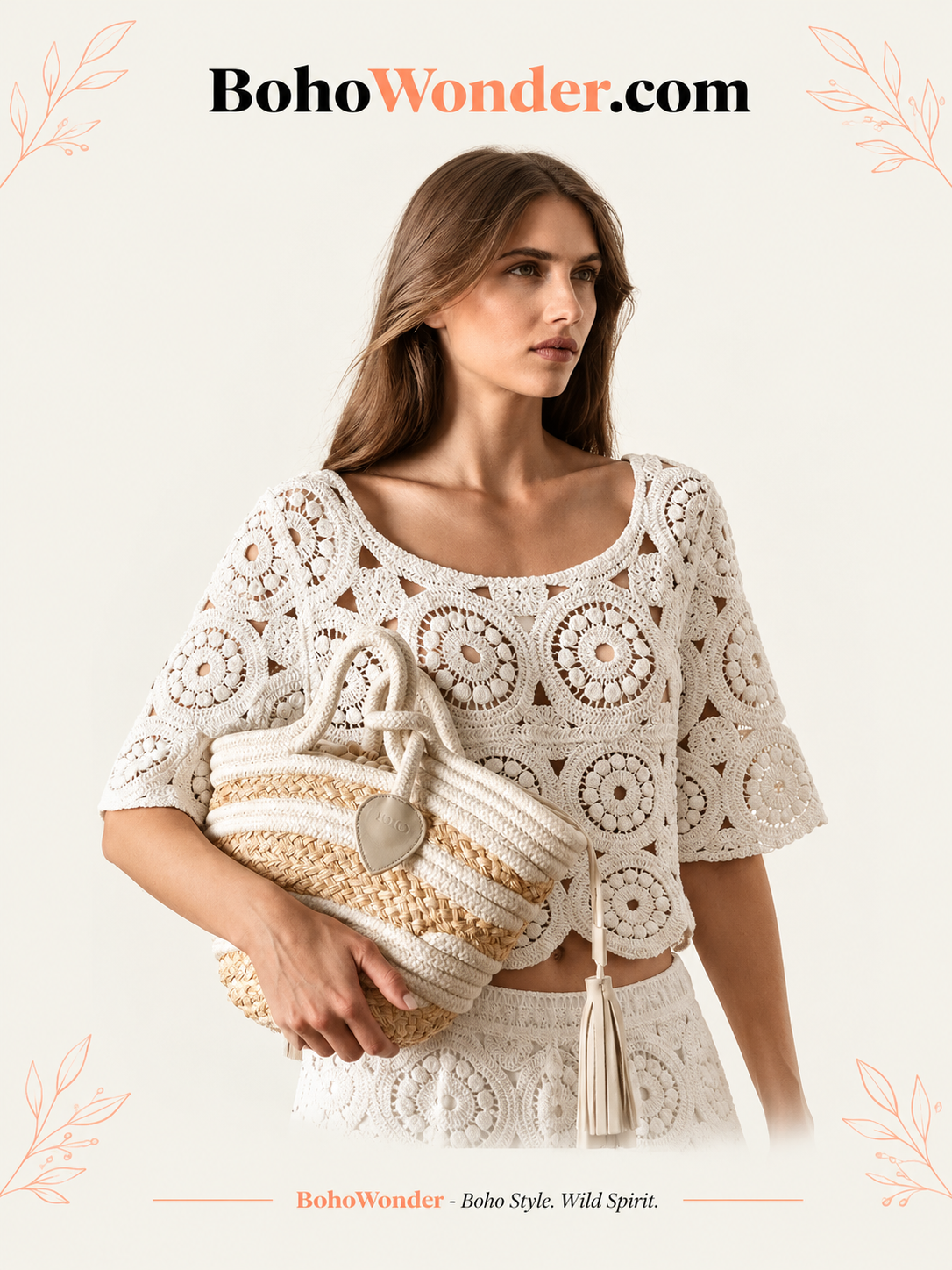
Texture is particularly valuable for shoppers who prefer simpler colour palettes. You can create a rich bohemian appearance without using several prints simply by combining different surfaces and details.
Crochet Adds a Handcrafted-Looking Texture
Crochet can introduce openwork detail and visual dimension to an outfit. Depending on the garment, it can appear as a complete layer, trim or smaller decorative feature.
A crochet top can be paired with a simple flowing skirt, while a crochet layer can add interest to an otherwise plain dress. Explore Boho Crochet Dress for more ways to incorporate openwork details and tactile layers into your outfits.
Lace Creates a Softer, Romantic Effect
Lace can bring a delicate quality to boho dressing. It works particularly well with flowing silhouettes because the contrast between detailed surface texture and relaxed movement creates visual interest.
A lace-trimmed piece does not need many additional details. Simple jewellery and neutral accessories can allow the texture to remain visible.
Woven Accessories Reinforce the Natural Mood
Woven bags, textured sandals and similar accessories can support a boho colour palette without introducing another strong print.
This is useful when the clothing itself is already expressive. A woven accessory can add texture while maintaining a relatively quiet visual role.
Velvet Adds Richness
Velvet has a denser visual texture and can introduce depth to an outfit, particularly when used in a rich colour.
Because the material already has a strong surface appearance, consider balancing it with simpler pieces rather than combining it with multiple heavily textured garments.
Distressed and Worn-In Details
Weathered wood, worn-in leather and hammered metal can contribute to a sense of history and character in bohemian-inspired styling.
For fashion, this can translate into accessories with an aged or textured appearance. The emphasis should be on the visual quality rather than suggesting that an item has a particular origin or handmade history unless that information is verified.
Boho Movement: The Element That Brings Everything Together
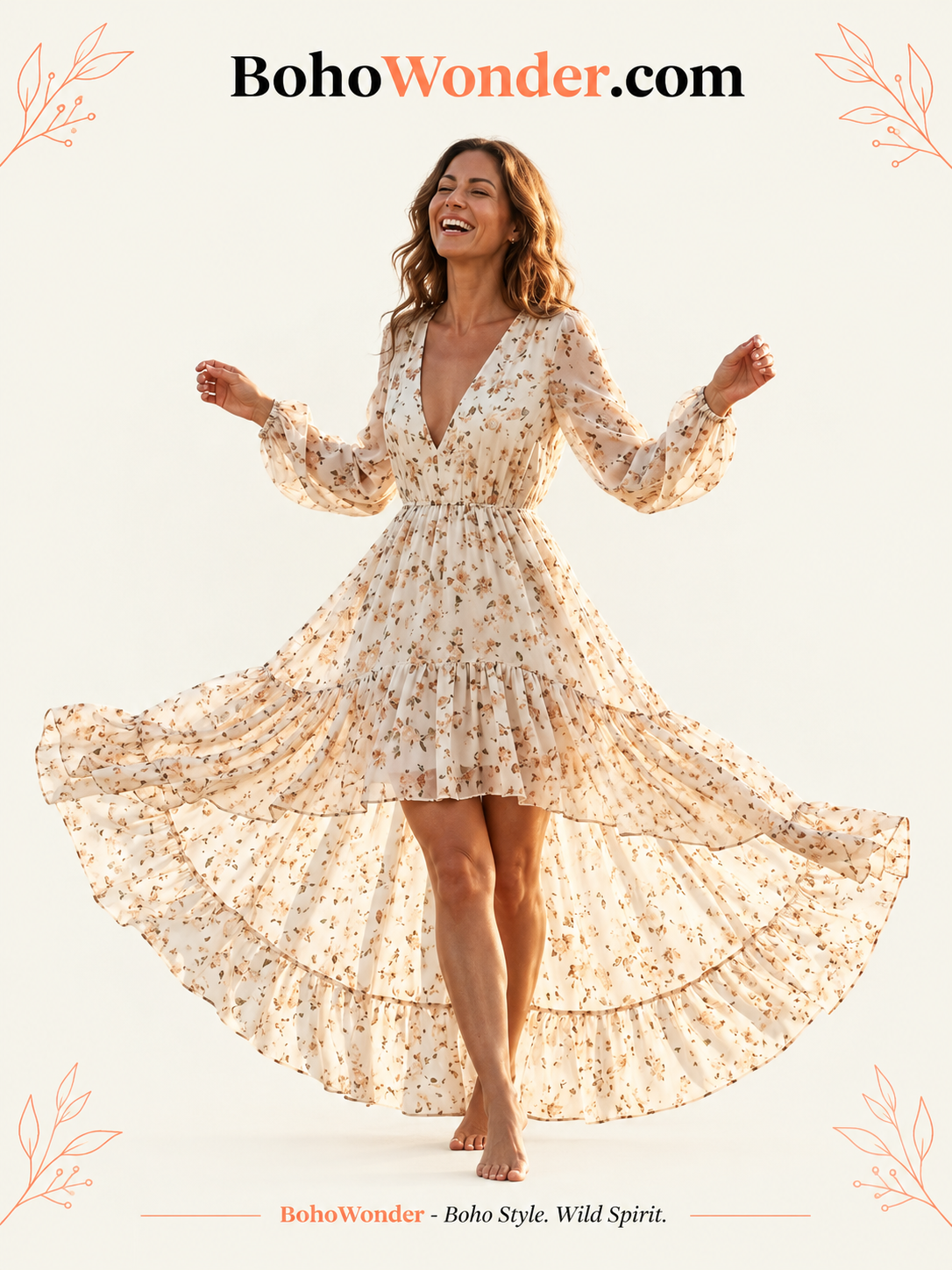
Movement is sometimes overlooked because it is not a colour or physical surface. Yet it can have a major effect on how an outfit feels.
Boho dressing generally benefits from silhouettes that move naturally rather than looking overly rigid.
Maxi Dresses Create Natural Movement
Maxi dresses are one of the clearest examples. A longer skirt can create movement as you walk, while a flowing silhouette can make the outfit feel relaxed.
The movement does not have to be dramatic. Even a subtle drape through the skirt can change the overall impression of an outfit.
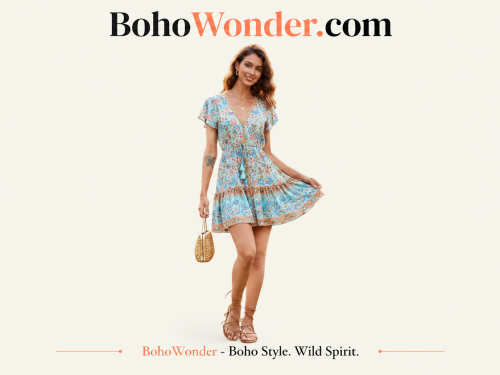
Movement is not limited to longer silhouettes. Boho Mini Dresses can also create a relaxed sense of movement when paired with ruffled hems, flowing sleeves or softly shaped skirts.
Tiered Shapes Add Dimension
Tiered skirts and dresses can create movement through the layered construction of the garment. Each tier contributes another visual line, making the silhouette feel more dynamic.
This works particularly well when paired with a relatively simple upper half. The movement through the skirt becomes the main feature.
Billowing Sleeves Add Movement Above the Waist
Movement does not have to come from the hemline.
Billowing or voluminous sleeves can create a softer silhouette around the shoulders and arms. When combined with a more defined waist, they can create contrast between volume and structure.
Draped Layers Create Flow
Open layers such as kimono-style pieces can add movement without changing the basic outfit underneath.
A simple base outfit can therefore become more expressive with one flowing layer rather than several additional garments.
Accessories Can Move Too
Scarves, fringed details and longer jewellery can introduce smaller amounts of movement.
These details are particularly useful when the clothing itself is more structured. They add a subtle sense of motion without changing the silhouette significantly.
Building Different Boho Looks With the Same Four Elements

The balance of colour, print, texture and movement can change depending on your personal style.
Earthy Boho
Earthy boho places colour at the centre.
Start with warm beige, camel, olive or terracotta. Add woven textures and a relaxed silhouette. Prints can be subtle or omitted entirely.
The result is grounded and understated while still carrying a clear bohemian character.
Romantic Boho
Romantic boho places more emphasis on print and movement.
Think flowing silhouettes, floral patterns, soft ruffles and delicate textures. Warm neutrals can be combined with softer or richer colours depending on the desired mood.
Keep accessories relatively refined if the dress already contains several decorative details.
Maximalist Boho
Maximalist boho allows colour, print and texture to become more prominent.
This is where pattern mixing and layered accessories can work particularly well. However, even a maximalist outfit benefits from some form of visual hierarchy.
One colour, print or silhouette should still provide a focal point.
Minimalist Boho
Minimalist boho uses fewer elements but relies on quality of contrast.
A warm neutral palette, flowing silhouette and one textured accessory may be enough.
This interpretation is especially useful for everyday dressing because the bohemian character remains subtle and adaptable.
Coastal Boho
Coastal-inspired boho can lean into lighter neutrals and relaxed movement.
A flowing dress, woven accessory and understated jewellery can create an easy warm-weather outfit without requiring heavy layering or strong prints.
Common Mistakes to Avoid
Trying to Use Every Boho Element at Full Strength
Colour, print, texture and movement are tools rather than requirements.
An outfit does not become more bohemian simply because every possible detail has been added. Too many competing elements can make the result feel cluttered.
Instead, choose one or two dominant features.
Assuming Earth Tones Are the Only Boho Colours
Warm neutrals are an important part of many boho palettes, but they are not the only option.
Brighter colours can work when they are balanced with the silhouette, print and accessories.
Mixing Too Many Prints
Pattern mixing can be expressive, but several unrelated patterns may compete for attention.
Start with two prints, look for a shared colour, and vary the scale when possible.
Adding Texture Without Contrast
If every piece has a heavy or elaborate texture, the details can lose their impact.
Pair more tactile pieces with smoother or simpler items so that each texture remains visible.
Choosing a Beautiful Detail That Does Not Work With the Silhouette
A garment may have a striking print or texture but still feel different from the relaxed boho aesthetic you want if its overall shape is extremely rigid.
Consider the silhouette alongside the decorative details.
Frequently Asked Questions
What are the four main elements of boho style?
The four key elements are colour, print, texture and movement. Colour establishes the overall mood, print adds visual personality, texture creates depth, and movement gives the outfit a relaxed quality.
What colours are most common in boho fashion?
Warm neutrals such as terracotta, beige, camel and olive are commonly associated with boho fashion. Rich accents such as burnt orange, mustard, deep teal and burgundy can add more contrast and personality.
Does boho style always use floral prints?
No. Florals are common, particularly in romantic interpretations of boho style, but they are only one option. Geometric patterns, paisley-inspired designs, botanical motifs and celestial details can also contribute to the aesthetic.
Can I wear boho style without prints?
Absolutely. A plain outfit can still feel bohemian through its colour palette, texture, accessories and flowing silhouette. This is also a useful approach if you prefer understated outfits.
BohoWonder Edit
At BohoWonder, these four elements can be useful when deciding which pieces will add the most value to your wardrobe.
Instead of asking whether a garment is simply “boho”, consider what it contributes to your existing outfits. A flowing maxi dress may introduce movement and colour at the same time. A printed piece can become the focal point of a neutral wardrobe. Crochet, lace or woven details can bring texture to simpler looks.
This approach also makes styling more flexible. A statement print can be worn with understated accessories for everyday dressing, while a simple flowing silhouette can be transformed through jewellery, a textured bag or a more expressive layer.
If you are developing a wardrobe around silhouettes and garment types, Boho Dresses can help you explore the wider range of relaxed and expressive dress shapes.
The goal is not to recreate every traditional bohemian detail in one look. It is to select the elements that feel natural to you and combine them in a way that works with the rest of your wardrobe.
Conclusion
Boho style becomes easier to understand when it is viewed through four connected elements: colour, print, texture and movement.
Colour creates the foundation, from warm beige and camel to terracotta, olive and richer accent shades. Print brings personality through florals, geometric patterns, botanical details and other expressive motifs. Texture creates depth through crochet, lace, woven surfaces and tactile details. Movement gives the outfit its relaxed character through flowing silhouettes, tiered shapes, billowing sleeves and draped layers.
The most effective boho outfits do not necessarily use all four elements at maximum intensity. Instead, they create balance. Let one element lead, use the others as support, and allow your personal preferences to determine how expressive the final look becomes.
That flexibility is what makes modern boho style so adaptable. Whether your wardrobe leans earthy, romantic, colourful, eclectic or minimalist, understanding these four elements gives you a practical way to create outfits that feel expressive, relaxed and genuinely your own.