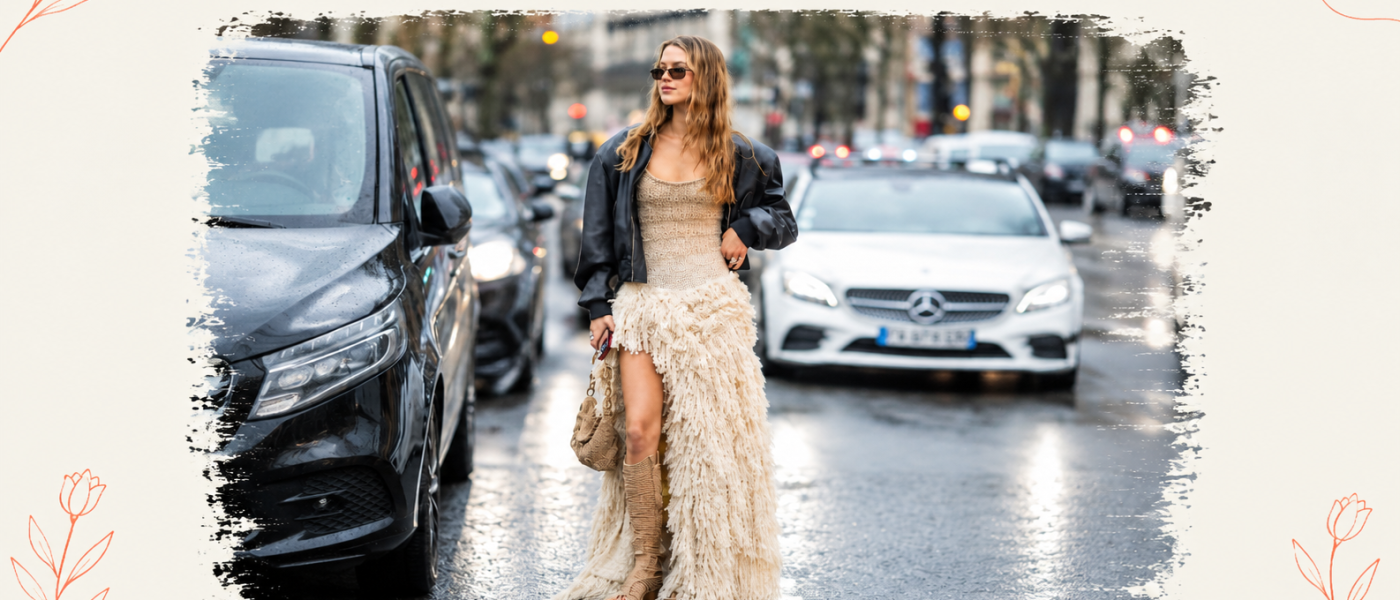
What is boho fashion? Boho fashion is a relaxed and expressive way of dressing that combines flowing movement, artistic pattern, tactile detail and personal styling. The word “boho” is short for “bohemian”, but modern boho fashion is not a strict uniform. It is a flexible style language that allows an outfit to feel individual, feminine, comfortable and visually distinctive.
Boho fashion can be romantic, minimalist, colourful, casual, resort-inspired or polished. A flowing maxi dress, a paisley skirt, an embroidered blouse and a pair of wide-leg trousers can all belong to the style, even though they create very different outfits. The common thread is the balance between an expressive detail and an easy, wearable silhouette.
This guide answers what is boho fashion in practical terms. It explains the features that make an outfit look bohemian, how the style developed, how to distinguish it from related aesthetics and how to wear it without making the outfit feel themed or overdone. For a broader overview of categories, explore the BohoWonder boho fashion collection.
Quick Answer: What Is Boho Fashion?
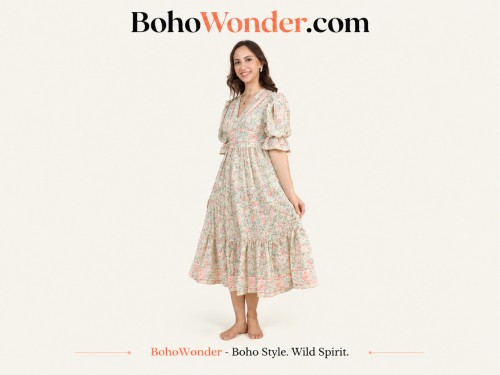
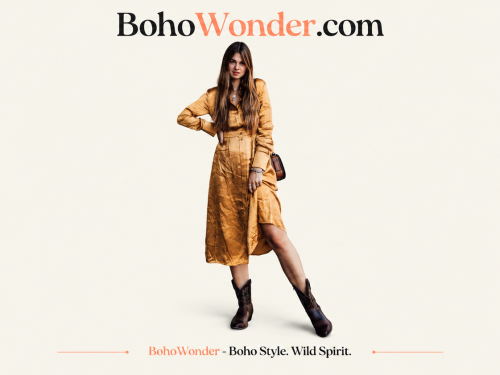
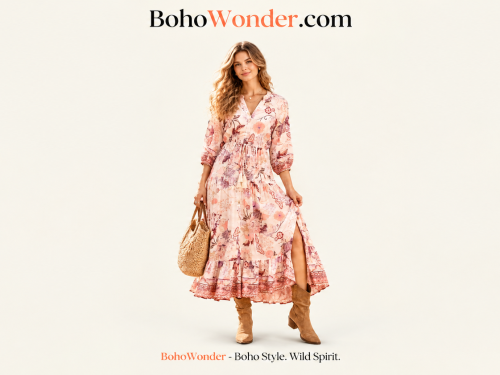
Boho fashion is a style of clothing centred on relaxed shapes, expressive details, natural-looking textures, rich or earthy colour and individual styling. The style may include flowing dresses, tiered skirts, wrap shapes, wide-leg trousers, floral or paisley prints, lace, crochet, embroidery, woven textures and carefully selected accessories.
Boho fashion does not depend on one compulsory item. A simple maxi dress may look bohemian because of its flowing shape, while a plain blouse may feel boho because of its embroidery or soft drape. A printed midi skirt can create the same effect when balanced with a simple top and a textured accessory. The style comes from the relationship between shape, surface, colour and styling.
Modern boho fashion is expressive but edited. One or two distinctive elements are usually enough: a flowing dress with clean shoes, a printed skirt with a plain shirt or an embroidered blouse with simple trousers. This approach keeps the free-spirited character of boho while making it suitable for everyday dressing, holidays, travel, brunch and relaxed social occasions.
What Does Boho Fashion Mean?
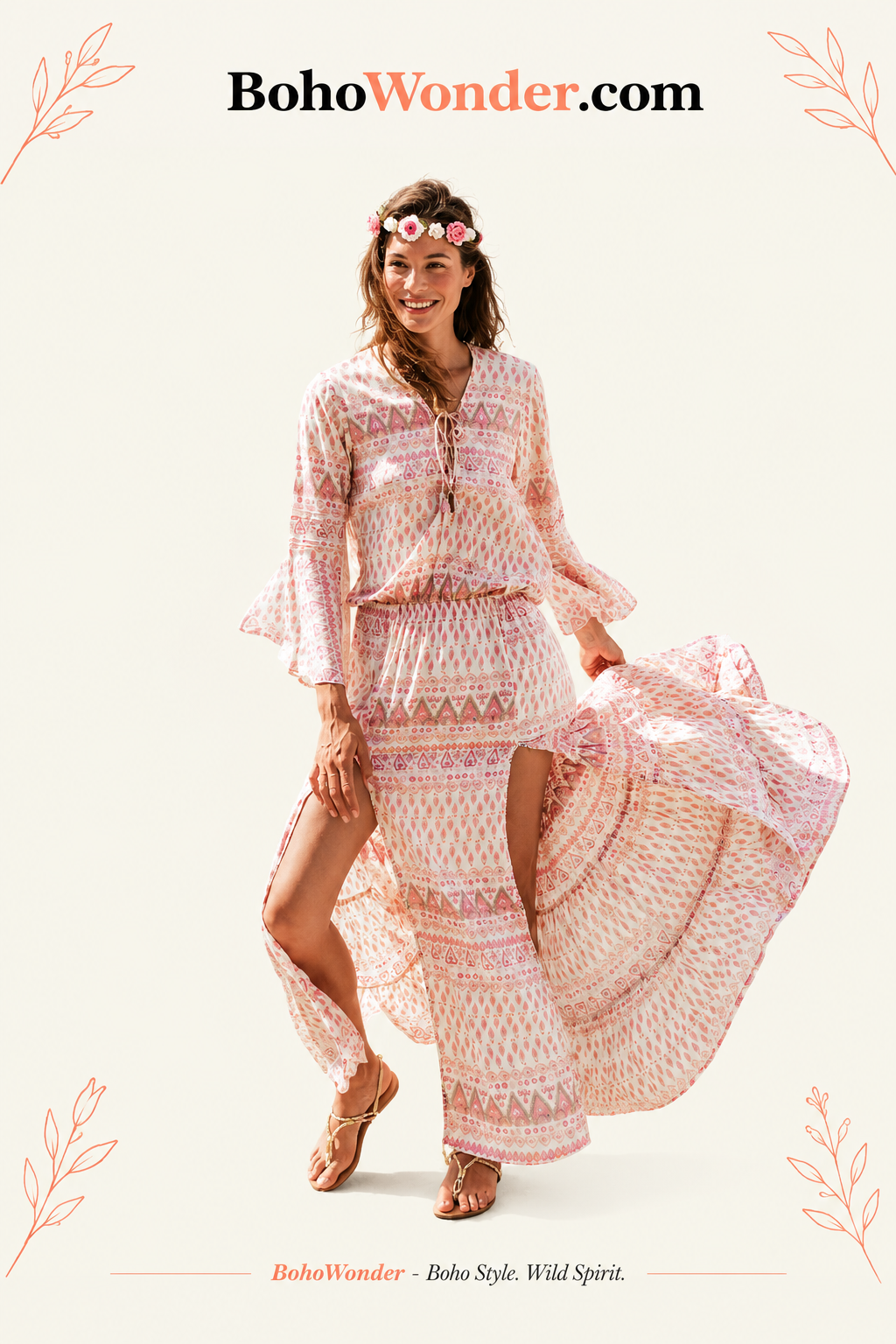
To understand what is boho fashion, it helps to separate the word’s cultural background from its current use in clothing. The modern fashion meaning is broad, visual and adaptable rather than tied to one precise era or uniform.
The Meaning Behind “Boho”
Boho is an abbreviation of bohemian. The term “bohemian” has a long cultural history associated with artists, writers and people who lived outside conventional social expectations. It later became connected with a fashion aesthetic that valued creativity, individuality, relaxed clothing and eclectic combinations.
That background helps explain why boho clothing often feels less formal than traditional tailoring. It also explains why the style can combine references from different periods instead of reproducing one historical look.
What Boho Means in Fashion Today
In contemporary fashion, boho usually describes observable design qualities. These may include a flowing hem, a loose or draped shape, a floral or paisley motif, embroidery, lace, crochet, woven texture or a warm colour palette.
A modern boho outfit may combine a vintage-inspired print with a contemporary jacket. It may pair a romantic dress with simple shoes and a clean-lined bag. The result does not need to look old-fashioned or heavily layered.
What Boho Fashion Does Not Require
Boho fashion does not require a particular lifestyle, body shape, age, festival setting or personal identity. It also does not require every garment to be loose, every colour to be neutral or every outfit to include multiple accessories.
The style should not be used as a label for a culture, ethnicity or community. Cultural details should not be reduced to costume. A more precise description focuses on what can actually be seen in the garment, such as pattern, colour, surface and silhouette.
The Core Characteristics of Boho Fashion
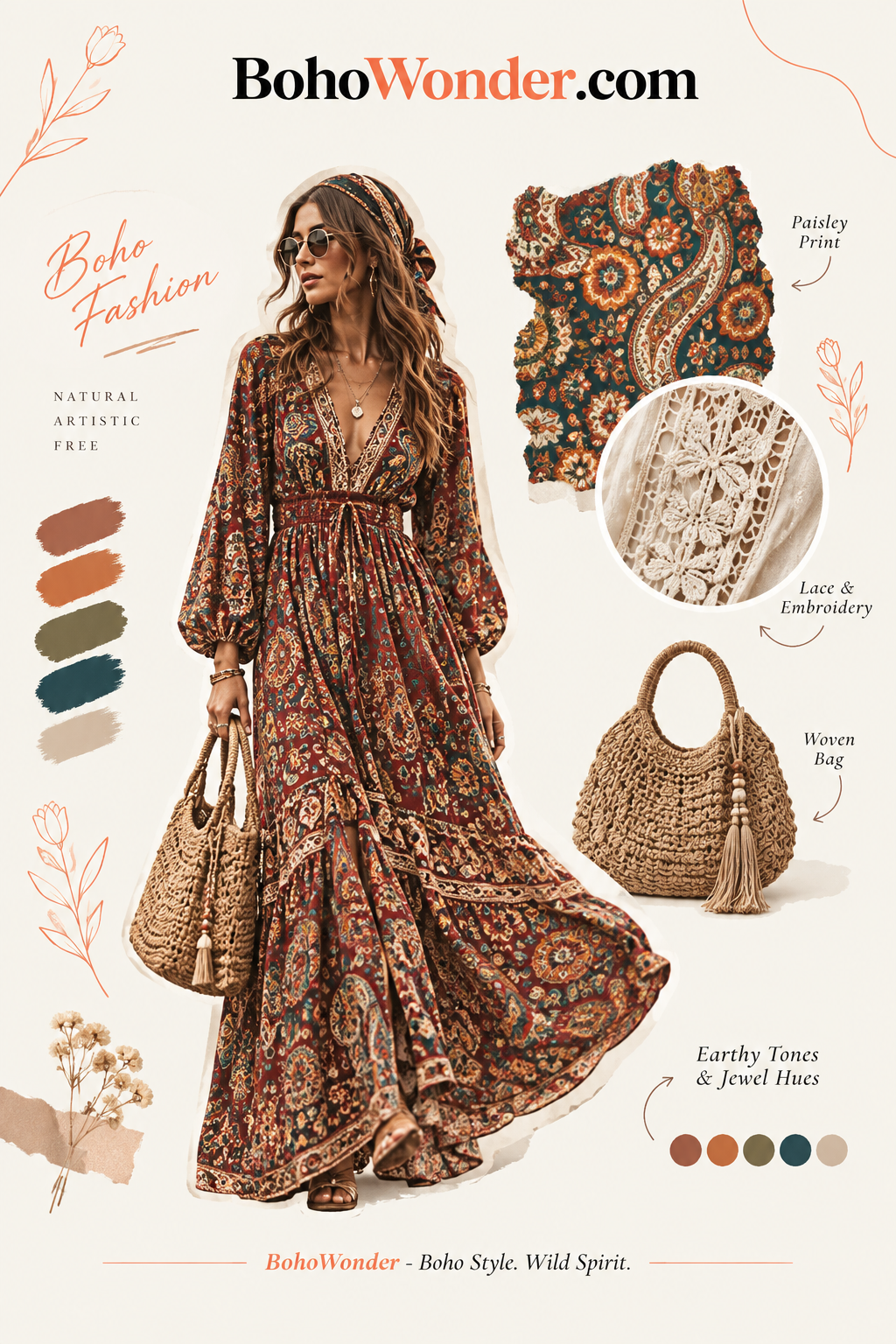
Boho fashion is easiest to recognise through a combination of movement, pattern, texture and colour. An outfit does not need every feature; one expressive detail can be enough when the rest of the styling supports it.
Flowing and Relaxed Silhouettes
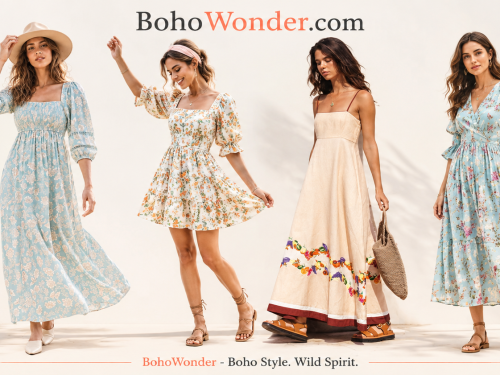
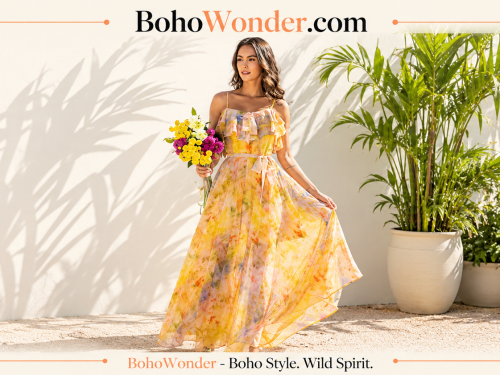
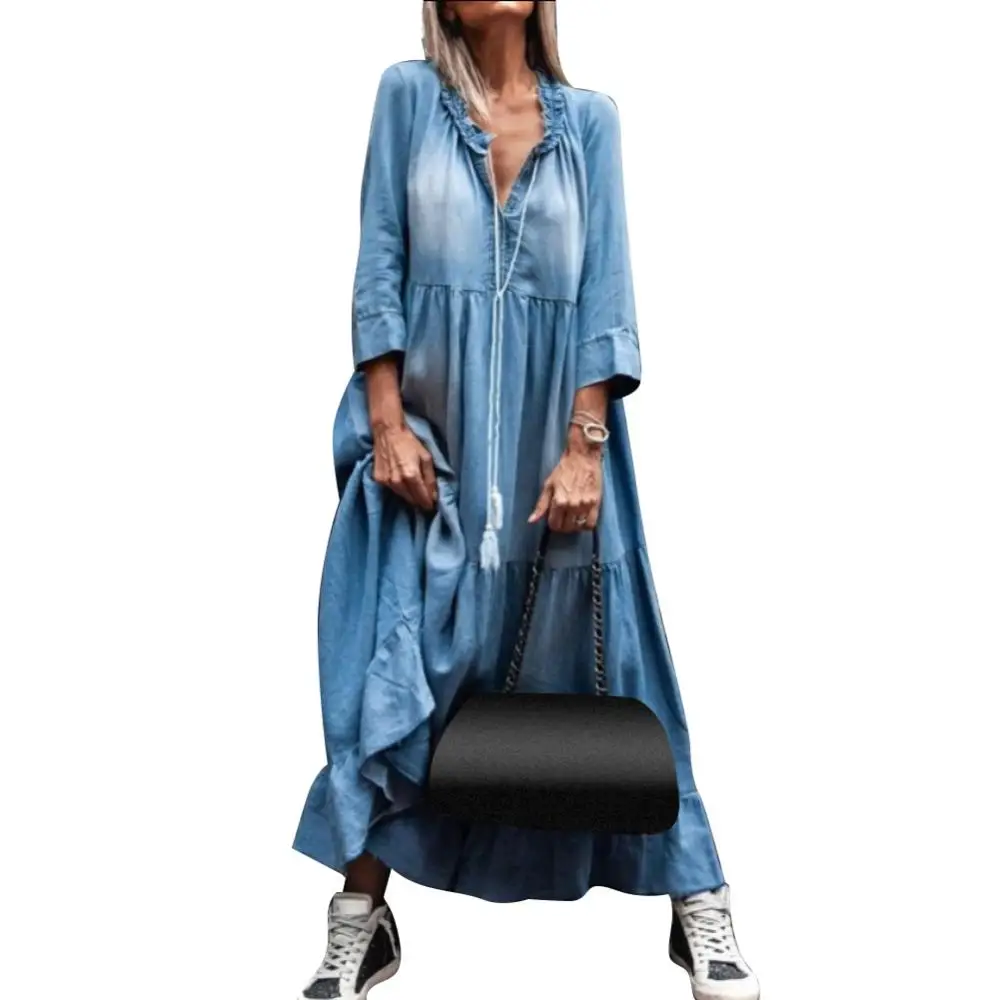
Movement is one of the clearest signs of boho clothing. Maxi dresses, tiered skirts, wrap styles, relaxed blouses and wide-leg trousers create a fluid line rather than a rigid shape. The fabric or construction may allow the garment to fall softly, shift as the wearer moves or create gentle volume through the skirt or trouser leg.
A flowing garment does not have to be oversized. A defined waist, shaped neckline, neat shoulder line or carefully placed seam can keep the silhouette polished and wearable. This distinction matters because modern boho fashion is usually relaxed without looking careless. The aim is to create ease while retaining enough structure for the outfit to feel intentional.
When choosing a silhouette, consider where the volume sits. A full skirt often works well with a simpler top, while wide-leg trousers can be balanced by a more streamlined blouse or jacket. A trapeze dress may need only simple shoes because its shape already provides the main visual interest.
Expressive Prints and Patterns
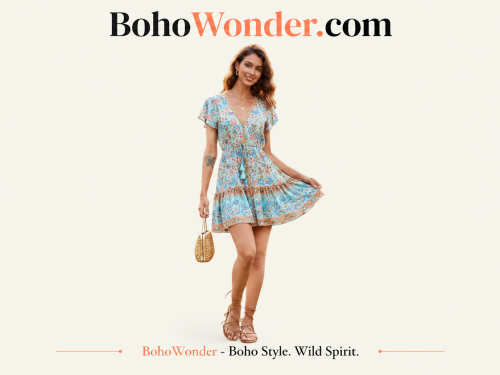
Floral, paisley, abstract and geometric patterns give boho fashion its artistic personality. A small floral may feel romantic, while a bold paisley or abstract print can become the focal point of an outfit. Pattern can also change the perceived mood of a garment: soft florals often feel gentle, darker motifs can feel more refined and colourful designs may create a more expressive result.
One printed dress, skirt or pair of trousers is usually enough. Plain surrounding pieces keep the look versatile and prevent it from feeling crowded. Before choosing a second pattern, consider the scale, dominant colour and visual weight of the first one. Two prints can work together, but they need a clear relationship rather than simply being expressive individually.
Tactile Fabrics and Decorative Details
Texture is central to understanding what is boho fashion. Lace, crochet, embroidery, woven surfaces and fringe add depth to a restrained colour palette. These details can make a neutral garment feel expressive without relying on a bold print, which is useful for shoppers who prefer quieter colour combinations.
A lace-trimmed hem can give a flowing dress a romantic finish, while embroidery across a sleeve, neckline or bodice can become the main point of interest. Crochet and woven surfaces create a more open or tactile impression, whereas fringe adds movement to the edge of a garment or accessory. The effect depends on the scale and placement of the detail, not simply on its presence.
A richly textured garment is usually best paired with quiet shoes, jewellery and a simple bag. Describe visible detail accurately without assuming that a product is handmade, artisan-made, one-of-a-kind or hand-dyed.
Warm Neutrals and Rich Colour
Cream, beige, brown, rust, terracotta, ochre, olive and muted green are common boho colours because they create a grounded impression. These shades can make a flowing silhouette feel softer and can connect naturally with woven, embroidered or lace-trimmed details.
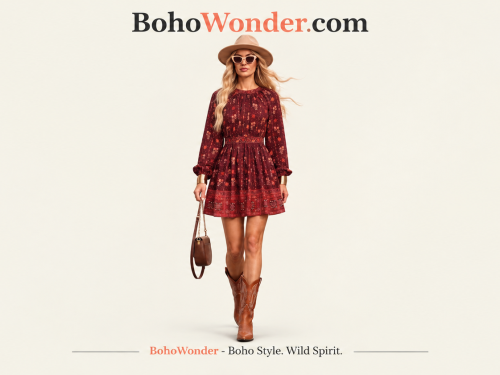
Deep blue, burgundy, plum, teal and jewel tones can also work well. Brighter colour is not excluded from boho fashion; it simply needs to sit comfortably within the rest of the outfit. A colourful print can be balanced with a neutral top, while a strong solid shade may need only simple accessories.
Try pairing one expressive shade or print with a neutral, then repeat one quiet colour rather than matching every shade exactly. This creates visual connection without making the outfit look overly coordinated.
How Is Boho Fashion Different From Related Styles?
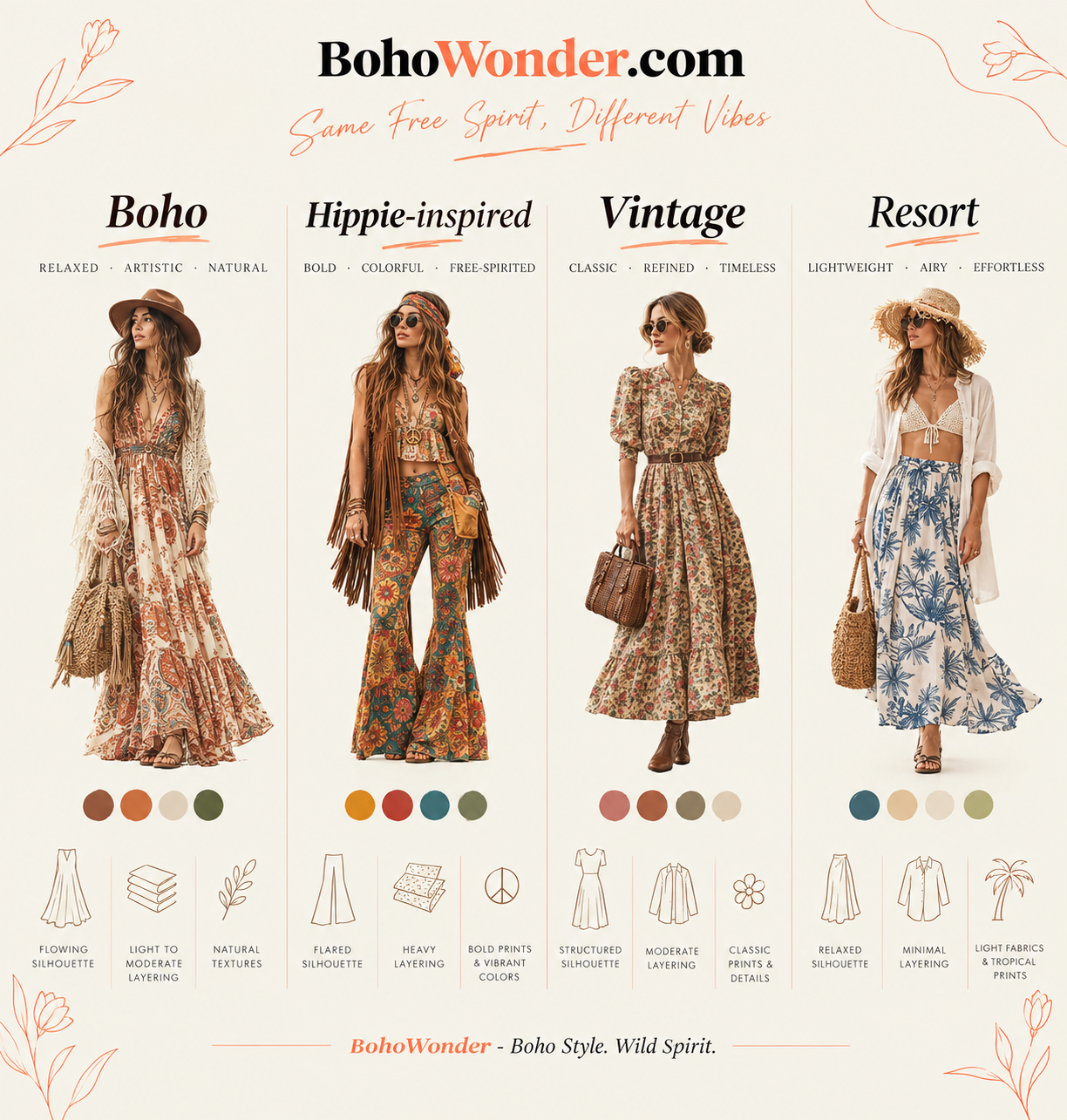
Boho fashion shares certain features with hippie, vintage, resort and minimalist styles. Comparing them helps clarify the specific meaning of boho without treating these categories as interchangeable.
Boho Fashion and Hippie Fashion
Boho and hippie fashion overlap, but they are not interchangeable. Hippie fashion is specifically associated with a historical counterculture, especially the late 1960s and 1970s. Its references may include flared trousers, tie-dye, denim, fringe and recognisable period details.
Boho fashion is broader and can be contemporary, romantic, refined or minimalist. It may borrow a flowing silhouette or expressive print without recreating a historical look. A floral maxi dress with a tailored blazer is a modern boho outfit; it does not need to resemble a period costume.
Boho Fashion and Vintage Style
Vintage style focuses on clothing associated with a particular earlier period, whether the pieces are genuinely vintage or inspired by an older design era. Boho fashion may use vintage-inspired details, but it is not limited to them.
A contemporary blouse with embroidery can feel boho even when its cut is modern. Likewise, a current wide-leg trouser can work within a bohemian outfit when its colour and styling create the right mood.
Boho Fashion and Resort Style
Resort style often focuses on holiday dressing, warm-weather ease, beachwear, relaxed tailoring and travel-friendly outfits. Boho fashion can overlap with resort style through flowing dresses, prints and natural-looking textures.
The distinction is mainly in emphasis. Resort style is defined by the occasion or setting. Boho is defined by the visual language. A boho dress may work for a holiday, but it can also be styled for everyday life or a relaxed evening.
How to Recognise a Boho Outfit
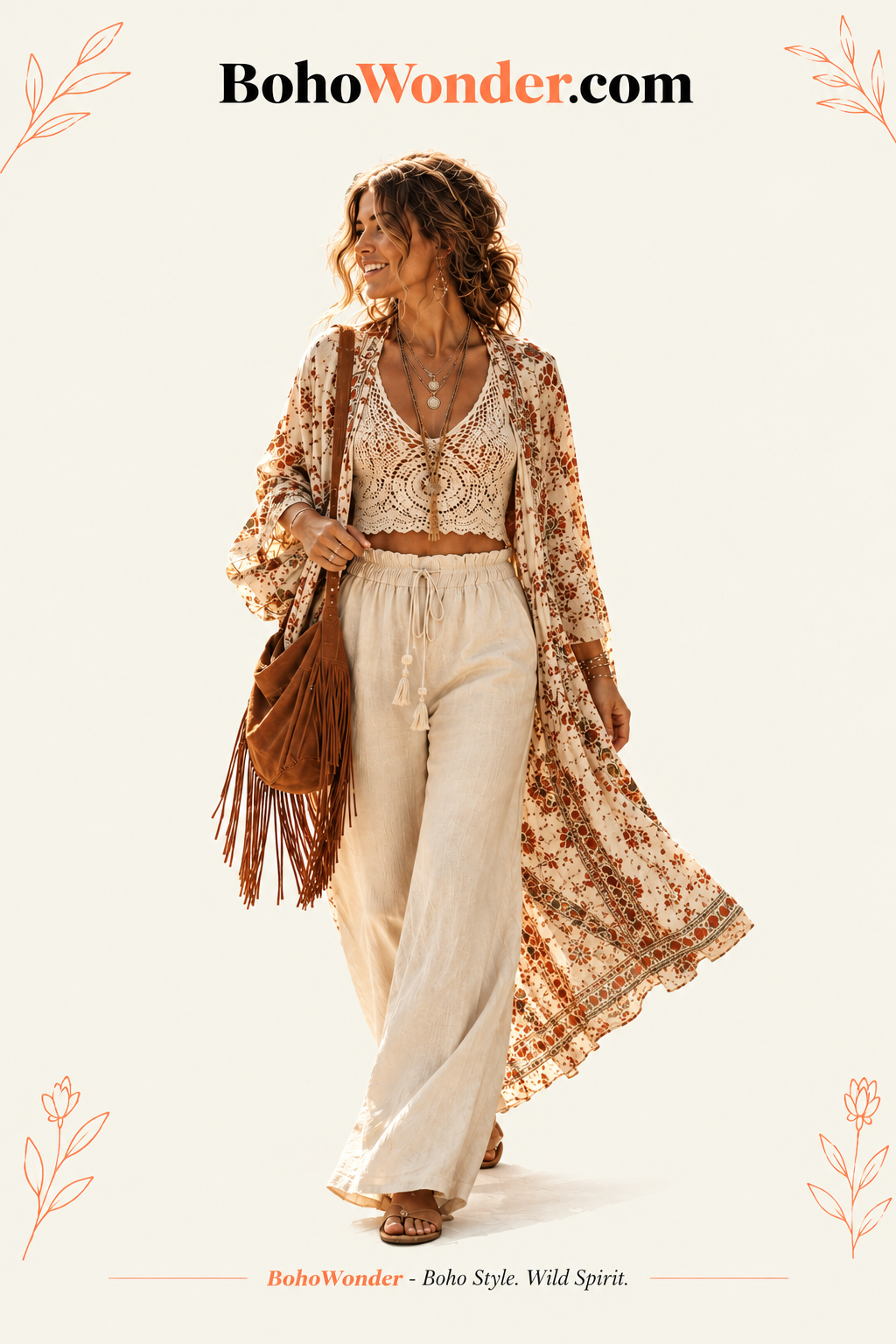
Recognising boho fashion is easier when you assess the full outfit rather than searching for a single “boho” item. The garment, colour, styling and accessories work together to create the final impression.
Visual Signals to Look For
A boho outfit often combines several of the following signals:
•A fluid, relaxed or gently draped silhouette.
•A floral, paisley, abstract or artistic print.
•Lace, crochet, embroidery, woven texture or fringe.
•A warm neutral, earthy shade or rich colour.
•A vintage-inspired detail used in a contemporary way.
•A relaxed garment balanced with a simple or structured piece.
•One accessory that adds texture or personality.
Why One Feature Is Not Enough
No single feature proves that an outfit is bohemian. A plain wide-leg trouser may look tailored or minimalist when worn with a crisp shirt. The same trouser may feel boho with a draped blouse, warm colour palette and woven bag.
A floral print can also belong to romantic, cottagecore, vintage or resort dressing. The silhouette and styling provide the context that determines how the pattern is read.
A Simple Recognition Test
Ask whether the outfit has at least one expressive feature and whether the remaining pieces support it. If the answer is yes, the outfit may have a modern bohemian direction.
Then check the proportion. Does the outfit have enough definition? Is the focal point easy to see? Do the colours work together without looking overly matched? These questions are more useful than counting how many “boho” details appear.
What Are the Main Types of Boho Fashion?
Boho fashion can be interpreted in several ways, depending on whether the outfit places more emphasis on softness, simplicity, pattern or texture. These categories are not strict rules and they can overlap. A flowing dress may be both romantic and print-led, while a neutral embroidered blouse may fit both minimalist and textured boho.
The useful purpose of these categories is to help you identify the type of expression that feels most natural to your wardrobe. Once you know whether the main feature is colour, movement, print or surface detail, it becomes easier to choose supporting pieces and avoid adding unnecessary decoration.
Romantic Boho
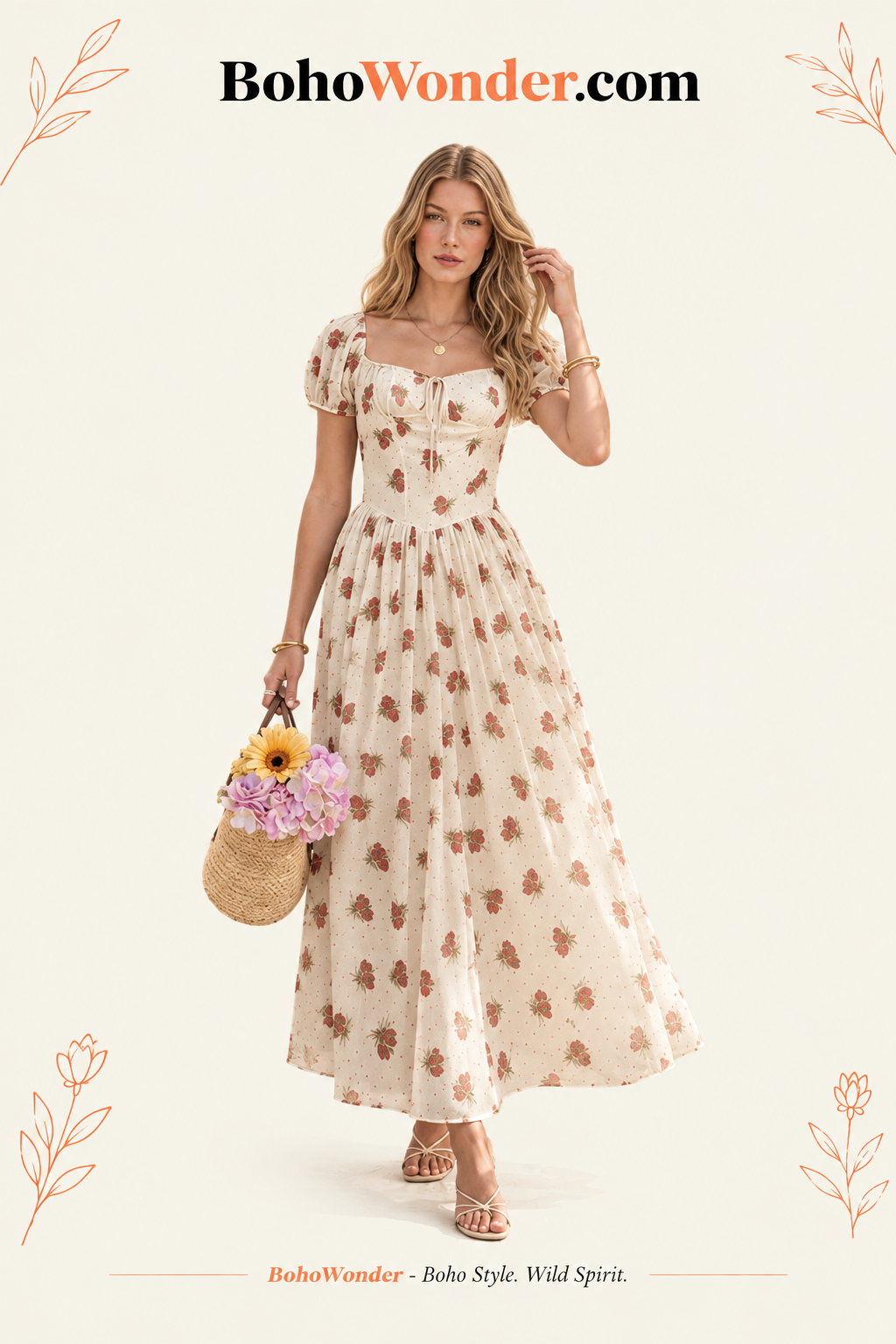
Romantic boho focuses on softness, movement and delicate detail. It often includes flowing dresses, gentle gathers, lace trims, subtle floral patterns, soft sleeves and graceful silhouettes. A flowing dress with a lace-trimmed hem, a tiered skirt or a floral midi dress can create this mood without looking overly formal.
Keep the rest of the outfit simple when the main garment already has detail. Neutral shoes, a structured bag, one piece of jewellery or a tailored jacket can add polish and definition. The garment’s movement or lace should remain the focus, making the outfit suitable for holidays, brunch, casual gatherings and relaxed evenings.
Minimalist Boho
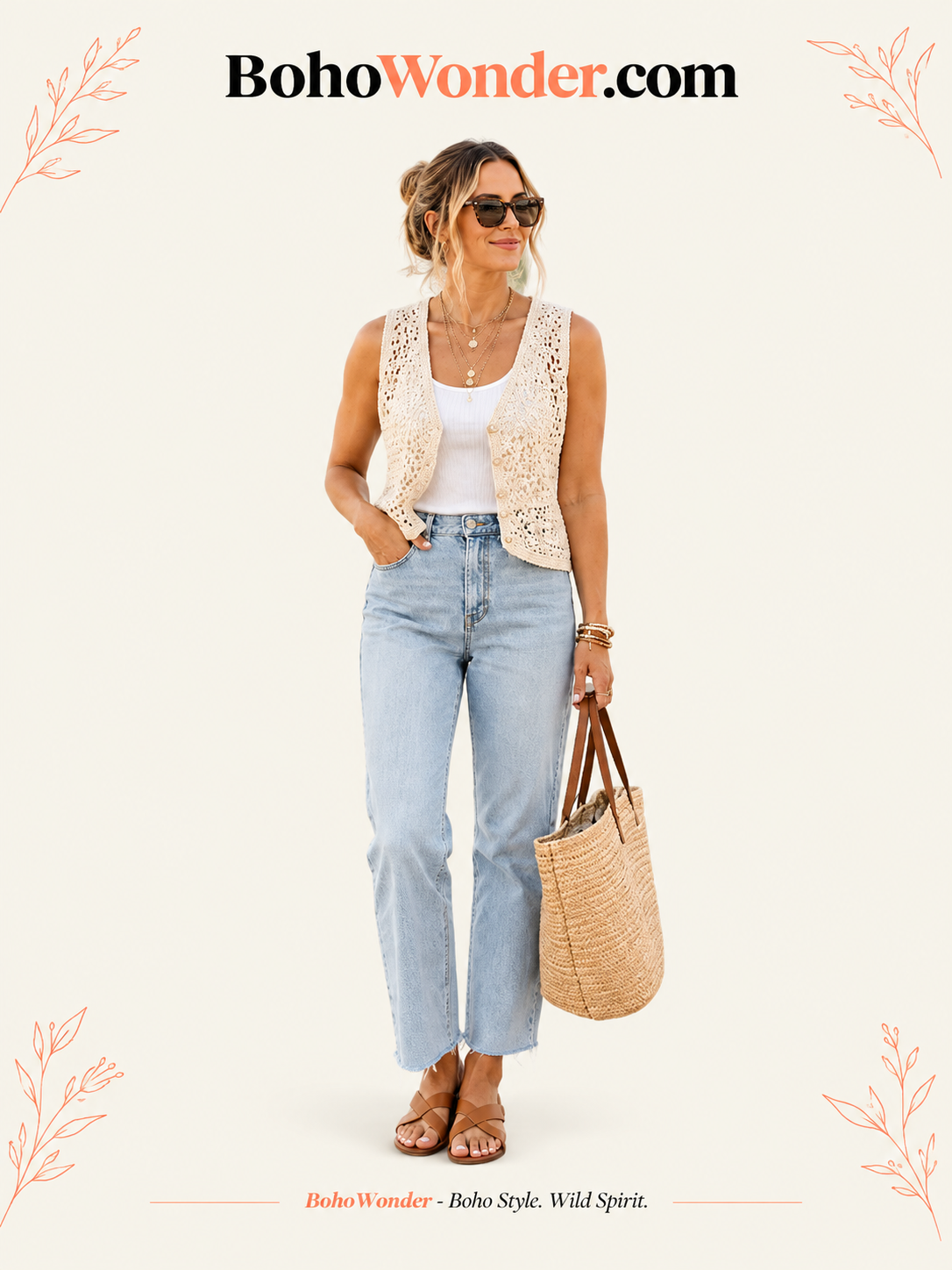
Minimalist boho uses fewer colours, simpler combinations and a smaller number of decorative details. It relies on one defining feature, such as a fluid shape, warm neutral colour, subtle print or woven texture. A plain maxi dress may feel boho through its length and movement, while a wrap-style skirt or relaxed blouse can create the same effect.
A textured bag with a simple dress or a clean shirt with a wrap-style skirt can create an understated look. Cream, sand, brown, muted olive and deep blue work well, but the palette does not have to be entirely neutral. The aim is to introduce boho gradually while keeping the outfit calm, intentional and easy to wear.
Print-Led Boho
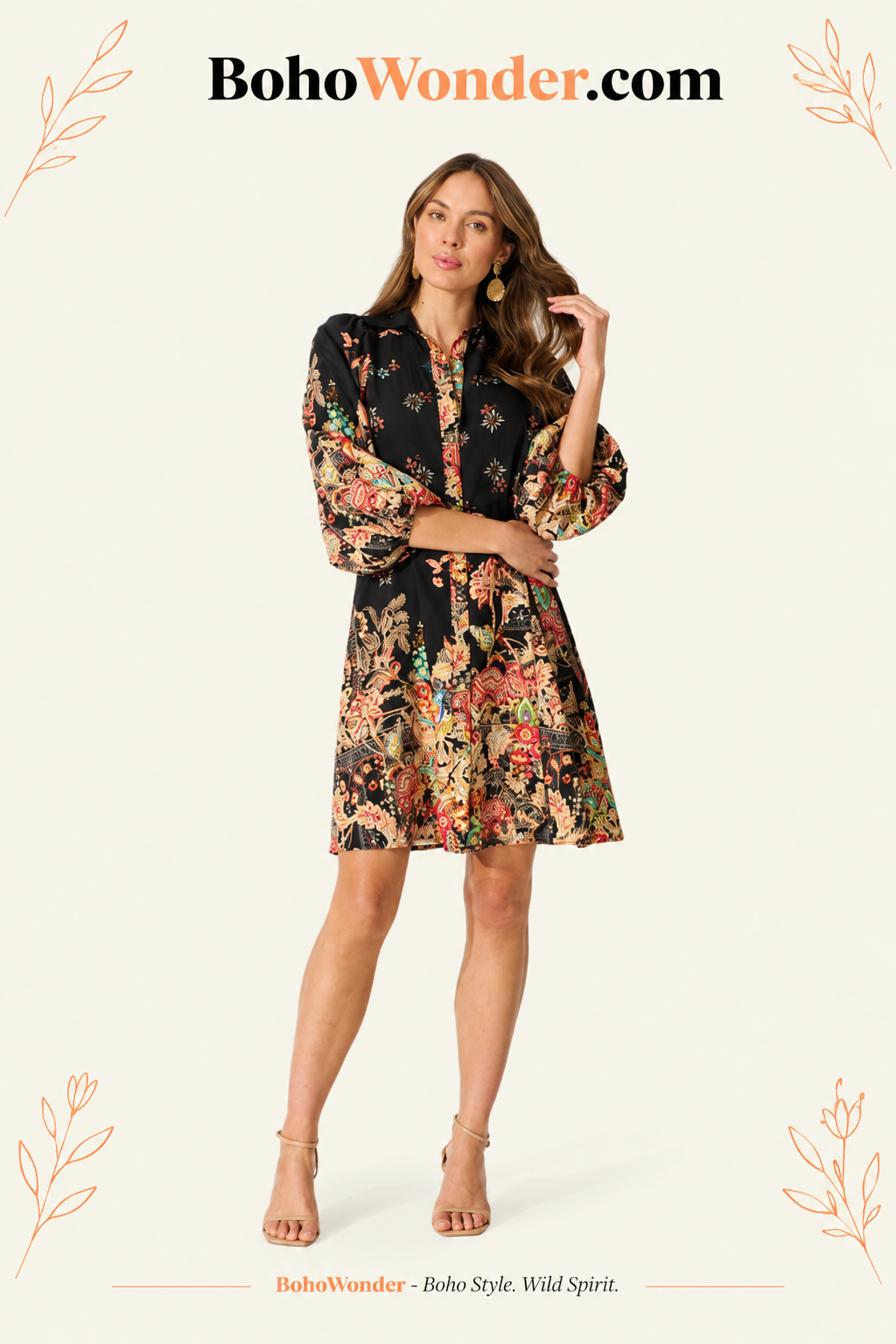
Print-led boho makes pattern the main point of the outfit. Paisley, floral, abstract and geometric motifs can all work, with small florals feeling delicate, paisley creating a recognisable bohemian reference and bold abstract designs giving a more contemporary mood. A printed midi skirt, flowing dress or pair of relaxed trousers can act as the hero piece.
Keep the supporting garments relatively quiet so the print has space to stand out. A simple top and one subdued shade taken from the pattern can create connection without overmatching. The same skirt may feel casual with a T-shirt, polished with a button-front shirt or more expressive with a textured accessory.
Textured Boho
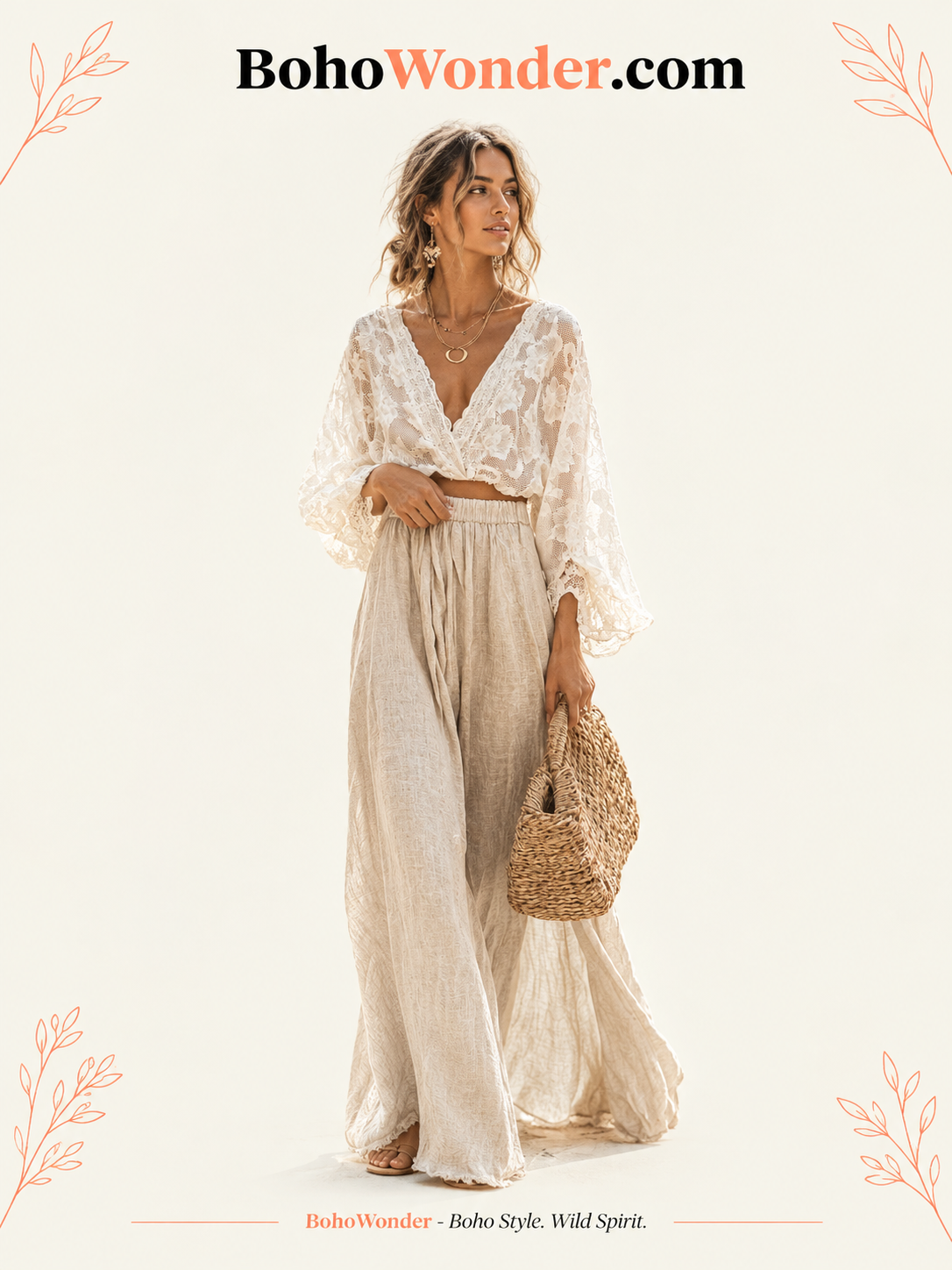
Textured boho relies on the garment’s surface rather than a strong print. Embroidery, crochet, lace, woven detail and fringe can add depth while keeping the colour palette controlled. A neutral embroidered blouse, lace-trimmed dress or woven bag can express the style without relying on bright pattern.
Let the texture remain visible by pairing it with clean, uncomplicated pieces, simple shoes and restrained jewellery. Fine embroidery may work with another subtle detail, while prominent fringe or dense decoration usually needs a quieter outfit around it. Describe the visible design accurately without making assumptions about how the garment was made.
Boho fashion can be interpreted in several ways. These categories are not strict rules; they are useful descriptions of where the outfit places its emphasis.
Common Mistakes to Avoid
The most common boho styling mistakes happen when the aesthetic is treated as a checklist rather than a relationship between shape, colour, texture and proportion. A piece does not become bohemian simply because it is loose, patterned or decorative; the full outfit still needs a clear focal point and enough balance to feel personal rather than themed.
Treating Every Relaxed Garment as Boho
Relaxed clothing can belong to casual, resort, minimalist or loungewear styles, so a loose shape alone does not define boho fashion. A plain oversized sweatshirt may feel casual, while a wide-leg trouser can look tailored or bohemian depending on the styling.
Look for a supporting quality such as an artistic print, lace, embroidery, warm colour, woven surface or flowing line. This keeps the description accurate and avoids using “boho” as a label for every comfortable garment.
Wearing Every Boho Detail at Once
Lace, crochet, embroidery, fringe, bold print and layered jewellery can each work well, but combining them all may make the outfit feel themed rather than personal. Too many focal points can also hide the garment’s shape and make the overall look feel crowded.
Choose one main feature and one supporting detail. A printed dress may need simple sandals and a clean bag, while an embroidered blouse can work with plain trousers and one piece of jewellery.
Assuming Boho Must Be Neutral
Earth tones are common in boho fashion because they create a grounded impression, but they are not compulsory. Deep blue, burgundy, plum, teal, jewel tones and colourful prints can also work within a bohemian wardrobe.
The important point is how the colour interacts with the silhouette, pattern and accessories. A bright floral skirt can work with a cream top, while a strong blue or burgundy garment can become the focal point when the surrounding pieces remain quiet.
Confusing Boho with Vintage Clothing
Vintage-inspired details often appear in boho fashion, but the clothes do not need to be vintage. A paisley motif, lace trim, tiered skirt or relaxed blouse may reference an earlier style without being an authentic vintage garment.
Contemporary cuts, modern proportions and simple accessories can create a current interpretation. Pair a romantic dress with a clean-lined jacket, or wear a flowing skirt with a neat shirt to keep the look adaptable for everyday dressing.
Frequently Asked Questions
What is boho fashion in one sentence?
Boho fashion is a relaxed and expressive clothing style that combines flowing movement, artistic pattern, tactile detail, grounded or rich colour and individual styling.
What does boho fashion mean for everyday dressing?
It means using one or more expressive elements in a wearable way. A flowing dress, printed skirt, embroidered blouse or relaxed trouser can be paired with simple basics so the outfit feels personal without looking overdone.
Is boho fashion only for festivals?
No. Festival clothing is one interpretation of the style, but boho fashion can also suit everyday dressing, holidays, travel, brunch and casual gatherings. A printed skirt with a clean shirt or a flowing dress with a structured jacket can feel bohemian without looking like festival wear.
Does boho fashion require a printed dress?
No. Print is optional. Shape, texture, colour and styling can communicate the same aesthetic. A plain flowing dress, lace-trimmed skirt, embroidered top or relaxed pair of trousers may all work.
BohoWonder Edit
The BohoWonder edit is designed to help shoppers approach boho fashion through the feature that feels most personal to them. Instead of trying to recreate every version of the style at once, begin with one garment category and one clear visual quality. A flowing dress can create movement with minimal styling, while a printed midi skirt can add personality alongside simple tops already in your wardrobe. Relaxed trousers offer a more casual direction and are often easiest to balance with a cleaner top or more defined outer layer. An embroidered, lace-trimmed, crochet or woven item can express boho style through texture rather than bold print, which suits a more controlled colour palette.
Explore the BohoWonder clothing collection, or browse boho dresses, boho skirts and boho pants for category-specific inspiration.
Conclusion
The clearest answer to what is boho fashion is that it is a flexible style built around relaxed movement, expressive pattern, tactile detail, warm or rich colour and personal styling. It can be romantic, minimalist, colourful, elegant or casual depending on how these elements are combined.
You do not need a particular dress, multiple layers or a festival setting to wear boho fashion. Begin with one feature that appeals to you, such as a flowing silhouette, printed skirt, embroidered detail or textured accessory. Balance it with simple pieces, consider the proportions and let the focal point remain visible.
That is the enduring appeal of boho fashion: it gives you a way to express individuality while keeping the outfit comfortable, adaptable and relevant to modern everyday life.