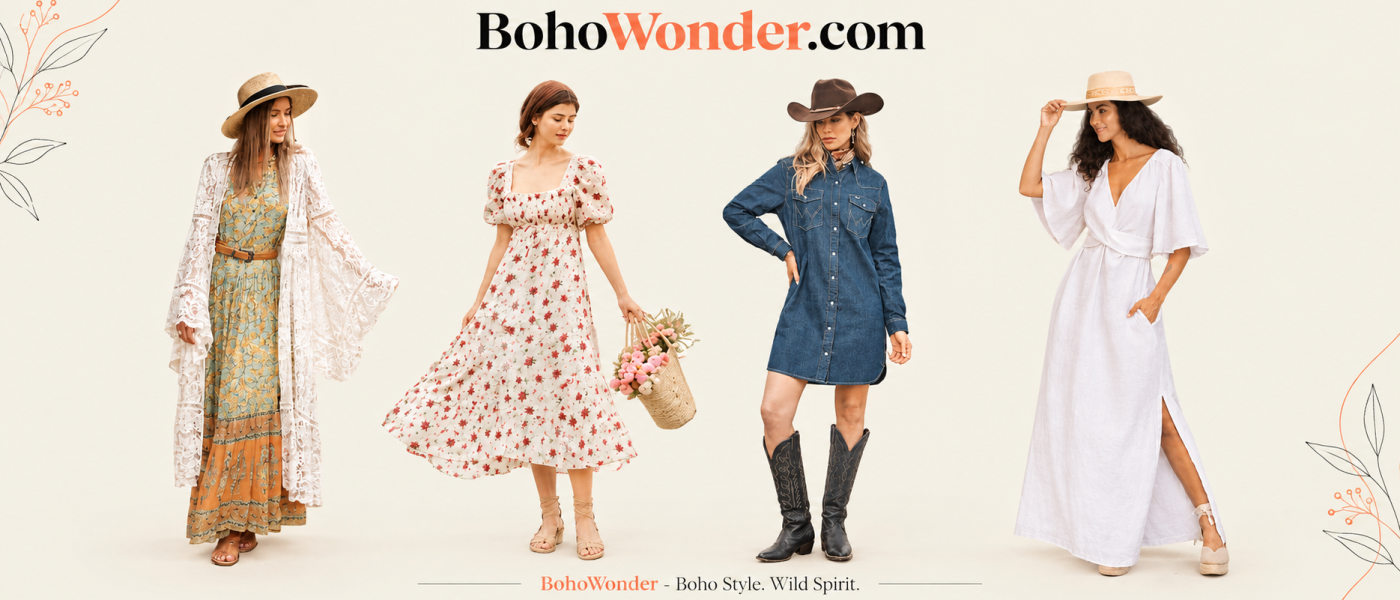
Boho, Cottagecore, Western and Coastal style can appear remarkably similar when you first encounter them. All four aesthetics can include relaxed silhouettes, natural-looking textures, flowing dresses, earthy or muted colours, woven accessories and an easy approach to everyday dressing. That overlap is exactly what makes it difficult to tell where one aesthetic ends and another begins.
The easiest way to understand Boho vs Cottagecore vs Western vs Coastal style is to look beyond individual clothing items. A floral dress is not automatically Cottagecore, just as a woven bag is not automatically Boho. The same flowing dress can take on a completely different character depending on its colour palette, pattern, accessories, footwear and overall styling. For a closer look at how different bohemian moods are created through colour, texture and silhouette, explore Boho Colour, Print, Texture and Movement Explained.
For a wardrobe, these distinctions are useful because they help you shop with more intention. Instead of buying pieces simply because they look vaguely “bohemian,” “romantic” or “rustic,” you can identify the mood you actually want and choose garments that support it.
Quick Answer
The biggest difference among these four aesthetics is their source of inspiration and the visual language that develops from it.
Boho is expressive, relaxed and eclectic. It is associated with artistic individuality, travel-inspired influences, warm earthy colours, flowing silhouettes, layered textures and decorative accessories.
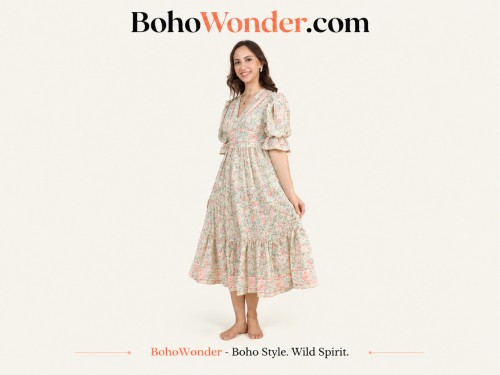
Cottagecore is romantic, nostalgic and pastoral. It draws on an idealised rural lifestyle and often uses delicate florals, soft colours, puff sleeves, gathered details, vintage-inspired silhouettes and feminine styling.
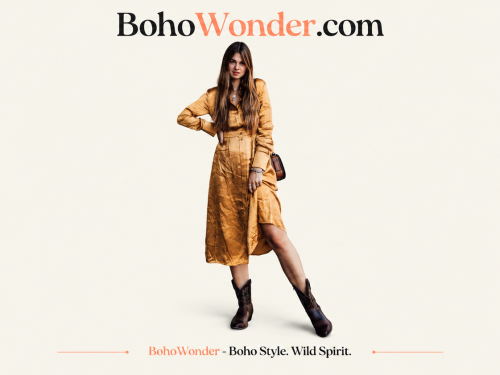
Western is grounded, rugged and adventurous. Its visual references come from ranch life, rodeo heritage and wide-open landscapes, with denim, boots, belts, fringe, brown tones and western-inspired hardware playing important roles.
Coastal is airy, light and uncomplicated. It takes inspiration from seaside living and relaxed beach environments, often using white, cream, sandy beige, soft blue, flowing shapes and simple accessories.
| Style | Main inspiration | Typical colours | Common textures/details | Overall mood |
|---|---|---|---|---|
| Boho | Artistic expression, travel and eclectic influences | Terracotta, rust, warm brown, burnt orange, earthy tones | Crochet, woven textures, fringe, layered textiles, jewellery | Free-spirited, expressive, relaxed |
| Cottagecore | Rural life, gardens and countryside nostalgia | Cream, sage, lavender, soft floral tones | Florals, ruffles, puff sleeves, gathered details | Romantic, pastoral, nostalgic |
| Western | Ranch life, rodeo and frontier landscapes | Brown, saddle tan, denim blue, turquoise | Denim, leather-style details, fringe, buckles, boots | Rugged, grounded, adventurous |
| Coastal | Beaches, seaside homes and ocean living | White, cream, sand, soft blue | Linen, cotton, jute, woven details, light textures | Airy, breezy, understated |
These categories are useful guidelines rather than strict rules. A dress can contain elements from several aesthetics at once. The key is to identify which influence dominates the complete outfit.
Understanding the Core Identity of Each Style
Before comparing individual pairs, it helps to understand what makes each aesthetic recognisable on its own.
What Defines Boho Style?
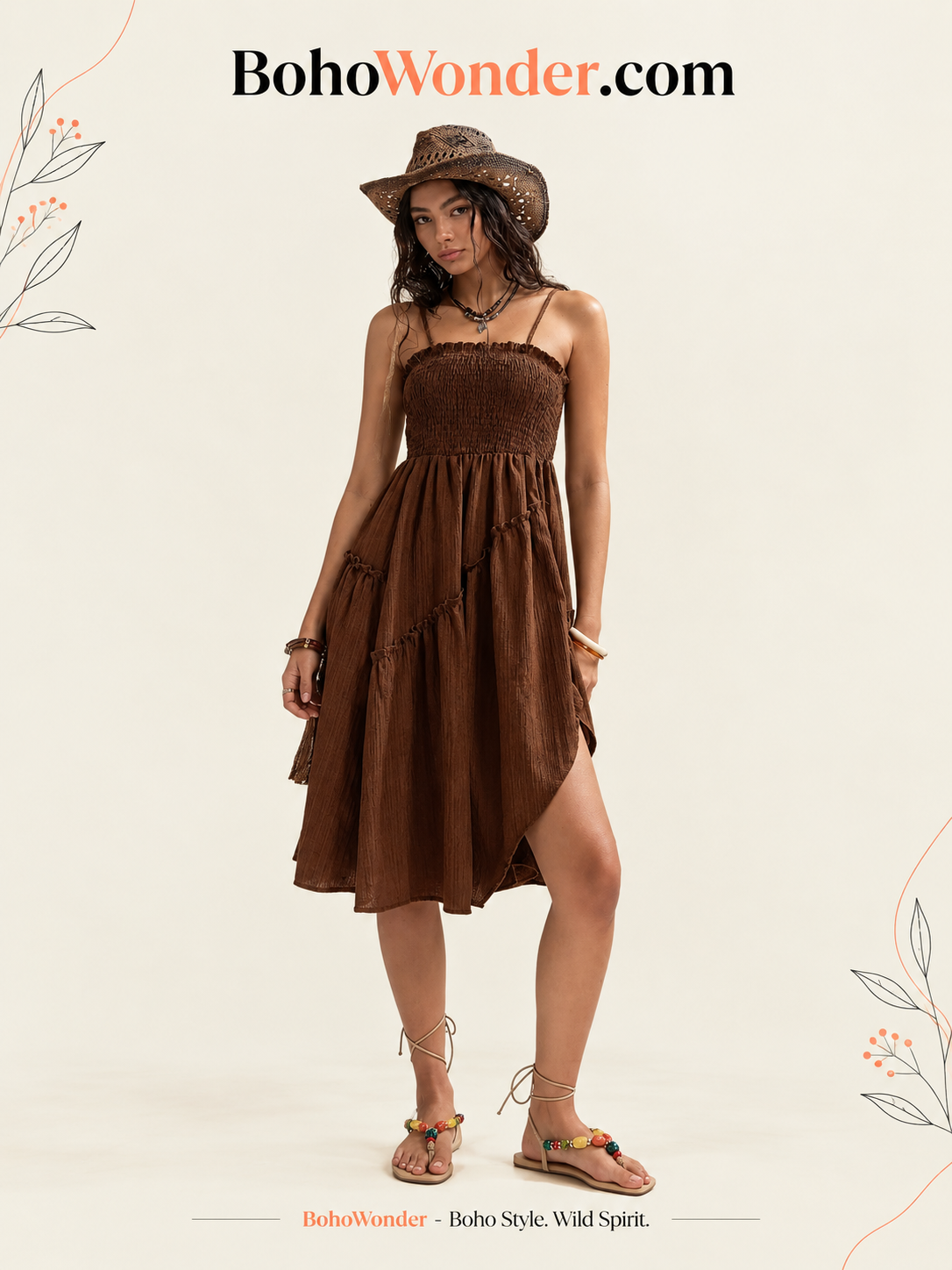
Boho is perhaps the most flexible of the four aesthetics because it does not depend on one narrow historical wardrobe. Its character comes from a combination of relaxed silhouettes, expressive colour, tactile details and an eclectic approach to styling.
The aesthetic is often associated with artistic expression, travel and a mix of cultural and decorative influences. In interiors, bohemian style is frequently described through warm colours, layered textiles, rattan, wicker, macramé, plants and collected decorative objects. These same principles can be translated into fashion through texture, movement and layering.
Colour is an important part of the look. Warm neutrals can form the foundation, while terracotta, rust, burnt orange, deep brown and jewel-like tones introduce more depth. However, boho does not require a specific colour palette. A neutral cream dress can look strongly bohemian when paired with textured accessories and layered jewellery.
Texture is equally important.
Crochet, woven details, fringe, lace, embroidery, macramé-inspired elements and tactile fabrics can all contribute to a boho outfit. The important point is not to use every texture at once. Boho styling works best when several complementary details create visual depth.
Silhouette tends to favour movement. Flowing maxi dresses, tiered skirts, wide-leg trousers, relaxed blouses and loose outer layers are particularly compatible with the aesthetic.
The result is generally relaxed but expressive rather than polished and minimalist.
A useful way to think about Boho is:
Boho = movement + texture + individuality + relaxed layering
That combination is what separates it from simply wearing a floral dress or neutral clothing.
What Defines Cottagecore?

Cottagecore takes a much softer and more nostalgic direction.
Its central idea is an idealised vision of rural life, often associated with gardens, countryside settings, domestic crafts, old-fashioned cooking, flowers and a slower pace of living. In fashion, these references become romantic silhouettes and delicate details. Cottagecore is commonly associated with prairie-inspired dresses, puff sleeves, floral patterns, ruffles, gathered waists and vintage-influenced shapes.
The colour palette tends to be gentler than classic boho. Cream, warm white, sage green, lavender, dusty pink and muted floral shades are particularly useful for creating the look.
Pattern is one of the easiest ways to recognise the aesthetic.
Small-scale florals, botanical prints and delicate repeating patterns can immediately establish a cottagecore mood. But a garment does not need a floral print to qualify. A plain cream dress with puff sleeves and a gathered waist can still feel strongly cottagecore when styled appropriately.
The silhouette also matters.
Cottagecore often favours details that create a romantic or nostalgic impression:
- Puff sleeves
- Ruffled hems
- Gathered skirts
- Defined or gently shaped waists
- Square or sweetheart necklines
- Prairie-inspired lengths
- Button-front details
- Delicate floral prints
The overall impression is soft, feminine and pastoral.
A useful shorthand is:
Cottagecore = countryside nostalgia + romance + delicate detail
What Defines Western Style?
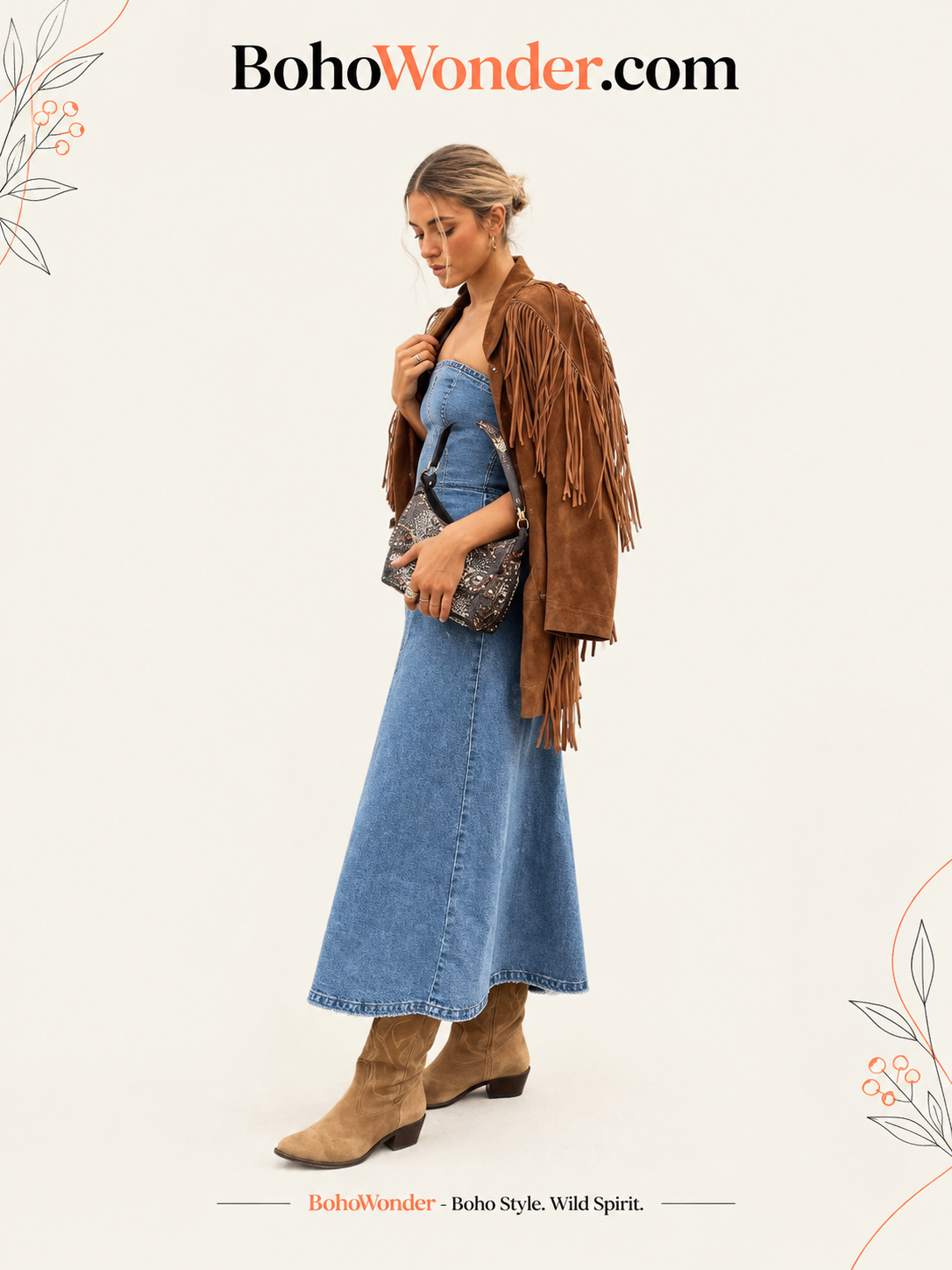
Western style has a stronger connection to a specific cultural and historical visual vocabulary.
Its fashion references include American ranch life, rodeo heritage, denim workwear, boots, belts, fringe and open landscapes. The look can be traditional or highly modern, depending on how many Western references are included.
The colour palette often revolves around brown, saddle tan, denim blue, cream and turquoise. These colours can be combined with simple neutrals to create a more contemporary interpretation.
Western style also relies more heavily on accessories than some of the other aesthetics.
A flowing dress can become Western-inspired simply by adding boots and a structured belt. Denim can strengthen the effect further, while fringe and metal hardware can make the reference more obvious.
The aesthetic generally feels more grounded and structured than boho.
Even when the main garment is soft or flowing, the accessories often introduce contrast through boots, belts or heavier-looking details.
A useful shorthand is:
Western = ranch references + structure + rugged details
What Defines Coastal Style?
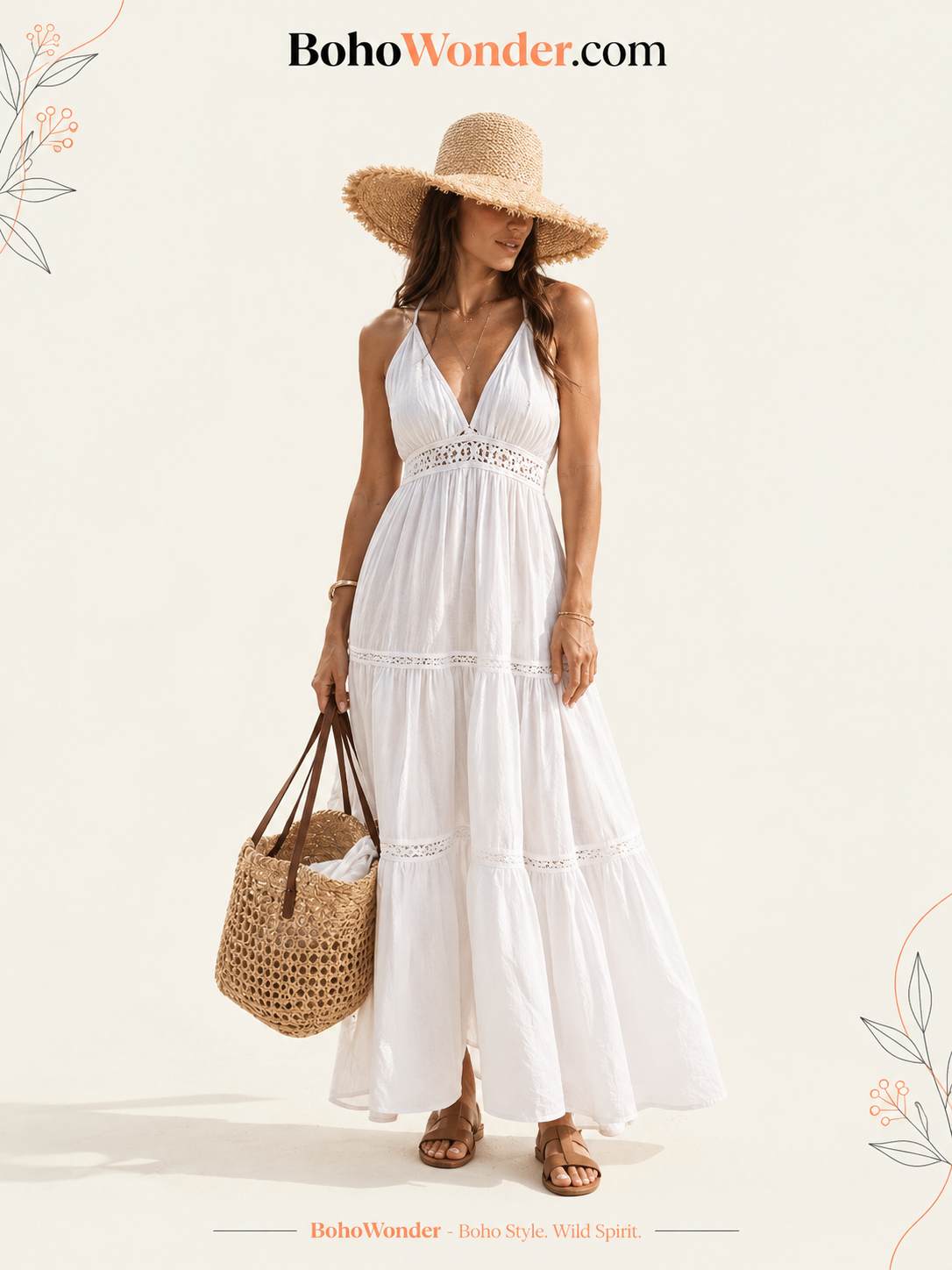
Coastal style takes inspiration from seaside living, beaches, ocean landscapes and relaxed holiday environments.
It generally has a lighter visual quality than the other three aesthetics.
The colour palette is particularly recognisable:
- Crisp white
- Warm cream
- Sandy beige
- Pale blue
- Soft ocean-inspired shades
- Natural straw tones
Coastal design references also commonly use light wood, whitewashed surfaces, linen, cotton, jute and other natural-looking materials.
In fashion, these ideas translate into simple flowing dresses, relaxed separates, lightweight-looking layers, woven bags and understated sandals.
The important word is ease.
Where boho may add layers and decorative texture, coastal style often removes visual complexity. Instead of asking what else can be added, coastal styling often asks what can be simplified.
A useful shorthand is:
Coastal = seaside inspiration + light colour + simplicity + ease
Boho vs Cottagecore: Romantic Overlap With Different Roots
The comparison between Boho vs Cottagecore is one of the most useful because these two aesthetics frequently share the same wardrobe territory.
Both can feature:
- Flowing dresses
- Floral prints
- Natural-looking textures
- Relaxed silhouettes
- Woven accessories
- Feminine details
- Soft, earthy colours
So how can you tell them apart?
The answer lies in what the outfit is trying to evoke.
Boho usually feels collected, artistic and expressive. Cottagecore feels pastoral, nostalgic and romantic.
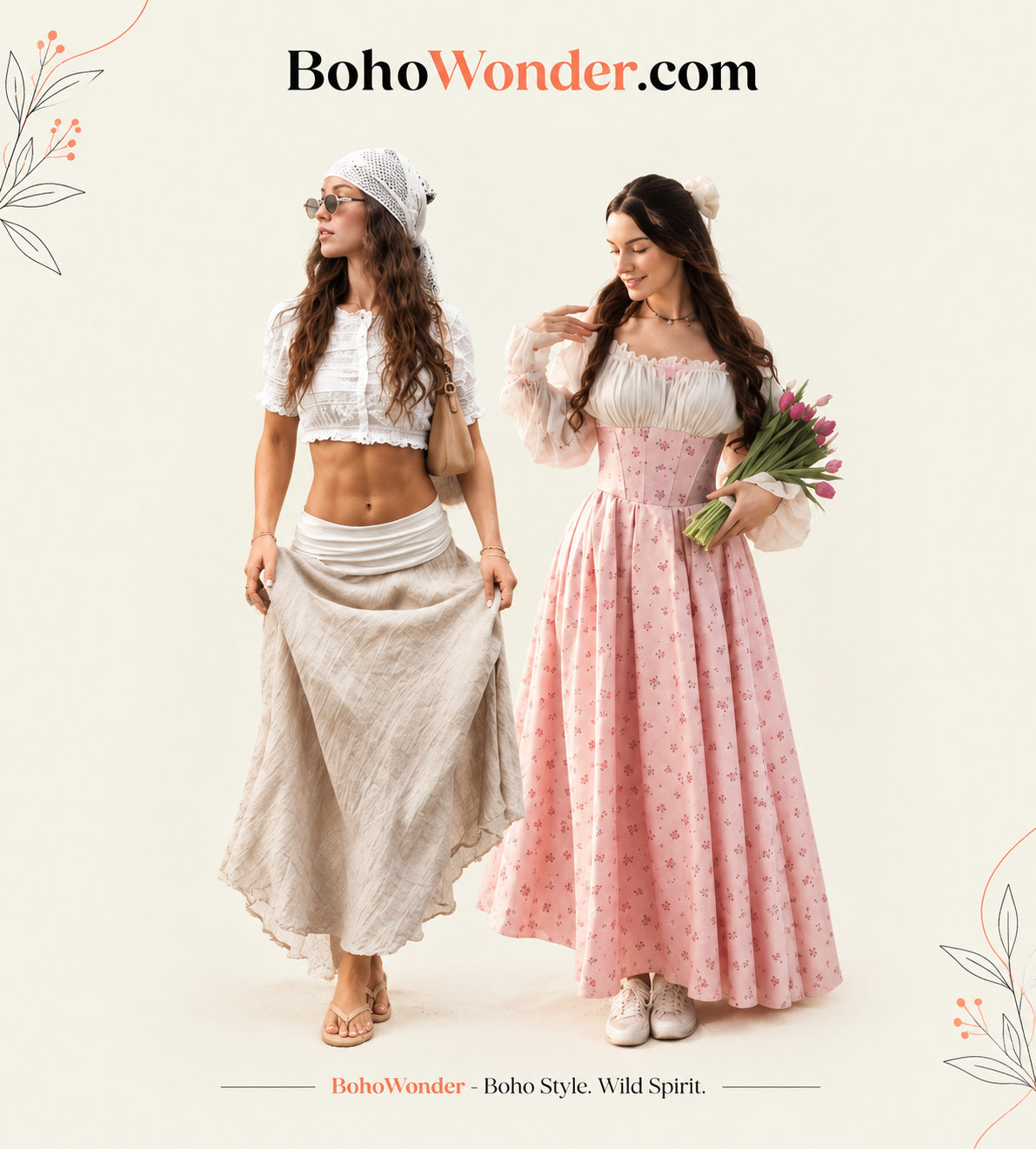
Consider a floral maxi dress.
Imagine one version in warm rust with a slightly eclectic print, a flowing tiered skirt, layered necklaces and a woven bag. The combination creates a distinctly bohemian impression.
Now imagine a second version in cream with tiny lavender flowers, puff sleeves, a gathered waist and delicate flats. The same general garment category now feels much closer to cottagecore.
The floral print alone did not determine the aesthetic.
The colour + silhouette + accessories + styling mood did.
Colour Differences
Boho tends to have more visual warmth.
Think:
- Rust
- Terracotta
- Burnt orange
- Warm brown
- Ochre
- Deep green
- Rich neutrals
Cottagecore often feels softer:
- Cream
- Sage
- Lavender
- Dusty pink
- Warm white
- Muted green
- Soft floral colours
This does not mean every boho outfit must be dark or every cottagecore outfit must be pastel. Neutral clothing can belong to either aesthetic.
The difference is the atmosphere created by the complete palette.
Pattern Differences
Cottagecore has a particularly strong relationship with floral and botanical patterns.
Boho can also use florals, but it tends to accommodate a wider range of patterns and textures. A richer floral print can become bohemian when paired with warm earthy colours and layered accessories.
If the pattern feels like something you might associate with a cottage garden, it naturally supports cottagecore.
If the pattern feels more expressive, eclectic or richly coloured, it can move toward boho.
Styling Differences
Accessories are often the easiest way to shift between the two.
For a cottagecore look, consider:
- Delicate jewellery
- Simple flats
- Small floral accessories
- Soft-toned bags
- Romantic hair accessories
For a boho look, consider:
- Layered necklaces
- Woven bags
- Textured sandals
- Crochet layers
- Fringe
- Mixed-metal jewellery
The underlying dress can remain almost identical.
Boho vs Western: Texture Meets Structure
Boho vs Western style creates another interesting overlap because both aesthetics can use earthy colours, fringe, flowing dresses and textured accessories.
However, their styling logic is different.
Boho tends to build interest through layering and texture.
Western tends to build interest through recognisable ranch-inspired details.
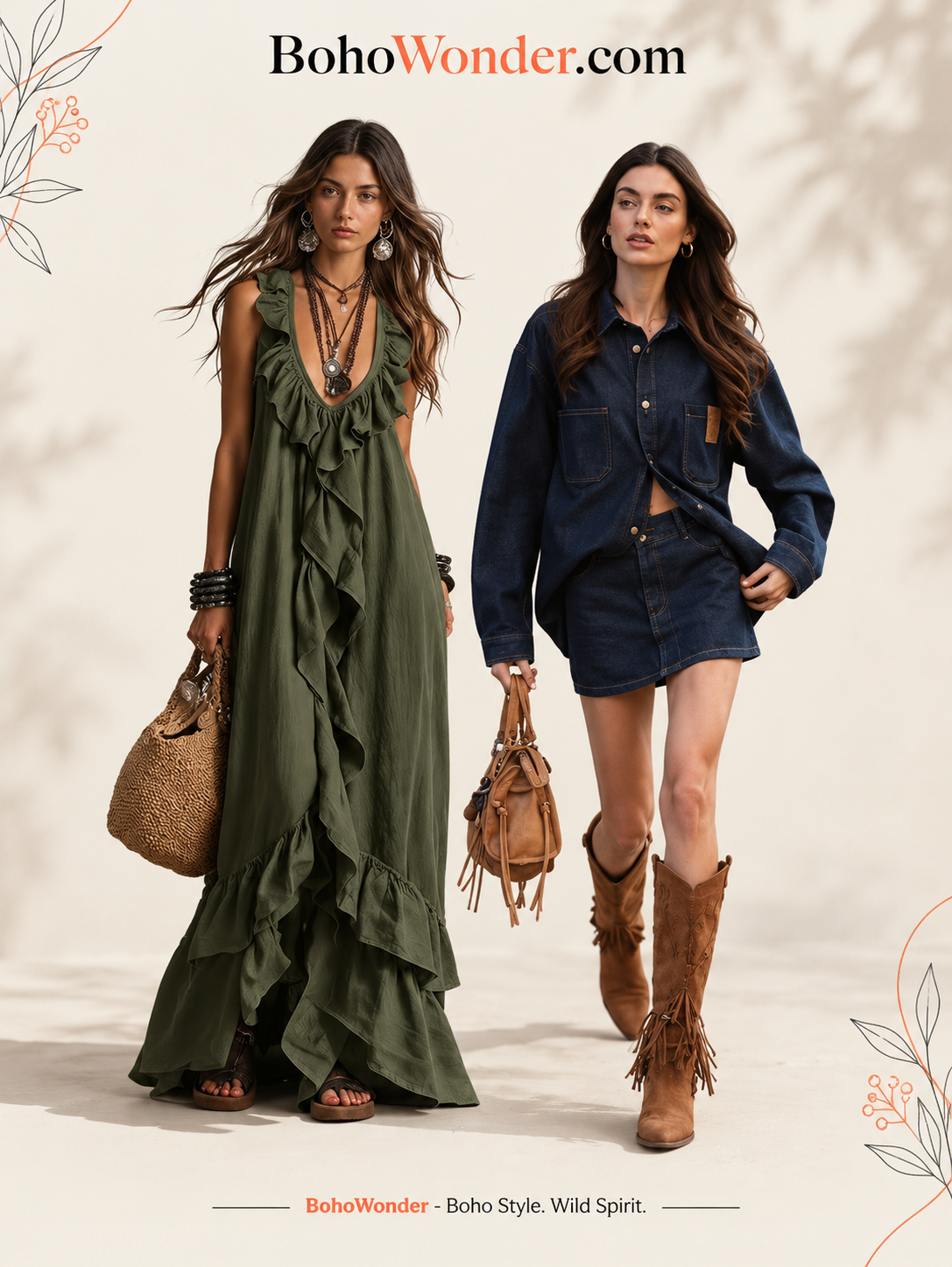
A flowing maxi dress is a useful example.
Pair it with layered necklaces, woven sandals and a relaxed bag, and the outfit becomes more bohemian.
Pair the same dress with cowboy boots and a structured belt, and the direction changes toward Western.
Add fringe to both and the distinction becomes less obvious. At that point, the other elements determine the balance.
When an Outfit Looks Both Boho and Western
There is no problem with creating a hybrid.
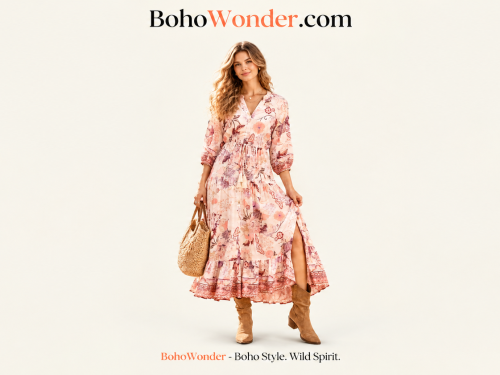
A flowing floral dress with Western boots can feel modern and relaxed. The dress supplies softness and movement, while the boots provide structure and a stronger visual reference.
For a subtle combination, use:
- One flowing dress
- One Western accessory
- Minimal additional decoration
For example, a simple boho dress with ankle boots and a belt can be enough.
If you add boots, a large buckle, multiple fringe pieces, denim, a cowboy hat and several Western motifs simultaneously, the Western influence will become much stronger.
The same principle applies when moving in the opposite direction. A Western-inspired wardrobe can feel softer when paired with flowing fabrics, relaxed silhouettes and layered accessories.
Boho vs Coastal: Two Relaxed Approaches
The comparison between Boho vs Coastal style is particularly relevant for holiday wardrobes because both aesthetics work naturally with flowing dresses, sandals and woven accessories.
They differ most clearly in colour, texture and visual density.
Boho welcomes visual richness.
Coastal usually prefers visual simplicity.
Imagine a cream maxi dress.
For a coastal outfit, you might add:
- Simple sandals
- A woven tote
- Minimal jewellery
- Soft blue accents
For a boho interpretation, you might choose:
- Layered necklaces
- A textured bag
- Warm brown accessories
- Crochet or fringe
- More noticeable jewellery
The dress itself has not changed.
The styling has.
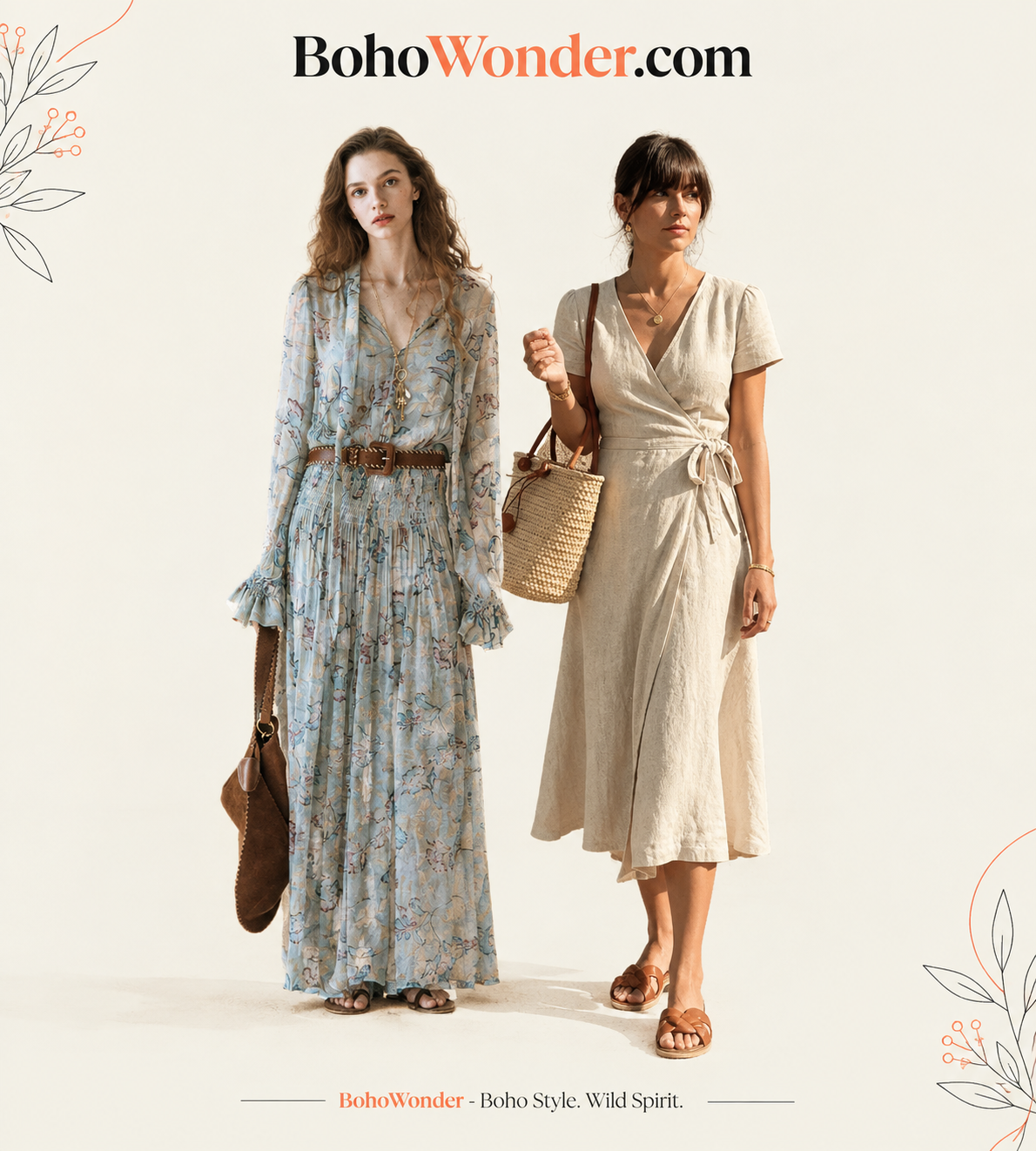
The Role of Colour
Coastal palettes generally stay close to the colours associated with sand, sky and sea.
White, cream, beige and pale blue create an airy foundation.
Boho can also use cream and beige, but warm terracotta, rust, brown, burnt orange and richer accents introduce more contrast.
This is why a white dress can work beautifully for both aesthetics.
The accessories establish the direction.
The Role of Texture
Both aesthetics can use woven materials, but they use texture differently.
Coastal texture tends to remain subtle. A straw bag, woven sandal or jute detail adds interest without overwhelming the outfit.
Boho is more comfortable making texture a central feature. Crochet, fringe, layered fabrics or multiple tactile accessories can become major parts of the look.
A Four-Way Comparison by Outfit Element
Sometimes the fastest way to understand Boho vs Cottagecore vs Western vs Coastal style is to compare the same wardrobe category across all four aesthetics.
Dresses
Boho: Flowing maxi dresses, tiered silhouettes, crochet details, relaxed shapes and expressive prints.
Cottagecore: Prairie dresses, floral midis, puff sleeves, ruffles and gathered waists.
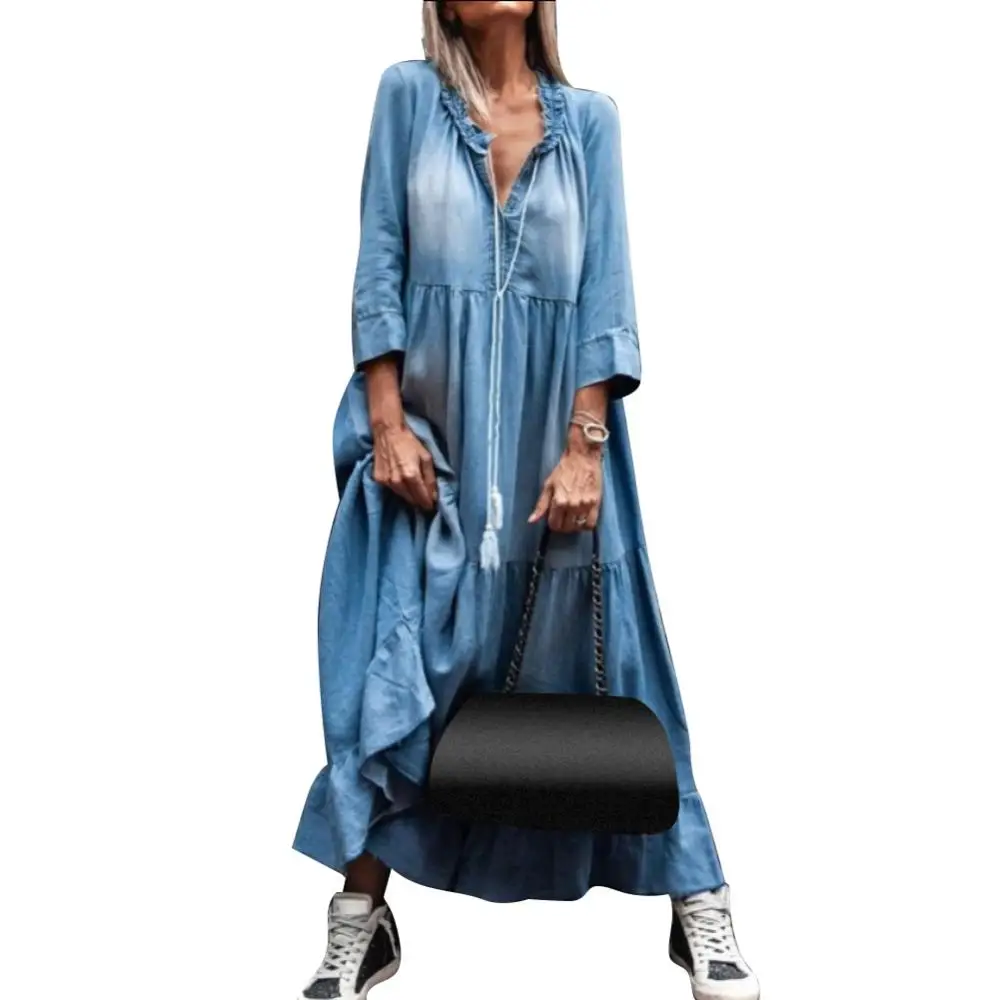
Western: Denim dresses, flowing dresses styled with boots, belted silhouettes and fringe details.
Coastal: White or cream dresses, relaxed maxis, simple midi silhouettes and light, uncomplicated shapes.
Skirts
Boho: Tiered, flowing or textured skirts paired with relaxed tops.
Cottagecore: Midi skirts with florals, gathers or romantic details.
Western: Denim skirts, longer skirts with boots or structured belts.
Coastal: Simple midi or maxi skirts in neutral colours and easy silhouettes.
Tops
Boho: Loose blouses, crochet tops, textured pieces and flowing shapes.
Cottagecore: Puff sleeves, square necklines, floral blouses and romantic details.
Western: Denim shirts, fitted tops with belts, western-inspired shirts and structured layers.
Coastal: Simple cotton or linen-inspired shirts, relaxed blouses and uncomplicated tops.
Accessories
Boho: Layered jewellery, woven bags, fringe and textured accessories.
Cottagecore: Delicate jewellery, floral details, vintage-inspired accessories and small bags.
Western: Boots, belts, buckles, fringe and western-inspired jewellery.
Coastal: Straw bags, simple sandals, woven accessories and understated jewellery.
Footwear
Boho: Flat sandals, woven sandals, boots or relaxed shoes depending on the outfit.
Cottagecore: Ballet flats, simple sandals, low boots and other delicate-looking footwear.
Western: Cowboy boots and other structured boots are particularly important visual cues.
Coastal: Sandals, simple flats and relaxed warm-weather footwear.
How to Choose the Style That Fits Your Wardrobe
When comparing Boho vs Cottagecore vs Western vs Coastal style, you do not need to decide which aesthetic is objectively better. A more useful question is: which style feels most natural to your personality, lifestyle and existing wardrobe?
Which visual language already works with the clothes you enjoy wearing?
Start by looking at your existing wardrobe.
If you repeatedly choose flowing dresses, warm colours, layered jewellery and textured accessories, you may naturally gravitate toward boho.
If you prefer floral prints, soft colours and romantic silhouettes, Cottagecore may feel more intuitive.
If denim, boots, belts and structured accessories dominate your wardrobe, Western elements may feel more natural.
If your favourite pieces are white, cream, beige, pale blue and simple flowing silhouettes, Coastal styling may fit your existing preferences.
You can also look at your favourite outfits rather than individual garments.
Ask yourself:
- Which colours do I wear most often?
- Do I prefer layered or simple styling?
- Do I enjoy noticeable accessories?
- Do I prefer romantic or structured silhouettes?
- Do I like warm earthy colours or cool light tones?
- Do I want my outfit to feel expressive, nostalgic, rugged or airy?
Your answers can reveal your dominant aesthetic without requiring you to follow a strict label.
How to Build a Boho Wardrobe Without Looking Overly Themed
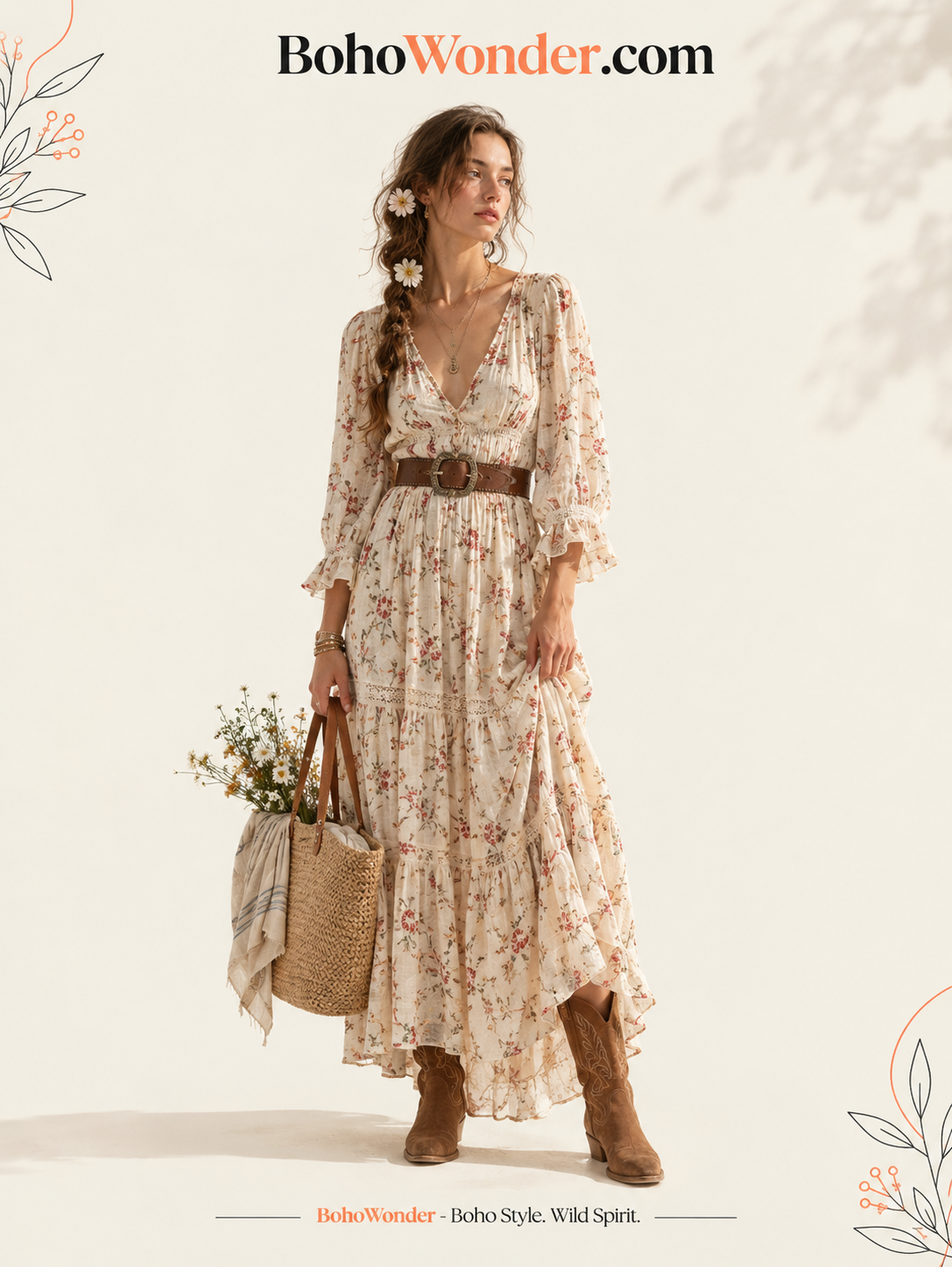
Because BohoWonder focuses on contemporary bohemian dressing, Boho is particularly useful as a flexible foundation.
The goal is not to make every garment visibly bohemian.
Instead, create a wardrobe where individual pieces can move between aesthetics.
A simple flowing dress can be worn with:
Boho accessories: layered necklaces + woven bag + textured sandals
Cottagecore accessories: delicate jewellery + romantic flats + soft floral detail
Western accessories: boots + belt + structured bag
Coastal accessories: simple sandals + woven tote + minimal jewellery
This approach gives one garment several styling possibilities.
It also keeps your wardrobe from becoming dependent on a single aesthetic trend.
For a versatile boho foundation, consider building around:
- Flowing dresses
- Relaxed skirts
- Neutral tops
- Textured layers
- Woven accessories
- Simple sandals
- A small selection of statement jewellery
- One or two stronger accent pieces
The purpose is not to own every boho detail. It is to create enough texture and flexibility that you can adjust the mood of an outfit.
How to Mix Two Aesthetics Successfully
Mixing aesthetics works best when one style is clearly dominant.
A useful 70/30 approach is to let approximately 70% of the outfit support the main aesthetic and use the remaining elements for contrast.
For example:
70% Boho + 30% Western
Flowing boho dress + woven bag + layered jewellery + Western boots.
70% Coastal + 30% Boho
White flowing dress + simple sandals + woven bag + layered necklace.
70% Cottagecore + 30% Western
Floral prairie dress + delicate jewellery + Western boots.
70% Cottagecore + 30% Coastal
Floral cream dress + simple sandals + woven tote.
The point is not the exact percentage. It is simply a way to prevent every aesthetic from competing equally.
If you use four strong visual languages at the same time, the outfit can lose its sense of direction.
How to Make Boho the Starting Point
When considering Boho vs Cottagecore vs Western vs Coastal style, Boho offers a relaxed foundation that can easily incorporate subtle details from other aesthetics. Start with flowing silhouettes, natural textures or expressive prints, then add a few carefully chosen accents to create a look that still feels distinctly bohemian.
For a Cottagecore Influence
Choose softer florals, romantic sleeves or delicate accessories.
Keep the boho base simple so the cottagecore elements can remain visible.
For a Western Influence
Add boots, a structured belt or one Western-inspired accessory.
Avoid adding every Western detail at once.
For a Coastal Influence
Switch to cream, white or pale blue and reduce the number of accessories.
Let the flowing silhouette provide the boho movement while the simpler palette creates a coastal atmosphere.
This is one of the easiest ways to keep your personal style consistent while experimenting with different aesthetics.
Common Mistakes to Avoid
Assuming Every Floral Dress Is Cottagecore
Florals appear across multiple aesthetics.
A warm, richly coloured floral maxi with layered jewellery can be strongly boho.
A delicate floral prairie dress can feel cottagecore.
A floral dress with boots and a belt can take on Western influence.
The print is only one part of the outfit.
Assuming Every Woven Accessory Is Boho
Woven bags and natural-looking textures also work beautifully with Coastal styling.
The difference comes from how much visual layering surrounds the accessory.
A woven tote with a white dress and simple sandals feels coastal.
A woven bag with a rust-coloured maxi, layered necklaces and textured sandals feels more bohemian.
Adding Too Many Signature Details
One or two recognisable elements are often enough.
If you are creating a Western-inspired look, boots and a belt may already communicate the idea.
If you are creating a cottagecore look, a floral dress and delicate accessories may be enough.
If you are creating a coastal look, a simple neutral palette and woven accessories can establish the mood without adding nautical motifs everywhere.
Treating Aesthetics as Strict Rules
Fashion is more flexible than a style chart.
There is no requirement for every boho outfit to use fringe, every cottagecore outfit to use florals, every Western outfit to use cowboy boots or every coastal outfit to use blue.
These are visual tools rather than rules.
Buying an Entire New Wardrobe
You usually do not need to start from zero when exploring another aesthetic.
Instead, identify the pieces you already own that can serve as foundations.
A neutral dress, denim jacket, woven bag, pair of boots or simple skirt can often move between several aesthetics with relatively small styling changes.
Choosing an Aesthetic Before Considering Personal Comfort
Aesthetic labels are useful only when they help you create outfits you actually enjoy wearing.
If a particular silhouette, colour or accessory does not feel natural to you, there is no need to force it simply because it belongs to a style category.
The most useful wardrobe is one where the aesthetic supports your personal preferences rather than replacing them.
Frequently Asked Questions
How does Boho vs Cottagecore vs Western vs Coastal style differ?
Boho style stands out for its relaxed silhouettes, layered textures, expressive prints and free-spirited character. Cottagecore tends to feel more nostalgic and pastoral, Western style draws on rugged details and Americana influences, while Coastal style focuses on light fabrics, breezy shapes and an easy seaside mood. The key difference is the overall feeling each aesthetic creates and the details used to express it.
What is the main difference between Boho and Cottagecore?
Boho is generally more eclectic, expressive and texture-focused, while Cottagecore is more romantic, pastoral and nostalgic. Both can use flowing dresses and florals, but Boho tends to welcome richer colour and layered accessories, whereas Cottagecore often favours soft colours and delicate countryside-inspired details.
What is the difference between Boho and Western style?
Boho usually builds visual interest through flowing silhouettes, texture, layering and expressive accessories. Western style relies more strongly on ranch and rodeo references such as denim, boots, belts, fringe and western-inspired hardware.
What is the difference between Boho and Coastal style?
Both can be relaxed and suitable for warm-weather dressing, but Boho generally has more colour, texture and visual layering. Coastal style tends to be lighter and simpler, using white, cream, sandy beige and soft blue as key colours.
Is Cottagecore more feminine than Boho?
Cottagecore is often presented through romantic details such as florals, puff sleeves, ruffles and gathered silhouettes, which can create a traditionally feminine appearance. Boho can also be feminine, but its visual identity is usually more eclectic and expressive rather than specifically romantic.
BohoWonder Edit
When exploring Boho vs Cottagecore vs Western vs Coastal style, it can be helpful to start with versatile bohemian pieces that can be styled in different directions rather than choosing highly themed garments.
At BohoWonder, Boho Dresses provide an easy foundation for experimenting with colour, texture and silhouette. A flowing dress can take on a softer cottagecore mood with delicate accessories, become more Western-inspired with boots and a structured belt, or feel more coastal with simple sandals and light-toned accessories.
For a more relaxed everyday wardrobe, Boho Tops can also work as flexible styling pieces. Pair a textured or flowing top with a skirt for a romantic look, denim for a Western influence, or neutral trousers for a simpler coastal-inspired outfit.
If you prefer building outfits through separates, Boho Pants offer another way to introduce relaxed silhouettes without relying on dresses. The same pair can feel distinctly bohemian with layered accessories or take on a cleaner direction when styled with minimal pieces.
The idea is to choose pieces that support your personal wardrobe rather than limiting yourself to one strict aesthetic. With the right combination of colour, texture, footwear and accessories, a versatile boho foundation can adapt to several different style moods.
Conclusion
The easiest way to understand Boho vs Cottagecore vs Western vs Coastal style is to look at the inspiration behind each aesthetic and then follow that influence through colour, silhouette, texture and accessories.
Boho is expressive, eclectic and free-spirited, with warm colour, flowing shapes and layered texture at its centre. Cottagecore is softer and more nostalgic, using rural references, florals and romantic details. Western is grounded in ranch and rodeo influences, with denim, boots, belts and structured details. Coastal is lighter and more restrained, drawing from beaches, seaside living and airy neutral palettes.
The boundaries are flexible, and that flexibility can make your wardrobe more useful rather than more complicated. A single flowing dress can support several different aesthetics simply by changing the styling around it.
Instead of asking which style you have to choose, start with the colours, silhouettes and textures you genuinely enjoy. Then use the visual language of Boho, Cottagecore, Western or Coastal style to refine the look and make it feel more personal.